Okay, let me tell you a little story. So, remember that time when you were at a concert and the lights were flashing all over? You felt all those colors bouncing around, right? Well, here’s the kicker: those colors are basically light waves doing their thing.
Now, think about this for a sec. Ever stared up at the night sky and pondered what’s out there? The stars and planets are like cosmic light shows. They’re constantly emitting light and also absorbing it. It’s wild, isn’t it?
Waves of light can show us so much about what’s happening in the universe around us. By understanding absorption and emission spectra, you can unlock secrets of everything from distant stars to everyday objects.
So let’s dig into this colorful world together! You ready for a bright adventure?
Insights into Absorption and Emission Spectra: Unveiling the Secrets of Light-Matter Interaction in Science
Absorption and emission spectra are like the fingerprints of materials when it comes to light. They reveal how substances interact with light. It’s pretty cool! When light hits an object, the way it’s absorbed or emitted tells scientists a ton about that object’s properties.
So, what’s going on here? Light behaves kind of like a wave and a particle at the same time. When you shine light on something, it can be absorbed by atoms or molecules in that material. Some of that energy gets used to bump electrons up to a higher energy level. It’s like playing leapfrog—you’re lifting them up to a higher spot!
Now, once those electrons are all pumped up and excited, they can’t stay there forever. Eventually, they have to come back down to their original levels, releasing energy in the process. This is where emission spectra come into play. The energy released can be in the form of visible light or other types of electromagnetic radiation, depending on how much energy was involved.
You probably remember from school that each element has its own unique “spectrum.” It’s like having a favorite song; just as everyone has different tastes in music, every element emits different colors when it gets excited and then relaxes. The colors you see are often visualized as lines on a graph, called spectral lines.
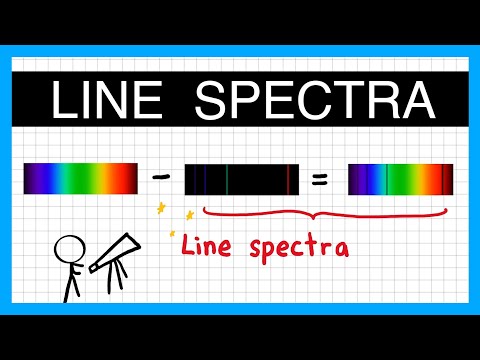
Another interesting point is that absorption spectra work almost like the opposite side of the same coin. If you shine white light through a gas or liquid that absorbs certain wavelengths (or colors), you’ll end up with dark lines where those colors got sucked in by electrons jumping up again. It’s all about energy shifts!
Think about how this works with fireworks—when they explode, they emit various colors based on what chemicals are used. Different mixtures mean different electron transitions and hence different colors showing up in the sky!
You might wonder why this matters so much? Well, studying these spectra is key for all kinds of scientific applications! For instance:
- Astronomy: We analyze starlight using absorption and emission spectra to determine what stars are made of.
- Chemistry: Spectroscopy helps identify unknown substances in labs.
- Environmental science: Scientists monitor pollution levels by observing how certain compounds absorb specific wavelengths.
In everyday life too! Think about your favorite colored shirt; its hue comes from certain wavelengths being absorbed while others are reflected back to your eyes.
To wrap it all up, absorption and emission spectra give us critical insight into how matter interacts with light. By understanding these phenomena better, we unlock secrets about everything from remote stars to simple household items! It’s pretty amazing just how much information can be packed into these little interactions with light and matter. So next time you see some beautiful colors around you— remember there’s quite the science story behind them!
Understanding Absorption and Emission Spectra: Key Concepts in Spectroscopy
So, let’s chat about absorption and emission spectra. It sounds complicated, huh? But really, it’s all about light and how different materials interact with it. You might have seen that cool rainbow effect when sunlight passes through a prism. That’s a bit like what we’re talking about here!
When light hits an object, two things can happen: the object can absorb the light or emit light. But why does this matter? Well, each material absorbs and emits light at specific wavelengths, which is super helpful for scientists in identifying substances. Let’s break it down.
- Absorption Spectra: This is like a fingerprint for materials. When a material absorbs certain wavelengths of light, it leaves dark lines on the spectrum where those colors are missing. For example, think of how plants use chlorophyll to absorb sunlight for photosynthesis. They absorb blues and reds but reflect greens, which is why they appear green!
- Emission Spectra: On the flip side, when substances get excited—like heating them up or running electricity through them—they can emit light at specific wavelengths too. This results in bright lines on a dark background in the spectrum. Ever seen neon lights? That glow comes from noble gases like neon emitting specific colors when energized.
- The Connection: The magic happens because of electrons in atoms! These little guys jump between energy levels when they absorb or emit energy (think of jumping up or down stairs). When they absorb energy from light, they move up to a higher level; then they drop back down and release that energy as light. It’s like a dance party at an atomic level!
You know what’s really cool? Spectroscopy, the study using these concepts! Scientists use spectroscopy to figure out what stars are made of by looking at their absorption spectra. Each element gives off or absorbs its own unique pattern of lines—like an interstellar fingerprint!
This stuff isn’t just academic; it has real-life implications too! Medical researchers employ these principles in techniques like mass spectrometry, which helps analyze substances in your body—for instance, detecting diseases.
So next time you look up at the night sky or admire plants soaking up sunlight, remember: you’re witnessing these fascinating interactions of absorption and emission spectra firsthand! Pretty mind-blowing stuff if you think about it.
Exploring the Connection Between Wave Properties and Atomic Emission Spectra in Physics
When we talk about wave properties and atomic emission spectra, we’re diving into a fascinating intersection of physics and chemistry. So, let’s break it down together, shall we?
First off, waves are all around us. Think of the ocean waves rolling onto the beach or the sound waves carrying your friend’s voice across a room. Light is a wave too! But not just any wave; it’s part of what’s called the electromagnetic spectrum. This includes radio waves, microwaves, infrared light, visible light, ultraviolet light, X-rays, and gamma rays. Each type has its own unique wavelength.
Now, when we get to atomic emission spectra, we’re looking at how atoms release energy in the form of light. Here’s where it gets interesting: when electrons in an atom absorb energy—like when you heat a metal or expose it to electricity—they jump to higher energy levels. It’s like they’re getting supercharged! But this state doesn’t last long because those electrons can’t hang around in that excited state forever.
Eventually, these electrons release that energy in the form of light as they fall back down to their original levels. The light emitted has specific wavelengths that depend on the difference in energy between those levels. This is what creates what we call an emission spectrum. You can think of it like a fingerprint for each element because different elements emit different colors of light.
So why does this matter? Well, the connection between wave properties and atomic emission spectra is crucial for things like identifying elements in stars or other celestial bodies. When scientists look at the light from these objects through a prism or spectrometer, they can see patterns—dark lines representing absorbed wavelengths and bright lines showing emitted wavelengths.
Here are some key points you might find interesting:
- Wavelength and Energy: The shorter the wavelength of light (like UV), the more energy it carries.
- Transition Levels: Electrons jump between discrete energy levels which creates unique spectral lines for each element.
- Absorption vs Emission: Absorption spectra show what wavelengths an atom absorbs; emission spectra show what it emits.
- Spectral Analysis in Astronomy: Astronomers analyze star light to determine their composition using these spectral fingerprints.
Imagine standing under a clear night sky full of stars. Each twinkle is telling you a story about its elements based on its emission spectrum! Isn’t that poetic?
All of this connects back to understanding how matter interacts with electromagnetic waves. From designing lasers to figuring out how stars shine—you get a glimpse into how interconnected everything really is! Physics isn’t just about numbers; it’s about understanding our universe on many levels—pretty cool stuff if you ask me!
Light, it’s everywhere, right? You wake up, and boom! Sunlight streams through your window. But have you ever thought about what’s really going on when you see all those beautiful colors? It’s kind of like one of those magic tricks where the magician reveals the secrets behind the illusions. Waves of light, specifically absorption and emission spectra, are like windows into the hidden world of atoms and molecules.
So here’s how it works: when light hits an object, some wavelengths are absorbed while others bounce back. Imagine you’re at a party, and everyone hears your favorite song. You and your friends dance while others just stand around; that’s kind of what happens with light! The colors you see? They’re all about what that object didn’t absorb. Pretty wild, huh?
I remember this one time in class—my science teacher brought a prism to show us how white light can split into a rainbow. As we oohed and aahed at those vibrant colors, I felt like I was seeing magic happen. Turns out that was just light being absorbed and emitted by different materials! Each color represents a specific energy level within an atom or molecule.
Now, let’s get technical but keep it simple for a sec: when an atom absorbs energy—like a little energy snack—it gets excited. Usually, that energy comes from heat or light. The atom then releases this energy later as light when it returns to its chill state. That emitted light creates these unique spectral fingerprints we can analyze.
And here’s where it gets super cool: scientists use these spectral fingerprints to identify materials in distant stars or even in our own atmosphere! So every time you look up at the night sky or enjoy nature, remember there’s some amazing science happening behind those colors we often take for granted.
But honestly? It leaves me feeling awestruck every time I think about it. Just knowing that there are layers upon layers of information hidden in something as simple as light makes the world feel more mysterious and beautiful. It shows us how connected everything is—from tiny atoms to massive galaxies out there in space.
So next time you see a rainbow or experience those stunning sunset hues, take a moment to appreciate the complex dance of absorption and emission that brought them into view. Seriously fascinating stuff!