So, imagine this: you’re at a beach party, and everyone’s slathering on sunscreen like it’s frosting on a cake. But what if I told you there’s a science-y way to see how well that sunscreen is working? Yeah, seriously!
That’s where ultraviolet absorption spectroscopy comes in. It sounds fancy, but it’s just a tool that helps chemists peek at how substances absorb UV light. You know, like when you wear those super cool sunglasses to block out the sun’s rays?
This technique isn’t just for sunblock lovers; it plays a huge role in chemical research. From figuring out how drugs behave in our bodies to checking the quality of water, UV spectroscopy is all around us—even if we don’t realize it! So let’s break down this cool science and see what it’s all about.
Exploring the Significance of UV Spectroscopy in Chemical Compound Structure Determination
Alright, let’s chat about UV spectroscopy and why it’s a big deal in figuring out chemical structures. So, you might be wondering what UV spectroscopy even is. Basically, it’s a technique that helps scientists understand how molecules absorb ultraviolet light. When light hits a molecule, some wavelengths get absorbed while others bounce off. By measuring this absorption, researchers can infer a lot about the molecule’s structure.
Firstly, UV spectroscopy is particularly useful for compounds that have conjugated systems. What does that mean? Well, it refers to molecules that have alternating single and double bonds. These systems can absorb UV light because they have electrons that can jump between energy levels when they soak up that light.
Now, think back to your favorite science class project—maybe you were trying to figure out which flowers absorbed more sunlight or something like that. It was all about understanding how energy interacts with matter. In a similar way, UV spectroscopy provides information on electronic transitions in molecules. When researchers perform this kind of analysis, they can track how these transitions occur and what they reveal about the compound.
Another cool thing is how it allows us to identify functional groups within molecules. Just like how you might recognize different ingredients in your favorite dish by their smell or taste—think of garlic versus sugar—scientists can tell which parts make up a chemical based on where they absorb UV light. For instance:
- Aromatic compounds often show strong absorption due to their pi electrons moving around.
- Carbonyl groups (like those in ketones or aldehydes) also have distinct absorption patterns that are easy to spot.
- When looking at polyenes (molecules with multiple double bonds), the more double bonds you have, the longer the wavelength at which they’ll absorb.
So here’s where it gets pretty interesting: by analyzing the spectrum obtained from UV spectroscopy—a visual graph of absorption versus wavelength—researchers can piece together clues about molecular structure. It’s kind of like putting together a puzzle where each piece reveals something new!
You know what’s also fascinating? The method isn’t just limited to identifying known compounds but also helps in figuring out unknown structures! So imagine you’re trying to analyze something from nature—say an extract from a rare plant—and you don’t know exactly what it is. By using UV spectroscopy on that extract, you could compare its spectrum with databases of known compounds and narrow down possibilities.
And get this: even though it sounds super scientific and maybe complicated, this method is surprisingly quick! You’re not waiting around for days; results can often come back in just minutes or hours depending on the setup.
But like any tool—it’s not foolproof! Sometimes overlapping peaks or unexpected noise can make it tricky to interpret results accurately. And that’s where experience comes into play; knowing how to read those spectra takes time and practice.
In wrapping things up (not too literally!), it’s clear that UV spectroscopy plays an essential role in chemical research. Not only does it help identify structures but also aids in understanding interactions between different compounds which is super important for fields like pharmacology or environmental science.
So next time someone mentions UV spectrometry at a party or whatever—you’ll know you’ve got some cool insights under your belt!
Exploring the Application of UV-Vis Spectrophotometry in Chemical Analysis: Techniques and Insights
You know that moment when you’re trying to figure out what’s in a mysterious liquid, like a science detective? Well, welcome to the world of UV-Vis spectrophotometry! It’s like having super eyes that can see what regular eyes can’t. So, let’s break it down.
What is UV-Vis Spectrophotometry?
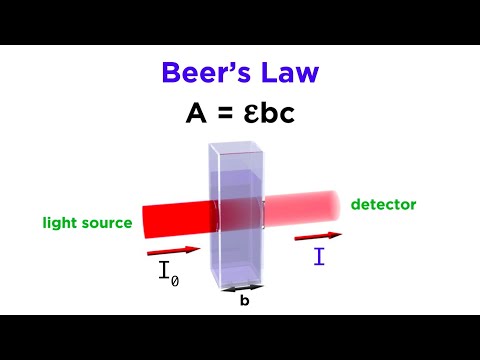
In simple terms, UV-Vis spectrophotometry is a technique used to measure how much light a substance absorbs. It focuses on ultraviolet (UV) and visible (Vis) light. When light hits your sample, some of it gets absorbed while other parts pass through. By measuring the absorption at different wavelengths, you can get insights into what’s going on in your sample.
Why Use It?
This method is super useful in chemical analysis for several reasons:
- Simplicity: It doesn’t require complex sample prep.
- Speed: You can get results quickly; sometimes in just minutes!
- Cost-effective: The instruments are generally affordable compared to some other techniques.
Okay, picture this: You’ve just mixed some mystery powders in water and want to check if there are any dyes present. With UV-Vis spectrophotometry, you’d shine light through your mixture. If there’s a color change or some strong absorption at specific wavelengths, voila—you’ve got clues about what those powders might be!
Applications Galore!
So where exactly do we use this technique? Well, here are a few cool examples:
- Chemical Research: Chemists use it to analyze reaction kinetics—basically figuring out how fast or slow reactions happen.
- Beverage Quality Control: Ever wondered how they check the quality of your favorite drink? They might use UV-Vis to ensure there aren’t any unwanted chemicals hanging around.
- Environmental Monitoring: Testing water samples for pollutants is another biggie—this method helps detect harmful substances quickly.
Now, let’s talk technique. The instrument consists of two main parts: the spectrum, which measures how much light goes through without interacting with the substance, and then the spectrum, which measures how much light gets absorbed after passing through the sample.
A Little Emotion!
I remember my first day using this machine back in college. I was nervous; it looked so technical! But when I finally got that graph showing absorbance peaks on my screen—it was like magic! You feel this rush from solving a puzzle as you connect those peaks with known substances.
The Bottom Line
UV-Vis spectrophotometry isn’t just another lab technique; it’s a powerful tool helping scientists uncover secrets hidden in liquids and solids alike. It provides crucial insights into chemical compositions and interactions that can steer research toward exciting new discoveries.
So next time you’re sipping on something colorful or reading about scientific studies, think about those invisible interactions happening behind the scenes! Pretty cool stuff, huh?
Exploring the Role of UV-Visible Spectroscopy in Forensic Science Applications
So, you’re curious about UV-Visible spectroscopy and its role in forensic science? Well, let’s break it down, shall we?
What Is UV-Visible Spectroscopy?
Basically, it’s a technique used to measure how much light is absorbed by a sample in the ultraviolet (UV) and visible range of the electromagnetic spectrum. When light hits a sample, some wavelengths get absorbed while others pass through. This absorption can tell you a lot about what’s in that sample.
How Does It Work?
The process involves shining light through a sample and measuring how much of that light gets through. Each substance absorbs light at specific wavelengths. So, if you’ve got a fingerprint left behind at a crime scene—let’s say it’s made of ink—UV-Visible spectroscopy can help identify what kind of ink was used by analyzing its absorption pattern.
The Role in Forensic Science
In forensic science, this technique is super handy for various applications:
- Identifying substances: It helps forensic scientists determine the composition of materials found at crime scenes.
- Dye analysis: You know those fancy fabrics or clothing items? UV-Vis can analyze dyes used on fabrics to match them to potential sources.
- Toxicology: Looking at bodily fluids? This method can check for toxic substances like drugs or poisons by assessing their absorption characteristics.
- Document analysis: Sometimes documents might be altered or forged; this technique can reveal different inks or types of paper used.
Anecdote Time!
I once read about a forensic investigator who solved a case using UV-Visible spectroscopy after discovering an unusual blue ink on a suspicious note found near the crime scene. By analyzing the light absorption properties of that ink, they figured out it matched an uncommon pen brand. That little detail led them straight to the suspect! Isn’t that just wild?
The Benefits
The beauty of using UV-Visible spectroscopy is that it’s non-destructive—you get your answers without destroying evidence. Plus, it’s pretty quick! You don’t have to wait days for results; sometimes, you’ll have data within minutes.
A Few Limitations
Now, it’s not all sunshine and rainbows; there are some drawbacks too. For instance:
- Selectivity: It can sometimes struggle with complex mixtures where several compounds absorb similarly.
- Sensitivity: Trace amounts might not show clear results unless you’re using highly sensitive equipment.
In summary, UV-Visible spectroscopy plays an essential role in forensic science by providing crucial information about substances that could be vital for solving crimes. If there’s one thing to take away here, it’s how important these scientific techniques are in helping bring closure to cases and understand what really happened in tricky situations!
So, ultraviolet absorption spectroscopy, or UV-Vis for short, is one of those scientific techniques that might sound all fancy and complicated, but it’s actually pretty cool and super handy in chemical research. When you think about it, the concept behind it is simple. Basically, this method helps scientists figure out what substances are present in a sample by measuring how much UV light those substances absorb.
Imagine walking into a dark room and flipping on a light switch. You can see everything clearly now! But if you had some funky glasses on that made certain colors invisible while amplifying others, you’d only see parts of the room differently. That’s kind of like what UV-Vis does—except instead of glasses, we’re using light in different wavelengths to reveal the hidden secrets of chemical compounds.
I remember sitting in my first chemistry class and being totally mesmerized when our professor explained how they could identify unknown substances just by shining a beam of light on them. It felt like magic! Seriously though, the way molecules interact with light tells us so much about them—their structure, concentration, even how they react with other chemicals. It was like solving a mystery with science as my detective tool.
Here’s where it gets interesting: every substance has its own “fingerprint” in terms of how it absorbs UV light. So when researchers are working on something like drug development or analyzing environmental samples, this technique becomes invaluable. For instance, let’s say scientists want to track pollutants in water; they can use UV-Vis to see how much sunlight different contaminants absorb compared to clean water. It’s like getting a sneak peek into what’s really going on!
But you know what? It’s not just about identifying stuff; it can also help monitor reactions over time. Picture stirring together baking soda and vinegar—you can watch bubbles form as they react. Well, in the lab with UV-Vis spectroscopy, chemists can monitor changes at a molecular level as reactions take place by tracking changes in absorption over time.
And while the tech behind it may seem daunting at first glance, there’s something genuinely beautiful about how basic principles lead to major discoveries in diverse fields—be it pharmaceuticals or environmental science. It makes you appreciate the connections between everyday life and these complex scientific processes.
In sum, ultraviolet absorption spectroscopy is more than just lab equipment; it’s sort of like having a superpower for seeing hidden details that would otherwise go unnoticed. As researchers continue to explore new ways to innovate with this technique, who knows? Maybe some future application will change our understanding of chemistry altogether! Isn’t that an exciting thought?