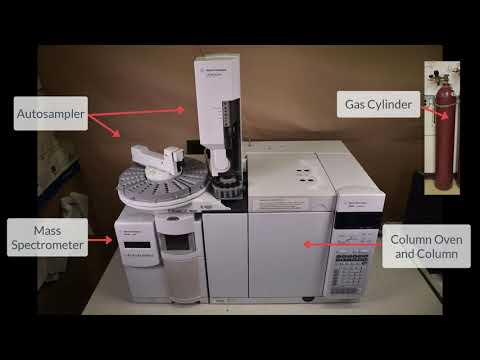
You know when you accidentally spill coffee on a super important paper? Totally the worst! But what if I told you that scientists have a fancy way to figure out what’s in that coffee? Yup, they use something called gas chromatography mass spectroscopy, or GC-MS for short. Sounds complicated, right?
Well, it’s actually pretty cool and way more useful than just analyzing your morning brew. Think of it like a detective tool for chemists. It helps them identify everything from toxic chemicals in the environment to secret ingredients in your favorite snack—without needing a magnifying glass!
Imagine being able to unveil secrets hidden in tiny samples—you could become a science superhero! So, let’s chat about how this method works and why it’s such a game-changer in modern research. You down?
Exploring the Applications of Gas Chromatography-Mass Spectroscopy in Scientific Research and Industry
Gas Chromatography-Mass Spectrometry, often just called GC-MS, is a pretty nifty technique. It combines two powerful methods to analyze substances in detail. It’s like having a magnifying glass and a microscope at the same time, but for chemicals.
So, what does GC do? Well, gas chromatography separates different components of a mixture. Imagine you’re at a party with all kinds of people mingling. Gas chromatography is like picking out just your friends from that crowd. How does it do this? It passes the sample through a column packed with materials that interact differently with each component. Some stick around longer than others, which helps separate them.
Then comes mass spectrometry. This step is like tossing your friends into an analyzer that tells you exactly who they are and how much they weigh! Mass spectrometry identifies the individual components based on their mass-to-charge ratio. It’s super precise and can detect tiny amounts of substances—a drop in the ocean, so to speak.
Now let’s get into how this combo is used across different fields:
- Environmental Monitoring: Scientists use GC-MS to test air or water for pollutants. It’s crucial for tracking harmful substances in our environment.
- Forensics: In crime scenes, this technique helps identify drugs or toxins in biological samples. Picture detectives solving mysteries with scientific evidence!
- Food Safety: Ever wonder if your food has pesticides? GC-MS helps analyze food samples for residues ensuring what you eat is safe.
- Pharmaceuticals: In drug development, researchers use it to check the purity and composition of new medicines. It ensures that medications are effective and safe.
I remember once visiting a lab where they tested local water sources using GC-MS. The technician showed me how they detected contaminants at parts per billion levels! It really hit home how important this complex tool is for keeping our environment clean and safe.
On top of all that, GC-MS can handle complex mixtures efficiently, which makes it quite popular in research labs and industries alike. It’s not just about spotting something that’s there; it’s also about understanding how much of it is present—crucial information when making decisions based on those findings.
In summary, gas chromatography-mass spectrometry stands as an invaluable tool across various sectors—from protecting the environment to ensuring food safety and enhancing medical research. It’s fascinating how one technique can bridge so many gaps in science and industry!
Recent Advancements in Mass Spectrometry: Transforming Analytical Science for Enhanced Precision and Efficiency
Mass spectrometry, often called MS, has really taken off recently. It’s like a superhero in the world of analytical science, swooping in to help us understand complex mixtures and tiny quantities of substances. You might have heard about it paired with gas chromatography, or GC-MS, which is a common combo used in many labs today. So, what’s all the fuss about? Let’s break it down!
First off, think about how we analyze things. If you’ve ever used a recipe, you know that measuring ingredients accurately is crucial for making that perfect cake. In the lab world, mass spectrometry does something similar but on a whole new level. It measures the mass-to-charge ratio of ions, helping scientists identify different molecules based on their mass. This is super helpful for everything from checking the purity of drugs to analyzing environmental samples.
One recent advancement in MS technology is the use of high-resolution mass spectrometry. This fancy term just means that these machines can separate ions with tiny differences in mass better than ever before. Imagine trying to hear two quiet conversations happening at once; getting high-resolution output helps scientists distinguish between closely related molecules. This means more accurate results and less chance of mixing things up.
Next up is the improvement in sensitivity. Newer instruments are like having an incredibly sharp pair of ears – they can pick up single molecules even when they’re super diluted! For instance, detecting pollutants in drinking water or hazardous chemicals in air samples becomes way easier this way. Less background noise means you get cleaner results faster.
Also, we can’t forget about automation! With better software and robotic systems handling parts of the process, scientists spend less time on tedious tasks and more time interpreting data. These advancements streamline workflows and let researchers focus on discovering new things instead of just crunching numbers all day.
And let’s talk about applications—there are so many! In pharmaceuticals, researchers use GC-MS to ensure drug safety by analyzing metabolic profiles. In environmental science, it helps monitor pesticides or heavy metals that could endanger ecosystems or human health.
To sum it up:
- High-resolution MS allows for better separation and identification.
- Sensitivity improvements make detecting low-abundance compounds a breeze.
- Automation enhances efficiency and reduces human error.
- Diverse applications span across industries like healthcare and environmental monitoring.
In a nutshell, advancements in mass spectrometry are truly transforming analytical science! You see? With every leap forward, we get closer to unraveling nature’s mysteries with greater precision and efficiency than ever before. And who knows? The next big breakthrough might be just around the corner!
Emerging Trends and Developments in Gas Chromatography Technology: Innovations and Applications in Modern Science
Gas chromatography is like that trusty sidekick in the lab, you know? With all its cool tricks, it’s essential for separating and analyzing compounds in mixtures. Lately, it’s been making waves with some pretty amazing innovations. Let’s break down what’s happening.
Greater Sensitivity
New advancements are pushing the sensitivity of gas chromatography to a whole new level. This means it can detect much smaller amounts of substances than before. For instance, new detectors are allowing scientists to identify trace levels of pollutants in environmental samples. Imagine being able to spot a single drop of perfume in an Olympic-sized swimming pool! Pretty neat, right?
Hyphenation Techniques
So there’s this trend called hyphenation where gas chromatography teams up with mass spectrometry (GC-MS). It’s like a dynamic duo! This combo helps scientists not only separate compounds but also analyze their molecular structure in detail. The partnership has proven invaluable in areas like forensic science and food safety.
Automation
Another exciting development is the increase in automation within gas chromatography systems. Automated sample handling and analysis save time and reduce human error. Researchers can process more samples faster while still maintaining accuracy. It’s a win-win!
Sustainable Practices
You might be wondering about sustainability, right? Well, gas chromatography is stepping up its game here too! There’s a push towards greener solvents and techniques that minimize waste. Some researchers are even exploring ways to recycle materials used in the process, which is just awesome for Mother Earth.
Micro-scale Gas Chromatography
Then there’s micro-scale gas chromatography which uses tiny samples yet still provides high-resolution data. Think of it like packing superpowers into a small package! It offers incredible benefits in various fields, from biomedical research to detecting explosives.
Real-Time Analysis
And how about real-time analysis? Thanks to advancements in technology, scientists can now get results on-the-spot during experiments instead of waiting days or weeks for results. This speeds up research across various disciplines! Imagine running an experiment and getting instant feedback; that could totally change the game.
In short, emerging trends in gas chromatography are making this tool even more powerful and efficient than ever before. With improvements ranging from increased sensitivity to automated processes and greener practices, it’s clear that gas chromatography has an exciting future ahead! So next time you think about analytical chemistry or even your favorite scented products, remember the science behind it—it may just involve some cutting-edge gas chromatography technology working behind the scenes!
Gas Chromatography Mass Spectrometry, or GC-MS, might sound like a mouthful, but it’s seriously one of those unsung heroes in modern research. You know, it’s all about analyzing complex mixtures and figuring out what’s really going on at a molecular level. It’s like being a molecular detective!
I remember the first time I stumbled upon a lab working with this technology. I was just doing my rounds as an intern, and the scientists were buzzing around these fancy machines that look like something straight out of a sci-fi movie. They were identifying unknown compounds in environmental samples—like who knew what was lurking in our air or water? It’s one thing to talk about pollution, but then to see them break it down into actual chemical components? That was eye-opening.
So here’s how it works: Gas chromatography first separates the different chemicals in a sample by vaporizing them and passing them through a column packed with tiny particles. Imagine sliding down a fun slide where each twist and turn sorts you out based on your size or shape. Some molecules zoom through while others take their sweet time. Then comes the mass spectrometry part. This is where things get really cool! The machine zaps those separated molecules to determine their mass and structure. It’s seriously techy stuff that helps researchers identify even the tiniest traces of substances.
This technology has become super essential for many fields—like environmental science, forensic analysis, food testing—you name it! It can differentiate between substances that are so similar you’d think they were twins! And that precision? It’s crucial when you’re looking for contaminants or trying to verify if something is safe to eat.
But honestly, what strikes me most is how this tech can be such a game-changer for public health and safety. Like when scientists use GC-MS to track down toxic chemicals in foods or pollutants in drinking water; they’re not just crunching numbers—they’re safeguarding communities. That kind of impact sticks with you!
Sure, GC-MS might seem complicated on paper, but at its core, it’s about understanding the world around us better. Every sample analyzed can lead to new discoveries—whether it’s figuring out the origins of an ancient artifact or catching criminals red-handed with their toxic fingerprints left behind. There’s something meaningful about using science as a way to unravel mysteries… you know?