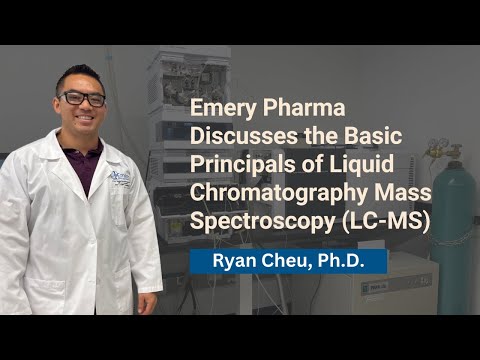
So, funny story: I once tried to impress my friends by explaining liquid chromatography mass spectrometry, and they just stared at me like I was speaking Martian. Seriously! But here’s the thing—this stuff is super cool and not as scary as it sounds.
Imagine being able to sort through a complex soup of molecules faster than you can say “science.” That’s basically what’s happening with advanced techniques in liquid chromatography mass spectrometry. And let me tell you, it’s changing the game for researchers everywhere.
From discovering new drugs to figuring out what’s really in our food, these advancements are making waves. It’s like having a turbocharged magnifying glass that helps you see things nobody else can! So let’s chat about what’s going on in this fascinating world where science meets technique. Trust me; you’ll want to know more!
Recent Advancements in Mass Spectrometry: Innovations Shaping the Future of Analytical Science
Mass spectrometry, or MS for short, is like the superhero of analytical science. It’s become a go-to method for figuring out just what’s in a sample, and it’s evolving faster than you can say “five-second rule.” Recent advancements in this field, especially when paired with liquid chromatography (LC), have completely changed the game. So let’s break down what’s been cooking lately.
What is Liquid Chromatography Mass Spectrometry?
Okay, so first things first. You’ve got liquid chromatography, which helps separate mixtures into individual components. Basically, it drags stuff through a special column where different substances come out at different times. Now combine that with mass spectrometry, which identifies those substances by measuring their mass—and bam! You’ve got LC-MS.
Recent Innovations
In recent years, the tech and methods behind LC-MS have seen some pretty impressive tweaks that impact everything from drug discovery to environmental testing.
- High-Resolution Mass Spectrometry: manufacturers have been cranking out machines that can analyze samples with ultra-high resolution. This means better sensitivity and accuracy—kind of like switching from an old black-and-white TV to a fancy 4K model!
- Speed: Many new systems are designed to run faster than ever before. Research labs are working on quicker analyses without sacrificing quality. Imagine scheduling back-to-back movie marathons without missing a single scene.
- Sensitivity Improvements: Some newer instruments can detect lower concentrations of substances than past models could even dream of. This is huge for things like detecting drugs or toxins in super tiny amounts.
- User-Friendly Software: The software that runs these machines has gotten way easier to use too! New interfaces help researchers get results without needing a PhD in coding just to press start.
Anecdote Time!
Speaking of sensitivity advancements, I remember reading about this lab that used newer LC-MS methods to detect rare toxins in water samples from lakes around urban areas. They found contaminants at ridiculously low levels—like one part per trillion! That kind of precision could help tackle environmental issues much earlier than before.
The Future Looks Bright
The landscape for analytical science is changing rapidly thanks to these innovations. Think about how this could revolutionize healthcare and safety—faster diagnoses mean quicker treatments! Each little improvement adds up; you get better data which leads to more informed decisions.
So yeah, with all these advancements in mass spectrometry and its buddy liquid chromatography, researchers are set up for success like never before. The next time you hear about something amazing happening in science—like finding an ancient protein or doing complex cancer research—you might just want to thank these cutting-edge technologies!
Comparative Advantages of LC-MS Over HPLC in Analytical Chemistry
You know, when you dive into the world of analytical chemistry, you quickly bump into two really important techniques: Liquid Chromatography Mass Spectrometry (LC-MS) and High-Performance Liquid Chromatography (HPLC). Both are crucial for separating and analyzing compounds, but they’ve got some pretty significant differences. Let me break it down for you.
First off, LC-MS combines **liquid chromatography** with **mass spectrometry**, which lets you not only separate compounds but also identify them based on their mass. It’s like having a superpower! You can detect tiny amounts of substances that HPLC might miss. Seriously, think about drugs or toxins in your body; LC-MS can find them at very low levels.
On the other hand, HPLC is mainly about separation. It’s great for purifying compounds or determining their concentration, but it lacks that awesome mass-sensing ability. So if you need to know exactly what those compounds are after separating them, HPLC might leave you hanging.
Another thing is sensitivity and specificity. With LC-MS, you’re looking at enhancements in these areas that really stand out. The technique is incredibly sensitive too! You could detect a compound in blood or urine samples that are diluted down to parts per billion. HPLC doesn’t usually go that far unless paired up with some other detection methods.
There’s also speed! LC-MS processes samples faster than traditional methods because it rapidly provides both separations and identity info in one go. I remember once attending a lab session where they ran a series of drug tests using both methods; the difference was night and day! The lab using LC-MS wrapped up their tests while the HPLC team was still waiting for results to trickle in.
Cost can be another consideration—a big one! Usually, LC-MS systems cost more upfront compared to HPLC setups due to their complexity and additional components required for mass detection. But remember: if you’re dealing with complex mixtures like environmental samples or biological fluids, the time saved and data quality can justify that higher price tag.
To sum up:
In short, both techniques have their place in analytical chemistry. If you just want separation? Cool—stick with HPLC! But if you need fast results with detailed identification? Then LC-MS is where it’s at.
Exploring Cutting-Edge Techniques in Liquid Chromatography Mass Spectrometry: A Comprehensive Overview
Liquid chromatography mass spectrometry, or LC-MS for short, is a powerful technique used in many fields like chemistry, biology, and even forensics. It’s kind of like having a detective kit for molecules. So, what’s all the buzz about? Let’s break it down.
First off, **liquid chromatography** helps separate different components in a mixture. Imagine you have a big bowl of fruit salad with apples, bananas, and strawberries all mixed up. Liquid chromatography sorts them out so you can see each fruit individually. It does this by passing the mixture through a column filled with special materials that interact differently with each component.
Now onto the **mass spectrometry** part! This tech measures the mass of those separated components. It’s like checking how heavy each fruit is after you’ve sorted them out. The cool thing is that once they’re separated by LC, they go into the mass spectrometer one by one where they get zapped with energy to create charged particles. These particles then zoom through an electric field and get detected based on their mass-to-charge ratio.
But why is LC-MS cutting-edge? Well, let’s talk about some advancements:
- High-resolution techniques: Newer models can detect smaller differences in mass very precisely. This means scientists can identify tiny amounts of substances in complex samples.
- Speed: Modern systems are way faster than before! Some can analyze samples in minutes rather than hours.
- Miniaturization: You know those giant machines from years ago? Now we have portable versions that are much smaller but still incredibly effective.
- Automation: Many newer systems can run unattended for hours or even days, which frees up researchers to tackle other tasks.
An example that might hit home: think of food safety testing. Let’s say there’s a concern about pesticides in grapes; using LC-MS allows scientists to test many grape samples quickly and accurately so they can keep us safe without slowing down production.
Also worth mentioning: **quantitative analysis** has improved significantly with these advancements. You think about how much of something is present; modern LC-MS techniques allow researchers to obtain detailed concentrations of substances at really low levels—like finding a needle in a haystack!
So basically, whether it’s discovering new drugs or analyzing environmental pollutants, these advancements in liquid chromatography mass spectrometry are super important for helping us understand the world around us better every day! Exciting stuff happening here—don’t you think?
Okay, so let’s chat about liquid chromatography mass spectrometry, or LC-MS, for a minute. Now, I know that sounds like a mouthful of techno jargon, but hang with me! It’s actually pretty cool stuff. Picture it like this: you’ve got a complex mixture of chemicals – maybe something like your favorite smoothie with all kinds of fruits thrown in. How do you figure out what’s in there without just taking a wild guess? That’s where LC-MS struts in with its superhero cape.
So here’s the gist: liquid chromatography is the process that separates out those fruity ingredients. Imagine if each fruit wanted to go through a narrow door one at a time instead of all barging in together – it makes things way easier to identify, right? You start with this messy mix and by the end, you can see what each component is. And then comes the mass spectrometry part. This step tells you the weight of each of those separated fruits – I mean chemicals – which helps pinpoint exactly what they are.
Now, why is this relevant? Well, think about how much we depend on understanding chemical compositions in everything from pharmaceuticals to environmental testing! I remember once hearing about how scientists used these techniques to detect tiny amounts of harmful substances in water sources after natural disasters. It really hit home for me—knowing that this advanced tech could help save lives by making sure our drinking water was safe.
But here’s what gets really exciting! Advances in LC-MS technology keep coming at us faster than a speeding train. New developments mean we can analyze samples much quicker and more accurately now than ever before. There are innovations that allow us to look at extremely tiny amounts of substances—things we might never have been able to detect before! It’s kind of mind-blowing when you think about it.
You see, it isn’t just about improving speed; it’s about opening doors to new discoveries and capabilities that can change lives. Scientists are now able to tackle challenging issues like disease detection much earlier or monitor pollutants at nanoscale levels in our environment. And every time they come up with more efficient techniques, it’s like turning the page on an exciting new chapter!
So yeah, while LC-MS might seem like heavily scientific mumbo jumbo at first glance—all complicated acronyms and fancy equipment—the reality is so much more relatable and impactful than that! It’s helping us understand how our world works better and keeping us safer along the way. And honestly? That feels pretty great knowing science has our backs in ways we sometimes don’t even realize.