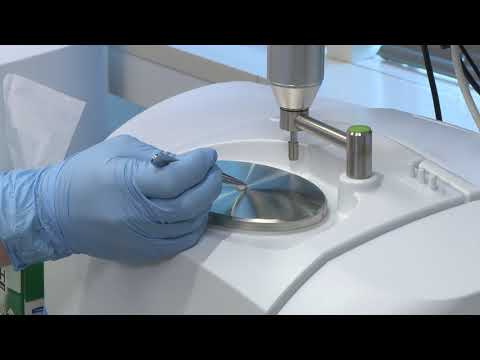
Have you ever tried to sniff out what’s cooking in the kitchen just by the smell? Like, when your buddy pulls out this amazing dish, and you just have to guess all the ingredients? Well, scientists do something sort of similar with FTIR spectroscopy.
Imagine having a super-powerful nose that can decode the molecular makeup of stuff. Seriously, it can tell you what something’s made of just by looking at how it interacts with light. It sounds like magic, but it’s all science!
This tool is like a secret weapon for researchers in so many fields. From figuring out what’s lurking in your favorite skincare product to analyzing ancient artifacts, FTIR is everywhere. So let’s break down how this cool technique works and why it matters.
FTIR Spectroscopy: A Comprehensive Tool for Advancing Modern Scientific Research – Download PDF Guide
FTIR spectroscopy, or Fourier-transform infrared spectroscopy, is one of those cool tools that help scientists figure out what stuff is made of. It’s like having a super-sophisticated magnifying glass that goes beyond just looking at something; it tells you about the molecular vibrations of different materials. You follow me?
Basically, when you shoot infrared light at a sample, that light interacts with the molecules in ways that depend on their chemical bonds. Some light gets absorbed and some bounces back. The trick here is that each type of bond has a unique pattern—it’s like its own fingerprint! By analyzing these patterns, you can identify the different components in your sample.
Now, let’s break this down a bit more:
- How it works: FTIR uses an interferometer to create an interference pattern from the light reflected off your sample. This creates what we call an “interferogram.” Then, a mathematical process called Fourier transform converts this pattern into a spectrum.
- The spectrum: The resulting graph shows how much light was absorbed at different wavelengths. Peaks in this graph correspond to specific molecular vibrations. For instance, if there’s a peak around 1700 cm-1, it could indicate the presence of a carbonyl group (like in ketones or aldehydes).
- Applications: FTIR is used everywhere—from pharmaceuticals to environmental science. For example, it helps analyze pollutants in air and water by identifying harmful compounds. In the lab, chemists use it to confirm product purity or identify unknown substances.
- Why it matters: The ability to quickly and accurately identify materials can save precious time and resources in research, which is super important when you’re racing against deadlines or trying to solve urgent problems.
But here’s where it gets even cooler: FTIR can also be combined with other techniques. Think about using FTIR with microscopy—this allows scientists to look at very tiny samples while still getting detailed chemical information.
Still not convinced? Let me share a little story from my own experience. I once saw a researcher analyze ancient pottery fragments using FTIR and some other methods. It was amazing! They could figure out what materials were used thousands of years ago just by shining infrared light on those pieces and examining the spectra produced! This kind of analysis opens up whole new worlds in archaeology.
So yeah, FTIR spectroscopy isn’t just for lab geeks; it’s like this bridge connecting science with practical applications in many fields. Whether you’re trying to develop new drugs or study climate change effects, FTIR gives you insights that are hard to come by otherwise!
Understanding FTIR Spectroscopy: Principles and Applications in Scientific Research
FTIR spectroscopy, or Fourier Transform Infrared Spectroscopy, is a pretty neat technique used to identify and study materials. It’s like having a super-sophisticated detective for molecules. You shine infrared light on a sample, and it tells you about the molecular vibrations happening inside it. It’s all about the way different molecular bonds absorb light at specific wavelengths.
Now, let’s break down how this works a bit. When infrared light hits a molecule, it can cause certain bonds within that molecule to vibrate. Different types of bonds will absorb different wavelengths of light. You could think of it as each bond has its favorite song; only when the right song plays can they dance! This absorption generates a unique spectrum—a sort of fingerprint for that molecule.
So basically, with FTIR spectroscopy, you collect this spectrum and analyze it. You get peaks at various wavelengths indicating the presence of specific functional groups in your sample. For instance, if you see a peak around 1700 cm-1, that’s typically associated with carbonyl (C=O) groups. It’s like decoding their secret signals!
Now let’s touch on some cool applications. FTIR is widely used in various fields:
- Chemistry: Identifying unknown substances or confirming the composition of synthesized materials.
- Biology: Studying proteins and lipids to understand their structure.
- Environmental Science: Analyzing pollutants in air or water samples.
- Materials Science: Checking the composition of polymers or composites.
I remember once hearing this story about a team of researchers trying to figure out what was contaminating local soil near an industrial site. They used FTIR spectroscopy and pinpointed some organic compounds that were leaking into the ground water—like finding out where that funky smell in your fridge is coming from!
One thing that makes FTIR so user-friendly is the fact that samples can be analyzed in solid, liquid, or gas states without much prep work needed. It saves time—who doesn’t love that?
However, there are still some challenges with FTIR spectroscopy to keep in mind too; for example, it can struggle with very complex mixtures because overlapping peaks can make things messy to interpret. But hey, scientists are pretty resourceful and often combine FTIR with other techniques to get clearer insights.
The bottom line here? FTIR spectroscopy is an essential tool in modern scientific research—it helps us understand materials better by breaking them down into their molecular signatures! And who knows? Maybe one day you’ll find yourself using this incredible technology in your own experiments!
Advancements and Innovations in FTIR Spectroscopy: A Comprehensive Review in the Field of Analytical Chemistry
FTIR spectroscopy, or Fourier-transform infrared spectroscopy, has made some serious waves in analytical chemistry lately. It’s like a super sensitive ear that picks up vibrations from molecules, helping scientists figure out what substances are made of. Imagine going to a concert and trying to pick out a specific instrument among the noise; that’s kind of what FTIR does with chemical compounds.
One big thing that makes FTIR so cool is its ability to analyze samples quickly. This means researchers can get results in real-time, which is especially handy in fields like medicine and environmental science. For instance, checking out air quality or tracking pollutants can be done on-site, saving time and resources.
Now, let’s talk about some innovations that have recently popped up in this field:
- Portable FTIR devices: These are game-changers! Scientists can take their tools into the field rather than staying chained to the lab. This mobility opens up new avenues for research.
- Imaging capabilities: Recent advancements allow FTIR to create images of samples at the molecular level. It’s like taking a selfie but for molecules! This helps in understanding how substances interact.
- Combination techniques: Pairing FTIR with other methods like mass spectrometry brings a whole new level of understanding to complex samples. It’s like being able to hear more instruments at that concert you went to — way richer details!
You might not realize it, but FTIR also plays a role in things like food safety and quality control. Remember when you bit into that apple and wondered if it was treated with pesticides? Researchers use FTIR analysis for checking residues on fruits without needing complicated sample treatments.
Oh, and there’s something called “micro-FTIR,” which focuses on tiny samples—think dust particles or those minuscule fibers from your favorite sweater! It allows scientists to study small bits without needing large quantities of material.
The future looks promising too! With ongoing developments in software and data analysis techniques, we’re likely going to see even faster processing times and more precise results.
So, in terms of advancements and innovations, it’s clear that FTIR spectroscopy continues to evolve. Whether it’s helping scientists monitor environmental changes or ensuring food safety from farm to table, this technology remains an essential tool in modern scientific research. Stay curious; who knows what else might be discovered through those vibrational signatures?
FTIR spectroscopy is, like, one of those tools that might sound super technical but it’s actually pretty cool once you get into it. You know, it stands for Fourier Transform Infrared Spectroscopy. Rather long name, right? But it’s just a fancy way to figure out what stuff is made of. Basically, FTIR helps scientists “see” the vibrations of molecules. This is super important because these vibrations tell us about chemical bonds and structures. Kinda like how different musical notes can create a whole song.
Let me share something personal here: one time I went to this exhibit on art restoration. They were using FTIR to analyze pigments in old paintings! It was mind-blowing to see how they could determine the type of paint used just by examining how the paint interacted with infrared light. It’s such a neat mix of science and art.
So, back to FTIR—what happens is you shoot infrared light through a sample, and depending on how the light interacts with it, you get a spectrum that looks like a fingerprint. Each molecule has its own unique pattern, which means scientists can identify substances even in tiny amounts! This is super useful in many fields—everything from pharmaceuticals to environmental science.
And here’s where it gets even cooler: non-destructive tests! Unlike some methods that might damage the sample, FTIR lets researchers study it without causing harm. Imagine analyzing an ancient artifact without ruining it—pretty sweet, right?
You can find FTIR being applied all over the place. Medical research uses it to understand diseases at the molecular level. In food safety, they’re checking for contaminants or authenticating products like olive oil (yes, there’s fake stuff out there!). In materials science? You bet they’re figuring out new compounds or creating better materials.
But hey, it’s not all sunshine and rainbows; FTIR has its challenges too. Sometimes overlapping peaks make things tricky when trying to decipher complex mixtures. It’s kind of like trying to hear your friend at a concert when everyone’s singing along loudly—it can get confusing fast!
So yeah, looking at FTIR as just another lab tool would be selling it short—it’s really a bridge between fundamental research and real-world applications that affects our daily lives in surprising ways! Like from preserving history with art restoration straight down to ensuring what we eat is safe—who knew molecular vibrations could do all that?