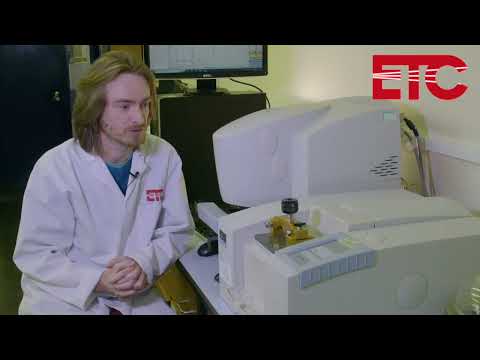
Alright, picture this: you’re at a party, and someone hands you a fancy drink. You take a sip and immediately think, “What the heck is in this?” Well, that’s kinda what Fourier Transform IR spectroscopy does for scientists.
You know how we can’t always tell what things are just by looking at them? This tech takes a *really* close look at molecules and shows us their secrets. It’s like having a super-sleuth sidekick in the lab!
From identifying unknown compounds to figuring out what makes that weird smell in your fridge, Fourier Transform IR Spectroscopy is like the Sherlock Holmes of chemistry. Seriously, it’s amazing how much info we can squeeze out of a tiny amount of material.
So let’s break it down—why is this tool so cool and useful in science? Buckle up, ‘cause it’s about to get interesting!
Exploring the 5 Key Applications of IR Spectroscopy in Scientific Research
Sure, let’s break down the cool stuff about IR spectroscopy and its applications in scientific research.
1. Chemical Composition Analysis
IR spectroscopy is a fantastic tool for identifying chemical substances. When you shine infrared light on a sample, molecules absorb specific wavelengths based on their structure. Each type of bond in a molecule vibrates differently, giving you a unique fingerprint. Imagine trying to play your favorite song on an instrument and only hitting certain notes; that’s kind of how it works! Scientists can analyze these patterns to determine what compounds are present. This is super handy in fields like organic chemistry.
2. Monitoring Chemical Reactions
Another great use is keeping tabs on chemical reactions in real time. Scientists can watch how reactants change into products by measuring shifts in the IR spectra as the reaction occurs. It’s like watching a cooking show where you see every step of making that fancy soufflé! For instance, in the pharmaceutical industry, this is crucial for ensuring that drugs are produced properly and safely.
3. Quality Control
If you’re making something—like food or cosmetics—quality matters, right? IR spectroscopy helps companies maintain consistency by checking raw materials and final products for specific contaminants or markers of quality. Think about how annoying it is to buy spoiled milk; using IR can help avoid those surprises! Many manufacturers rely on this technique to ensure their products meet safety standards and regulations.
4. Environmental Analysis
It also plays an important role in studying environmental samples like air and water. By examining pollutants in these samples, scientists can assess how human activities affect ecosystems. For example, measuring greenhouse gases like CO2 can inform climate change studies and policy-making decisions based on reliable data.
5. Biomedical Applications
Last but not least, IR spectroscopy has become essential in biomedical research! It’s used for everything from analyzing tissues to detecting diseases at early stages through blood analysis. The cool thing? You don’t even need complex sample preparation; just grab a few drops of blood or a small piece of tissue and get started with your analysis!
In sum, IR spectroscopy is super versatile, serving various fields from chemistry to environmental science and healthcare! It shows us just how much we can learn about the world around us through those sneaky little vibrations of molecules—and all without ever needing to break the bank on supplies!
Exploring the Role of FTIR Spectroscopy in Pharmaceutical Analysis and Quality Control
So, let’s talk about FTIR spectroscopy and how it fits into pharmaceutical analysis and quality control. Sounds kinda technical, but trust me; it’s pretty interesting!
FTIR stands for Fourier Transform Infrared Spectroscopy. Basically, it’s a super cool technique that helps us figure out what chemical compounds are in a sample. It works by shining infrared light on a substance and measuring the light that gets absorbed or transmitted. Each compound has its own unique “fingerprint” based on how it interacts with infrared light.
In the world of pharmaceuticals, quality is key. That’s where FTIR comes in. You know how you want to make sure your favorite candy bar tastes just right every time? Well, drug manufacturers need to make sure their products are safe and effective too. FTIR helps achieve that by allowing scientists to:
- Identify Chemical Constituents: By analyzing the unique absorption patterns, researchers can identify active pharmaceutical ingredients (APIs) present in a formulation.
- Check Purity: It can spot impurities or contaminants in drugs. Let’s say you’re trying to bake cookies and find out one of your ingredients is bad – that’s exactly what FTIR does for medications!
- Monitor Stability: As drugs age, they can change chemically. FTIR helps keep an eye on these changes over time, ensuring the product remains effective.
- Assist in Formulation Development: When developing new drugs, scientists use FTIR to see how different ingredients interact with each other during formulation.
Imagine this: you’re in a lab bustling with activity. There’s this scientist who looks super focused while peering at computer screens filled with data from an FTIR instrument—it’s like seeing into the molecular world! They analyze peaks and valleys on graphs displaying absorption; each line tells a story about what’s happening within the sample.
Here’s another cool aspect: FTIR is relatively quick! Unlike some methods that take ages (think waiting forever for paint to dry), you can get results sometimes within minutes! This speed is crucial when dealing with things like product recalls or safety concerns—nobody wants delays when health is at stake.
But hey, it’s not without challenges; sometimes samples can be tricky due to complex mixtures or solid forms. That means analysts have to carefully prepare their samples or combine FTIR with other techniques like chromatography to get more precise results.
So next time you think about pharmaceuticals—just remember that behind those little tablets or syringes lies incredible technology like FTIR spectroscopy working hard for quality assurance and safety. It really plays a significant role in making sure what you take is good for you!
Understanding FTIR: Its Role and Applications in Material Science
Sure, let’s break down FTIR in a way that’s relaxed and easy to grasp.
Fourier Transform Infrared Spectroscopy (FTIR) is a technique used to identify materials based on their molecular vibrations. It’s like having a superpower that allows scientists to “hear” the unique sounds molecules make when they wiggle and dance.
So, how does FTIR work? Picture this: you shine infrared light onto a sample, right? The molecules in the sample absorb some of this light, and each type of bond in the molecule absorbs at different wavelengths. The FTIR instrument captures these vibrational patterns and translates them into a spectrum. Think of it like getting a fingerprint for each substance!
Now, you’re probably curious about where this is helpful. Well, here are some applications:
- Material Identification: Scientists can use FTIR to figure out what materials are made up of. This is crucial in fields like forensic science where identifying unknown substances can be key.
- Quality Control: In manufacturing processes, FTIR helps ensure that products meet specific standards by checking their composition.
- Environmental Monitoring: It’s also used to detect pollutants in air or water samples, helping maintain safety standards.
- Molecular Research: Researchers use it to study chemical reactions and how molecules change over time.
One time I went to visit a lab that was using FTIR to analyze some old paintings. They were trying to figure out what kind of pigments the artist used without damaging the artwork! They pointed out that each color had its own unique IR signature, which was just mind-blowing.
FTIR isn’t just cool; it’s versatile too! For instance, thanks to its speed and accuracy, scientists can analyze samples with minimal preparation time. So if they have a new polymer or composite material they’re working on, they can get results fast.
In summary, FTIR stands out for its ability to provide detailed information about material composition through molecular vibrations. Whether it’s art conservation or environmental studies, this technique plays an essential role across various fields—helping us understand our world one spectrum at a time!
You know, when I first stumbled upon Fourier Transform Infrared (FTIR) Spectroscopy, I felt like I was opening a door to a secret world. Imagine being able to take a closer look at the very molecules that make up everything around you—it’s like having superpowers! So, what’s the deal with FTIR? Well, basically, it helps scientists identify and analyze the chemical composition of substances by measuring how they absorb infrared light.
I remember sitting in a lab during my college years, surrounded by beakers and test tubes. We had this old FTIR machine humming away in the corner. The first time we used it to analyze a mystery sample—it felt like solving a puzzle! The spectrum it produced was like reading a unique fingerprint for that substance. It’s pretty cool how just by shining some light on things and capturing the patterns, you can tell if something is organic, inorganic, or even if it has specific functional groups.
The applications of FTIR are everywhere. In chemistry labs, researchers use it to identify unknown compounds or even monitor reactions in real-time—how amazing is that? But wait, there’s more! In biology and medicine, they use FTIR to study proteins and lipids. It’s crucial for understanding diseases at the molecular level or figuring out how drugs interact with cells.
And it’s not just limited to science fiction scenarios; this tech also plays an important role in environmental studies! Scientists can analyze air samples to detect pollutants or check for contaminants in water sources. You might have heard about food safety inspections—FTIR can help ensure that what you eat is free from harmful substances.
But you know what really gets me? It’s how this seemingly complicated technology boils down to some pretty simple concepts: light absorption and molecular vibrations translate into valuable info about our world. Next time you sip on coffee—or whatever your drink of choice is—just think about all the science happening behind the scenes.
So yeah, FTIR spectroscopy may sound complex at first glance, but its ability to connect us with our surroundings is seriously impressive. From tackling health issues to keeping our environment safe, there’s no doubt that this technique has become an indispensable tool for scientists—and who knows where else it could lead us next!