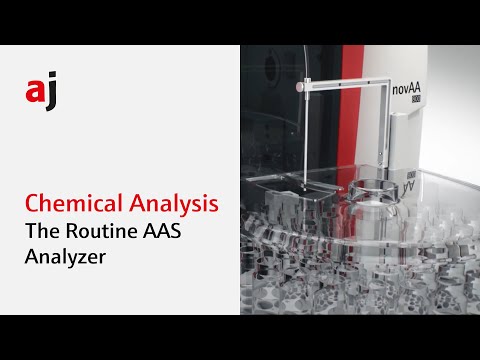
You know, back in high school, I thought chemistry was all about mixing things in beakers and watching colorful reactions. But here’s a wild thought: it’s way more than that! Enter atomic absorption spectrometry, or AAS for short. Sounds fancy, right?
Imagine this: you’re at a party, and someone brings out a fancy drink that suddenly glows under a blacklight. That glow? It’s like these elements are showing off their identities! AAS works kind of like that but way cooler—it helps scientists figure out exactly what elements are hanging out in a sample by measuring how much light they absorb.
Seriously, it’s like detective work for atoms! That little bit of science has found its way into so many areas—from checking for heavy metals in drinking water to testing the quality of foods we eat. Pretty neat stuff, huh? So let’s chat about how this method is shaking things up and where it’s headed next!
Exploring the Applications of Absorption Spectroscopy in Scientific Research and Analysis
Absorption spectroscopy is super cool. It’s basically a technique that helps scientists understand what materials are made of by looking at how they interact with light. The main idea is simple: when light hits a sample, some wavelengths (colors) get absorbed, and the rest bounce back. By analyzing this absorbed light, you can identify and quantify what’s in that sample.
When it comes to **atomic absorption spectrometry (AAS)**, things get even more interesting! This method focuses on detecting metals in different substances. It’s like shining a flashlight on a room full of people and figuring out who’s there based on how each person reacts to the light. Well, in AAS, the “light” is usually from a lamp that emits specific wavelengths for different metals.
So why is this useful? Well, AAS has tons of applications! For one:
Imagine you’re at a picnic with friends and you start dissecting the contents of your lunch—like figuring out which dish is contributing too much salt or not enough veggies. That’s pretty much what scientists do when they analyze samples using AAS!
Now, here’s where it gets better—recent advancements have made these techniques even more precise and efficient than before. Modern atomic absorption spectrometers are often equipped with computer software that helps automate everything from sample preparation to data analysis. It’s like having an intelligent friend who not only sees what you eat but also keeps track of how healthy your diet is!
In addition to traditional methods, there are new variations like **flame atomic absorption** and **graphite furnace atomic absorption** (GFAAS). Each has its strengths depending on what you’re measuring:
To sum up, using absorption spectroscopy—especially atomic absorption spectrometry—opens up so many doors for scientists across various fields. From keeping our environment safe to ensuring our food is healthy and even aiding medical diagnostics, its applications are almost endless! And when you think about all these advancements making tech smarter and faster, who wouldn’t be excited about the possibilities?
Exploring Common Applications of Atomic Absorption Spectroscopy in Scientific Research
Atomic Absorption Spectroscopy (AAS) is one of those powerful techniques that scientists rely on to analyze various substances. Imagine you’re at a party, and you’re trying to figure out who has the best dance moves. You’d watch and focus on a specific dancer to see their style, right? Well, AAS does something similar. It focuses on individual atoms within a sample to determine what elements are present and in what amounts.
So, how does it work? AAS uses the principle of absorption. When you shine light through a sample, certain wavelengths are absorbed by specific elements. Each element has its unique fingerprint—a particular wavelength it absorbs. By measuring the intensity of this absorbed light, scientists can quantify how much of an element is in the sample. Pretty neat, huh?
Now let’s get into some common applications of AAS:
- Environmental Monitoring: Scientists use AAS to test soil and water for contaminants like heavy metals—lead, mercury, or cadmium. They need to make sure that our environments are safe for us and wildlife.
- Food Safety: Ever wondered about what’s really in your food? AAS helps analyze food products for harmful substances such as arsenic or lead. For instance, testing rice from areas known to have high arsenic levels ensures consumer safety.
- Pharmaceutical Research: In the world of drugs, AAS is essential for determining metal content in medicines. This helps ensure that drugs meet safety standards before they hit pharmacy shelves.
- Mining Industry: When mining companies dig up minerals from the earth, they use AAS to determine whether those minerals contain valuable metals like gold or silver—basically helping them decide if it’s worth extracting.
- Chemical Analysis: Researchers often rely on AAS when analyzing different chemicals and compounds in laboratories. This includes determining concentrations of elements in complex mixtures.
But wait! How did I first learn about this cool technique? Well, I remember being at a lab during my college days when we had to analyze samples from local rivers. The excitement in measuring tiny contaminant levels was infectious! Watching those numbers pop up made me realize just how vital these tests are for public health.
One thing that’s crucial with AAS is its limitations too—like any method out there! It’s not all-powerful and can only detect elements that can absorb light efficiently; some low-abundance elements might slip through the cracks if they’re not good absorbers.
So there you have it! AAS plays a key role across various fields by ensuring our environment remains clean, our food is safe, and our medicines are effective. It’s one of those methods that quietly supports crucial decisions all around us—like your friend who always comes through when you need help with party planning!
Exploring Real-World Applications of Atomic Spectroscopy in Scientific Research and Industry
Atomic spectroscopy? It’s like a magic trick that scientists use to peek at the tiniest particles in our universe. Seriously! This technique helps us identify and quantify materials all the way down to the atomic level. It’s super useful in different fields, from environmental science to medicine.
First up, let’s talk about atomic absorption spectrometry (AAS). What does it do? Well, it measures how much light is absorbed by atoms in a sample. Each element absorbs light at specific wavelengths, which means this method can tell you exactly what elements are present and how much of each one you’ve got. So, picture this: you’ve got a glass of water and want to check if it has any lead or mercury. AAS can help you with that!
Now, let’s explore some real-world applications. In environmental research, AAS is used to analyze soil and water samples for contaminants. For instance, scientists test rivers or lakes for heavy metals. If there’s too much lead or cadmium floating around, that could be bad news for wildlife – and for us too!
Moving on to medicine. This technique plays a huge role in clinical laboratories where they analyze blood samples. Ever heard of measuring iron levels? Doctors need to know if someone has anemia or iron overload; AAS makes that super precise.
In the world of food safety, AAS comes to the rescue again! Food scientists use it to check for harmful substances like pesticides or heavy metals in your favorite fruits and veggies. You wouldn’t want a bite of apple laced with lead, right? By ensuring food safety through AAS testing, we can enjoy our meals without worries.
When we look at forensics, atomic spectroscopy shines here too! Investigators use this method to analyze evidence from crime scenes – say, gunshot residue on a suspect’s hands. AAS helps determine if certain elements are present that match gunpowder components.
Of course, advancements in technology have made AAS even better over time! With modern instruments now being more sensitive and accurate than ever before, researchers can detect trace amounts of elements – sometimes even down to parts per billion! That’s like finding a drop of ink in an Olympic-sized swimming pool!
So basically, atomic spectroscopy is not just some lab jargon; it’s incredibly valuable across various fields by providing essential data that influences decisions about health, safety and environmental policies. When you think about all its applications—from protecting our health to keeping our environment clean—it really highlights just how important this field is becoming!
Atomic Absorption Spectrometry (AAS) might sound like something out of a sci-fi movie, but it’s really just a cool tool scientists use to analyze the composition of different substances. Imagine you’re at a party, and you want to figure out what everyone’s drinking. Instead of sipping from every glass, you could use AAS to tell you about the drinks just by looking at them. That’s kind of what this technique does in the lab!
So, how does it work? Well, it uses the fact that atoms absorb light at specific wavelengths. When you blast a sample with light and analyze which wavelengths are absorbed, you can figure out what elements are present and in what amounts. It’s like putting on sunglasses that filter out certain colors—you only see what’s left!
This technique has come a long way since its beginnings. I remember attending a science fair as a kid and being awe-struck by all the cool experiments on display. One project involved measuring the lead content in soil samples using AAS—which is super important for environmental safety! Lead can be toxic, especially for kids playing outside. Just thinking about those little hands getting dirty… It struck me that science isn’t just numbers and charts; it can literally impact lives.
Fast forward to today, and AAS is being used everywhere—from environmental labs testing water quality to hospitals checking for metals in blood samples. You know how we’re all concerned about heavy metals like mercury? This method helps us monitor what’s safe and what’s not.
But let’s not forget about advancements! With modern technology, AAS has become faster and more sensitive. Imagine being able to detect tiny traces of an element that would’ve been impossible before! Researchers can now get real-time data rather than waiting days or weeks for results.
So, whether it’s ensuring our drinking water is clean or examining products we consume, Atomic Absorption Spectrometry plays a pivotal role in keeping us safe. I mean, isn’t it amazing how something so scientific can have such real-world applications? It’s like science is always working behind the scenes to make sure we’re living our lives as safely as possible—like superheroes with lab coats!