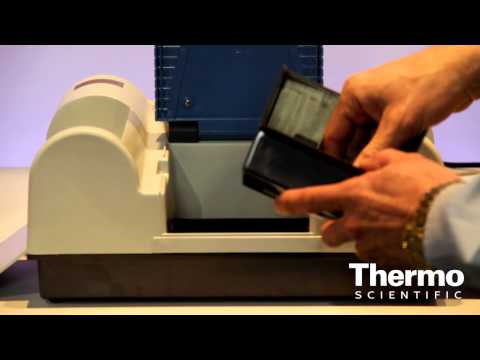
So, picture this: you’re at the beach, soaking up the sun, and you see some cool science nerds collecting water samples with fancy equipment. Turns out, they’re using ultraviolet spectrometry! Wild, right?
But seriously, these science wizards are actually making big strides in understanding our world. Ultraviolet light is like the secret sauce in so many experiments. From detecting pollutants to figuring out how plants absorb sunlight—it’s got a million uses.
And the advancements in this field? They’re pretty mind-blowing! You’ve got new gadgets that can analyze stuff faster than you can say “sunburn.” So let’s dig a little deeper into what’s cooking in the world of UV spectrometry and see how it’s shaping research today. Sound good?
Exploring Recent Advancements in Ultraviolet Spectrometry for Enhanced Scientific Research
Ultraviolet spectrometry is like having a superpower for scientists. It helps them see things that are invisible to the naked eye. Recently, there have been some pretty cool advancements in this area that are making waves in scientific research.
What is Ultraviolet Spectrometry?
Alright, let’s break it down. Ultraviolet spectrometry is a technique that measures how much light in the ultraviolet (UV) range a sample absorbs. Think of it as shining a flashlight with UV rays on something and checking how much light gets soaked up. This absorption can tell you about the chemical composition of the sample. It’s widely used in chemistry, biology, and even environmental science.
New Technologies on the Horizon
Some of the recent advancements involve improving the sensitivity and resolution of UV spectrometers. This means they can detect smaller amounts of substances more accurately than ever before! So, researchers can analyze trace amounts of pollutants in water or tiny concentrations of drugs in blood samples more effectively, which is super important for health and safety.
Anecdote Time!
I remember hearing from this passionate graduate student who was working on identifying pollutants in a local river using traditional methods. It took forever just to get basic data! When her lab got one of those nifty new portable UV spectrometers, she could finally measure things on-site and save so much time—it was such an emotional moment for her when she collected her first set of accurate results right by that riverbank!
The Impact on Research
These advancements are not just tech upgrades; they change how we approach problems! With better tools at their disposal, scientists might discover new compounds or behaviors that were previously hidden from view.
In short, exploring recent advancements in ultraviolet spectrometry opens up doors for enhanced scientific research everywhere—from environmental monitoring to drug development. The impacts stretch far beyond just academic curiosity; they touch our health and our planet’s well-being too! So yeah, it’s an exciting time to be involved in science!
Comprehensive Review of UV Spectroscopy: Insights and Applications in Scientific Research (PDF Download)
Ultraviolet (UV) spectroscopy sounds a bit techy, but it’s basically a way scientists “look” at substances by shining UV light on them. When the light hits the material, it can make certain electrons jump to higher energy states. This info is super useful because, depending on how much light gets absorbed and at what wavelengths, researchers can figure out what the substance is and how much of it there is.
What Are The Basics?
You have to think of UV spectroscopy like having a special pair of glasses that lets you see details not visible to the naked eye. Different substances absorb different amounts of UV light. So when you shine this light through or on a sample, some wavelengths will be absorbed more than others. The result? A spectrum—a kind of fingerprint for that material!
The key components in UV spectroscopy include:
- The Light Source: Usually a deuterium lamp for the range from about 160nm to 400nm.
- The Monochromator: This fancy term means it separates the light into its different wavelengths.
- The Detector: It measures how much light comes through after hitting the sample.
Why Is It Important?
One incredible thing about UV spectrometry is its wide range of applications in scientific research. It’s used in chemistry labs for analyzing pharmaceuticals, checking water quality, and even in forensic science for identifying substances at crime scenes.
For instance, imagine you’re investigating water quality. By measuring how certain contaminants absorb UV light at specific wavelengths, you can determine if it’s safe to drink or if something nasty is lurking in there! This has real-life implications—like ensuring clean drinking water for communities.
Advancements in Technology
Technology has really boosted UV spectroscopy over recent years. Newer instruments are more sensitive and can analyze samples faster than ever before. Plus, with computer software getting smarter, it’s easier to interpret spectrums without needing decades of experience.
For example, modern software can identify peaks in spectra that indicate specific compounds are present. This makes it even easier for researchers to gather meaningful data swiftly and accurately.
Challenges & Considerations
But hey, it’s not all sunshine and rainbows! There are challenges too. Interference from other compounds in complex mixtures can confuse results. Researchers need to be careful when interpreting data because overlapping absorption spectra might lead them astray.
Also, while UV spectroscopy is fantastic for many applications, it’s not suitable for everything—like transparent solutions or very low concentration substances sometimes require different methods like fluorescence spectroscopy instead.
So there you go! Next time someone mentions UV spectroscopy, just remember: it’s a powerful tool that helps scientists unlock secrets about materials right under our noses—using nothing but light! Isn’t science just mind-blowing?
Exploring UV-Visible Spectroscopy: Insights and Applications in Scientific Research on ResearchGate
UV-Visible spectroscopy is like shining a light on the hidden secrets of materials. It’s a powerful tool in scientific research, helping scientists understand what’s going on at the molecular level. Basically, it measures how much ultraviolet and visible light a substance absorbs. The cool part? Different substances absorb different wavelengths of light, so you can learn a lot just by shining a light on them!
When you look at how it works, envision this: you have a beam of light that passes through your sample. As the light travels through, some wavelengths get absorbed while others pass through or bounce off. This absorption creates a spectrum , which is essentially a fingerprint for that substance. Each peak or dip in the graph corresponds to specific molecules or functional groups within the substance.
This technique has tons of applications across various fields. For instance:
- Chemistry: It helps determine concentration levels of different chemicals in solutions.
- Biochemistry: Researchers can study proteins and enzymes by looking at how they interact with light.
- Environmental Science: UV-Vis spectroscopy can detect pollutants in water samples.
- Pharmaceuticals: It plays a crucial role in drug formulation and quality control.
Each application relies on that same fundamental principle: measuring how materials absorb light. Take environmental science as an example. By analyzing water samples with this technique, researchers can quickly pinpoint harmful substances and assess their concentrations.
A personal anecdote comes to mind—back when I was working in an environmental lab, we used UV-Vis spectroscopy for monitoring water quality. One day, we detected an unexpected spike in absorbance from one sample. After some investigation, we traced it back to an illegal discharge from a nearby factory! That’s where this kind of technology shines; it gives researchers immediate feedback about what they’re dealing with.
You might wonder about advances in this field too! Recent developments have made instruments more sensitive and faster than ever before. Innovations like sophisticated detectors and automated systems allow researchers to gather data more efficiently. And hey, some modern versions even integrate chemometrics—this fancy term means using statistical methods to interpret complex data better.
In summary, UV-Visible spectroscopy isn’t just about shining lights—it’s about uncovering truths hidden deep within materials we encounter every day. From protecting our environment to developing life-saving drugs, its impact is truly profound! So next time you think about science tools, remember that sometimes all it takes is the right kind of light.
You know, there’s something pretty amazing about how science evolves. I mean, just think about ultraviolet (UV) spectrometry for a second. It sounds super high-tech and all, but at its core, it’s like a really fancy way of figuring out what substances are made of by looking at how they interact with different wavelengths of light. Kinda like peeking into a secret world!
I remember the first time I heard about UV light. I was a kid at summer camp, and they had this cool glow-in-the-dark stuff. The camp counselors explained that it fluoresced when exposed to UV light. My mind was blown! How could something invisible make things glow? Fast forward to today, and I see just how far we’ve come with scientific tools that can utilize that same concept, but like on steroids.
Advancements in UV spectrometry really have taken off. These days, researchers are using this tech for everything from studying proteins to analyzing environmental samples. It’s not just about understanding what something is; it’s also about figuring out how things change over time or under certain conditions. For instance, if you’re looking into how pollutants break down in water under sunlight—bam!—UV spectrometry comes into play.
But what’s cool is that these advancements make the technique even more sensitive and precise. Imagine being able to detect trace amounts of substances that would’ve been nearly impossible to identify before. It’s like having superpowers in the lab! And it isn’t just scientists benefiting; we all feel the ripple effects in medicine and environmental monitoring.
Still, as exciting as all this is, there’s always a little voice reminding us of the ethical implications. With great power comes responsibility—you know? As we advance our capabilities, we need to think about how we’re using them and the impact on our planet and people.
So yeah, while it may sound technical and complex, at its heart UV spectrometry is this incredible tool opening up new vistas for discovery in science. It reminds you that even the tiniest steps in technology can lead us to big breakthroughs—and maybe even some glowing insights along the way!