You know, the first time I heard about energy dispersive spectrometry, I thought it sounded like a fancy name for an extreme sport. Like, “Hey dude, wanna go energy dispersive spectrometry-ing this weekend?” But nope! It’s way cooler than that – it’s all about analyzing materials at the atomic level.
Imagine having a superpower that lets you see what things are made of, right down to their tiniest bits. Seriously, this tech is like a magic lens for scientists. They can identify elements in samples quicker than you can say “elemental analysis.”
So, what’s the deal with it? Well, energy dispersive spectrometry helps researchers explore stuff from ancient artifacts to modern electronics. Every application reveals new insights and innovations! Let’s take a closer look at how this method is shaking up the science world.
Evaluating EDX: Impacts and Implications in Scientific Research
When you think about scientific research, a lot of exciting tools come to mind. One of those is Energy Dispersive X-ray Spectrometry, or EDX for short. It’s like a super detective in the world of materials science, helping researchers dig deep into the composition of materials at a microscopic level. But what does that really mean for scientists like you and me?
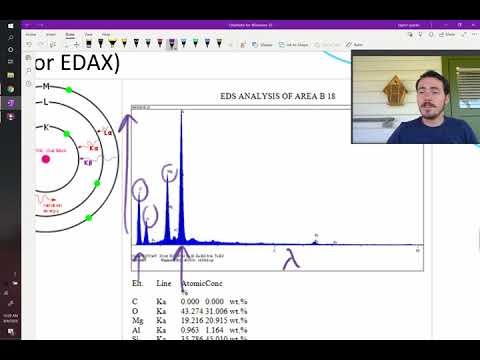
So, here’s the deal: EDX allows us to analyze materials by detecting the X-rays emitted when they are bombarded with electrons. Basically, when high-energy electrons hit a sample, they knock out inner-shell electrons from atoms in the material. This creates vacancies, and to fill them, other electrons drop down from higher energy levels, emitting X-ray photons in the process. These are what we measure and analyze.
You might wonder why this matters. Well, EDX has a bunch of impacts on scientific research:
- Materials Characterization: It helps identify elements and their concentrations within samples. Imagine studying ancient artifacts; EDX can reveal their elemental composition and provide clues about their origins.
- Quality Control: In manufacturing, researchers can ensure products meet specific elemental requirements. For example, in semiconductor production, even tiny impurities can lead to massive failures.
- Environmental Science: EDX aids in analyzing pollutants in soil or water samples. By understanding what elements are present, scientists can track sources of contamination or assess remediation strategies.
One cool thing about EDX is its ability to work alongside electron microscopy techniques like Scanning Electron Microscopy (SEM). This combo gives you not just elemental analysis but also information about surface morphology and microstructure. It’s like seeing both the big picture and all the tiny details at once!
But hold up—nothing is perfect! There are challenges too. For one, EDX has limitations on resolution; it can’t always detect light elements like lithium or beryllium well due to low X-ray emission intensity. Also, samples need to be thin enough for penetration by electrons which can be tricky with certain materials.
As for practical implications? Think about all those high-tech fields—nanotechnology being one of them! Researchers are using EDX not just for routine checks but also pushing boundaries in innovation and design.
In sum, evaluating EDX opens up avenues for deeper scientific inquiry while providing essential data that fuels innovation across various fields—from archaeology to environmental science and beyond! So yeah, despite its limitations, it plays a pivotal role that keeps moving science forward—keeping us eager to learn more every single day!
Exploring the Applications of Energy Dispersive Spectroscopy in Materials Science
Energy Dispersive Spectroscopy, or EDS for short, is like having a superpower in the world of materials science. It’s one of those tools that lets scientists really dive into the tiny world of atoms and molecules to figure out what materials are made of. But you might be asking yourself, “What does that even mean?” Well, let me break it down for you.
Okay, picture this: you’ve got a piece of metal and you wanna know what elements it contains. With EDS, you can zap it with some X-rays and—boom!—it gives off energy in response. The cool part? Each element has its own unique “fingerprint” in terms of energy levels. So, by analyzing these emissions, scientists can identify which elements are hanging out in that metal.
Applications in Materials Science are pretty vast:
Now, think about when I was a kid and I built this epic Lego castle. I thought I had all the right pieces until I realized some were from other sets—total bummer! That’s kind of how material scientists feel when they discover inconsistencies in their samples through EDS. They’re like Lego architects fine-tuning their creations based on exactly what they need.
Another amazing aspect is its speed and efficiency. Traditional methods of analysis often take time and require complex sample preparations. With EDS, you can get results pretty quickly right after imaging your specimen with an electron microscope. It cuts down on waiting time significantly.
Yet, while it sounds perfect on paper (or screen!), there are some limitations too. For instance, it struggles with very light elements like hydrogen and lithium because they don’t produce strong signals when zapped with X-rays.
Overall, Energy Dispersive Spectroscopy has carved out an important niche within materials science by offering insight into composition that just wasn’t possible before. So next time you hear about this tech being used in research labs or industries developing new materials—you’ll know it’s a game changer!
Understanding the EDS Test: Applications and Significance in Scientific Research
So, let’s chat about the EDS test, which stands for Energy Dispersive Spectrometry. This technique is like a superhero in the world of scientific research. It helps scientists figure out what elements are present in a sample by analyzing the energy of X-rays emitted when you hit it with electrons. Pretty neat, right?
The basic principle is simple: when electrons bombard a sample, they knock out inner-shell electrons from the atoms in that sample. This creates a vacancy, and an electron from a higher energy level jumps down to fill that vacancy. When this happens, energy is released in the form of X-rays. The cool part? Each element emits X-rays at specific energies, kind of like how every musician has their own sound.
When it comes to applications, EDS can shine bright in various fields:
- Material Science: Imagine you’re creating new materials—EDS can help you understand their elemental composition. Want to know why your metal alloy isn’t performing as expected? Run some tests!
- Archaeology: Studying ancient artifacts? EDS can unveil what they’re made of! It helps determine whether something’s made from local materials or if it might have traveled from far away.
- Biology: In cell biology research, for instance, you can use EDS to see what minerals are present in biological tissues.
This technique has both advantages and some limitations. On one hand, it’s relatively quick and doesn’t require too much sample preparation. Plus, you get instant feedback on elemental compositions! But then again, its resolution isn’t super high—meaning it might not pinpoint very small concentrations well.
A personal story? Let me tell you—once while helping a friend analyze soil samples for her agricultural project, we discovered traces of heavy metals using EDS. At first glance, everything seemed fine with her crops. But this discovery led us to dig deeper—literally—and rethink our planting strategies!
The significance of EDS in scientific innovation lies beyond just identifying materials; it helps researchers improve products and processes based on their findings! Whether developing new electronics or improving drug delivery systems in pharmaceuticals, EDS is there shining a light on what makes things tick at the atomic level.
This tech continues evolving as scientists come up with better detectors and software for analyzing data effectively. As we push boundaries looking for sustainable solutions or groundbreaking materials, techniques like EDS will be at the forefront.
You see? Understanding the EDS test opens up pathways for discovery across many scientific fields. So next time you hear about Energy Dispersive Spectrometry, remember that it’s not just about numbers; it’s about revealing stories hidden within materials that could help shape our future!
Energy Dispersive Spectrometry (EDS) might sound like one of those fancy tools scientists whip out in a lab, right? But honestly, it’s way cooler than it sounds. Imagine being able to peer into the molecular world and find out what stuff is made of, just by looking at how it interacts with energy. That’s kinda what EDS does.
I remember this time in my chemistry class when we were studying materials. My buddy Max was convinced that his favorite hoodie was made of some super rare fabric. We ended up using a simple spectrometer just to check it out. Sure, we didn’t have the high-tech EDS on hand, but I’ll never forget the moment we found out it was basically a mix of cotton and polyester—nothing special! But here’s the thing: in bigger scientific contexts, EDS pulls off some serious magic.
What’s really neat about EDS is its job in analyzing materials at the atomic level. It helps scientists identify elements by measuring the X-rays emitted when a sample is bombarded with electrons. So, if you’re looking at a rock from Mars or a tiny speck of dust from your backyard, EDS tells you exactly what elements make it up. How cool is that? You could literally hold history or the secrets of another planet in your hands!
In terms of innovation, think about all those breakthroughs happening because scientists can identify compounds quickly and accurately. From chemistry to materials science and even biology—EDS has become an invaluable tool for so many fields. When researchers are developing new drugs or optimizing energy materials like solar cells or batteries, having precise elemental data can make all the difference.
But it’s not just about science; it’s also about collaboration. Scientists around the world share their findings based on EDS analysis, leading to advancements no one person could achieve alone. You know that feeling when you work on a group project? Everyone brings different strengths to the table; that’s kind of how it works here too.
So yeah, while Energy Dispersive Spectrometry might seem like just another piece of lab equipment, its role in driving scientific innovation is pretty astounding! It reminds us that sometimes these complex-sounding things are doing really fundamental work behind the scenes—to help us understand our world better, one element at a time!