You know, the other day I was trying to explain to my kid why the sky is blue. They were all about rainbows and how cool they look, which got me thinking about light. Light is pretty magical, right?
So, here’s the deal: every time you see a rainbow or those funky colors in soap bubbles, that’s light doing its thing. It’s all about wavelengths and how different materials react to them. This is where ultraviolet (UV) and visible spectroscopy strut their stuff.
Basically, these techniques help scientists figure out what stuff is made of just by studying how it interacts with light. Can you believe that? It’s like using a superpower to peek into the molecular world! From detecting pollutants in water to figuring out if your favorite wine is legit—it’s everywhere!
So let’s chat about some of these wild applications. It’s not just for lab coats and science nerds; it’s changing how we see the world around us, literally!
Exploring Real-World Applications of UV-Visible Spectroscopy in Scientific Research
Sure, let’s talk about **UV-Visible spectroscopy** and how it plays a big role in scientific research. You know, when you hear **”spectroscopy,”** it sounds all technical and stuff, but it’s just a fancy way of saying scientists are figuring out what materials are made of by looking at how they interact with light, especially in the ultraviolet (UV) and visible range.
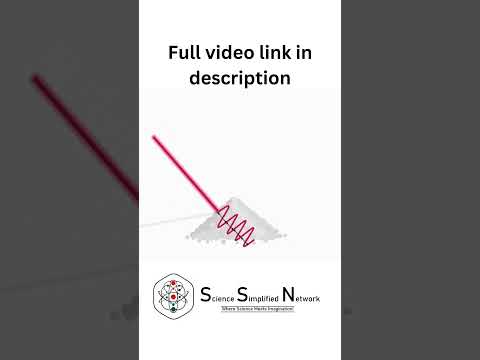
So basically, UV-Visible spectroscopy involves shining light through a sample and measuring how much of that light gets absorbed. Each substance absorbs different wavelengths of light, creating a sort of fingerprint that helps identify it. Pretty cool, right?
This technique is super handy in various fields. Let’s break down some real-world applications:
- Chemistry: In the lab, researchers use UV-Vis to monitor chemical reactions. For instance, if there’s a color change during a reaction, scientists can track that shift to understand how things are changing over time.
- Environmental Science: Scientists often analyze water quality using UV-Visible spectroscopy. They check for pollutants like heavy metals or organic compounds by looking at how these substances absorb light differently than clean water.
- Pharmaceuticals: When developing drugs, it’s crucial to determine concentration levels accurately. By using this method, pharmaceutical companies can quantify active ingredients in their products without fancy equipment or overly complicated procedures.
- Brewery Science: Believe it or not, even beer makers rely on UV-Vis! They check for colors and clarity in their brews to maintain quality control—a true science meets art scenario!
Now here’s something personal: I remember conducting an experiment in college where we measured the concentration of food dyes in drinks using this method. The colors were vibrant—bright yellows and deep reds—and as we watched the results come in from our UV-Vis spectrometer, there was something so exciting about seeing numbers that told us exactly what was happening with those colors.
So you see? This technique isn’t just lab-bound; it’s used everywhere from ensuring clean drinking water to crafting your favorite beverages! It kind of connects science to everyday life without being all stuffy or complicated.
In summary, UV-Visible spectroscopy is more than just a tool; it’s part of many important processes across various fields. By absorbing specific wavelengths of light, substances give us insights into their nature and behavior—helping scientists keep pushing boundaries in research every day!
Exploring the Applications of UV-Visible Spectroscopy in Nanotechnology: Insights and Innovations in the Field of Science
UV-visible spectroscopy is like that trusty sidekick in the world of science. It helps us understand materials on a deeper level, especially when we’re talking about tiny things like nanoparticles. So, what’s the deal with UV-Visible Spectroscopy in nanotechnology? Let’s break it down.
You know how light can be broken into different colors? Well, UV-visible spectroscopy does just that. It shines light on a sample and measures how much of that light gets absorbed. This absorption can tell us a lot about the material’s properties, especially at the nanoscale.
First off, one of the major applications is in characterizing nanoparticles. When scientists create new nanomaterials—say, gold nanoparticles—they need to check their size and shape. The absorption peaks at specific wavelengths can provide clues. For instance, if those tiny gold particles are around 15 nm in size, they absorb light differently than if they were 50 nm! Pretty cool, right? This helps researchers fine-tune their creations.
Another interesting application is monitoring chemical reactions. Imagine you’re cooking and you want to see how your dish changes as it heats up. In the same way, scientists use UV-Visible spectroscopy to observe how reactants turn into products in real time at the nanoscale level. It’s like watching a live show instead of waiting for the final product!
Plus, there’s this whole world of biosensing where UV-visible spectroscopy plays a key role too. Think about detecting pathogens or toxins in food or water using tiny nanoparticles that change color when they bind to specific molecules. This method makes it super easy to spot contaminants quickly and accurately.
And let’s not forget about solar cells. Researchers are using nanotechnology to create more efficient solar panels by tweaking materials at the nanoscale level. By employing UV-visible spectroscopy, they can analyze how well these new materials absorb sunlight and convert it into energy.
But here’s something that many might overlook: there are challenges too! One problem could be interference from other substances present in a sample that might mess with readings. Scientists have to be clever about isolating their samples so they can get reliable data.
In short, the applications of UV-visible spectroscopy in nanotechnology are vast and varied—from characterizing new materials to monitoring real-time chemical reactions or improving energy efficiency in solar cells. It’s like having a high-tech magnifying glass that reveals details about our world on an incredibly small scale!
So next time you hear someone mention UV-Visible Spectroscopy or nanoparticles, you’ll know it’s way more interesting than just some fancy science jargon—it’s key to innovations that could change our lives!
Exploring the Applications of UV-Visible Spectroscopy in Forensic Science
Alright, let’s chat about UV-Visible spectroscopy and how it fits into the world of forensic science. You might be thinking, “What even is that?” Well, basically, it’s a technique that uses light in the ultraviolet and visible range of the electromagnetic spectrum to analyze substances. It’s super handy in forensic science!
So, here’s the deal: UV-Visible spectroscopy helps to identify and quantify different materials by measuring how much light a substance absorbs at specific wavelengths. When a substance absorbs light, it can tell us all sorts of things about what it’s made of.
Applications in Forensic Science:
- Drug Analysis: One of the biggies. Forensic scientists can determine the identity and concentration of drugs in biological samples—like blood or urine—by examining their absorption spectra. This means they can detect what drugs are present in someone’s system and at what levels.
- Toxicology: Persistence is key here! If someone has been poisoned or overdosed, this method can help analyze potential toxins found in body fluids. Different substances absorb light differently; so analyzing these patterns can lead to critical findings.
- Ink Analysis: In cases involving forged documents or graffiti, scientists use UV-Visible spectroscopy to analyze ink components. Different ink types have unique absorption characteristics which can reveal their origin.
- Hair and Fiber Analysis: When looking at trace evidence from a crime scene, like hair or clothing fibers, this technique can differentiate between different materials based on their spectral properties. Subtle variations in absorption can provide clues about where they came from.
About a year ago, I heard a story from a forensic analyst that really hit home for me. They were working on a case involving counterfeit money. By using UV-Visible spectroscopy, they discovered subtle differences in the ink composition that gave away that these bills weren’t quite right! It was one of those moments where you just realize how powerful science can be.
But hold on; it’s not just about identifying stuff. This technique also supports crime scene reconstruction. By examining substances left behind at crime scenes—like residues from explosives or paints—scientists get closer to piecing together what went down during an incident.
Despite its many strengths though, there are some challenges too! Not every material responds well to this kind of analysis since some might not absorb light effectively at all or could overlap with other substances’ spectra, making it tricky.
So yeah! That’s UV-Visible spectroscopy for you! It may seem pretty technical but when you break it down like this—it’s kind of like having a magnifying glass for certain substances under specific kinds of light. And that’s seriously cool if you ask me!
You know, spectroscopy might sound like a complicated term that belongs only in a science lab, but it’s actually pretty cool when you think about how it touches our lives. Ultraviolet (UV) and visible spectroscopy — it’s all about understanding light and how it interacts with matter. Picture this: when you’re at the beach, soaking up the sun (hopefully with sunscreen on!), UV rays are bouncing around, and believe it or not, scientists use similar light to explore everything from chemistry to biology.
I recall this one time I was helping my younger cousin with a science project on plants. We had to figure out why some grew faster than others. After doing some research, we learned that UV light can affect the growth of different plant species by influencing their pigment production. Just imagine standing in front of your plants, peering at them under UV light — it reveals details you can’t see otherwise! It’s like seeing a whole new world right in your backyard.
Let’s get into some practical stuff. So, you might be wondering where else these techniques come into play? For starters, they’re used in environmental monitoring. Seriously! When scientists want to check water quality or air pollution levels, they shine light through samples and look for specific signals absorbed by different substances. It’s like having a unique code for each chemical compound that helps identify what’s lurking in our environment.
But wait! There’s more! UV and visible spectroscopy are also big players in the field of medicine. Think about how important early diagnosis is for diseases — using these techniques can help doctors analyze tissue samples or monitor drug interactions through their absorption characteristics. It helps them make sense of complex biological processes without needing highly invasive methods!
And if you ever thought about food safety (let’s face it, who hasn’t worried about what they’re eating?), this technology has got your back too! It can check for contaminants or spoilage in food products just by analyzing the way they interact with light.
So yeah, whether it’s figuring out how to grow healthier plants or making sure our food and air are safe to breathe, UV and visible spectroscopy aren’t just nerdy lab activities; they’re shaping real-world applications that impact all of us every day. It’s pretty mind-blowing when you realize how much we rely on understanding these invisible waves of light—like having a superpower we didn’t even know we had!