Did you know that the colors we see are like a secret code from the universe? Seriously! You ever had one of those moments when you’re staring at a rainbow, and just think, “Wow, this is amazing”?
Well, that’s not just beauty; there’s some wild science behind it. It’s all about light and how it interacts with our eyes. Like, you might be thinking, “Okay, but what does that even mean for me?”
You’re about to find out why understanding visible spectra is cooler than you think. Whether it’s art, nature, or even technology—colors are everywhere and they matter more than most people realize. So let’s unpack this colorful mystery together!
Understanding the Significance of the Visible Spectrum in Human Vision: Insights from Science
Alright, so let’s chat about something we see every day but might not really think much about—the visible spectrum. You know, those colors that light up our world? It’s pretty wild when you start to break it down.
The visible spectrum is basically the part of the electromagnetic spectrum that human eyes can detect. It ranges from red, with a wavelength of about 620-750 nanometers, all the way to violet at around 380-450 nanometers. That’s a lot of colors packed into a tiny slice of the electromagnetic pie!
Now, you might ask: why do we even care about this stuff? Well, the significance of the visible spectrum in human vision is huge. Our eyes have special cells called cones that are sensitive to these wavelengths. They’re like little color detectors! There are three types of cones in our retinas, each tuned to different parts of the visible spectrum—red, green, and blue. Together, they work their magic to let us see millions of shades and hues. Isn’t that neat?
But here’s where it gets really interesting: color perception isn’t just about physics; it’s also about how our brains process that information. When light hits an object and bounces back into our eyes, the cones send signals to our brain that interprets everything as color! Think about your favorite sunset or a blooming flower; all those vibrant colors come from how light interacts with those objects.
Now let’s touch on something emotional for a sec. I remember standing on a beach at sunset once—it was like Mother Nature was throwing an art show right before my eyes. The orange and pink blended so beautifully together; I felt this rush of joy just soaking it all in. That feeling? That’s what our ability to perceive color does—it connects us to beauty and emotions in ways words can’t even capture.
Another key point is how different creatures see light differently than we do. For example, some birds can see ultraviolet light! Yeah! So what seems like just blue or purple to us could be a whole rainbow for them! This highlights how diverse vision can be among living beings.
Lastly, consider this: our understanding of the visible spectrum has practical applications too! Artists use knowledge about color mixing based on this science while designers think a lot about how colors influence emotions and choices.
So next time you’re admiring a colorful scene or feeling inspired by art or nature, remember there’s so much more behind what you’re seeing—thanks to that amazing visible spectrum lighting up your life!
Understanding the Purpose of Visible Spectroscopy in Scientific Research and Applications
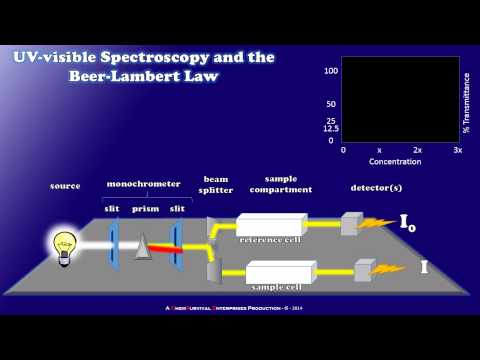
Visible spectroscopy is like having a superpower that lets scientists peek into the color spectrum of light to learn more about different substances. You know, imagine if you had a magical pair of glasses that could tell you what something is made of just by looking at its color! Well, that’s kind of what visible spectroscopy does.
Basically, it measures how light interacts with matter. Light travels in waves, and when it hits an object, some wavelengths get absorbed while others bounce back. This absorption creates a pattern that scientists can measure and analyze. Each substance has its own unique absorption pattern, kind of like a fingerprint. That’s how scientists identify materials and understand their properties—pretty cool, right?
In scientific research, this technique is super useful for several reasons:
- Identifying substances: If you’ve ever tried to figure out what makes your favorite fruit so colorful, visible spectroscopy can help by showing which pigments are present.
- Monitoring reactions: During a chemical reaction, visible spectroscopy helps track changes in concentration by observing color changes over time.
- Quality control: In industries like food and pharmaceuticals, it ensures that products meet specific standards by analyzing their composition.
Here’s a small story: A friend once brought home some grapes from the market—really vibrant purple ones. She was curious why they were so colorful compared to the green ones. So I pulled out my trusty spectrometer (okay, not really mine but let’s pretend) and told her about anthocyanins—the pigments giving those grapes their rich color! That’s where visible spectroscopy shines; it helps us understand why things look the way they do.
Now let’s talk about applications beyond just fun facts! In environmental science, researchers use this technique to detect pollutants in water or air by identifying specific compounds based on their light absorption patterns. It’s like having an advanced detective tool for monitoring our planet’s health.
Another exciting area is art conservation. Experts analyze paintings using visible spectroscopy to determine the types of pigments used historically. This helps in restoring artworks without damaging them—like bringing new life to old treasures!
So when you think about it, visible spectroscopy isn’t just some academic fluke; it’s woven into many aspects of science and practicality. It allows scientists to explore everything from the tiniest molecules all the way up to global environmental issues—all by just peeking at the colors involved! What a fascinating world we live in!
Four Key Facts About the Visible Spectrum of Light: Insights for Science Enthusiasts
Sure! Let’s talk about the visible spectrum of light. You know, when you look at a rainbow or just see colors around you? It’s all about that beautiful range of light we can actually see. Here are some key facts that’ll help you appreciate it even more.
The Basics of the Visible Spectrum
The visible spectrum is a part of the electromagnetic spectrum that our eyes can detect. It ranges from about **380 nm to 750 nm** in wavelength. That’s how long the waves are, and, honestly, it’s pretty wild to think about how much we can’t see outside of this small range! For instance, infrared light is longer and ultraviolet light is shorter than what we see. So next time you catch a glimpse of color, remember—you’re witnessing just a tiny piece of a much larger picture!
Colors and Wavelengths
Alright, so each color corresponds to a specific wavelength. If you take red, for example, it’s around **620-750 nm**. Blue hangs out in the **450-495 nm** range. Pretty cool, huh? The way our eyes perceive these wavelengths is all thanks to special cells called cones in our retinas. There are three types of cones—each one sensitive to different parts of the spectrum. And that’s why we can see so many different colors when various wavelengths hit those cones!
Mixing Light
Here’s another fun fact: mixing colors with light is totally different from mixing paint colors! When you mix red and green light, for instance, you get yellow! This phenomenon happens because light works on an **additive color model**. Unlike painting where mixing pigments absorbs certain wavelengths (hence making darker shades), in lighting, you’re adding wavelengths together to create new colors.
The Importance of Visible Light
Finally, let’s chat about why this matters so much. The visible spectrum isn’t just for seeing pretty things; it plays an essential role in things like photosynthesis too! Plants absorb sunlight—which contains various wavelengths—and use that energy to convert carbon dioxide and water into glucose and oxygen. Seriously interesting stuff! Also, advancements in technology like LEDs depend heavily on our understanding of how visible light works.
So there you go—those are some key insights into the world of visible light! From its basic characteristics to its incredible impact on life and technology, it really shows just how integral this small slice of the electromagnetic spectrum is in our everyday lives!
Alright, let’s chat about visible spectra. You know, that colorful rainbow you see when light hits a prism? It’s more than just pretty colors; there’s some cool science behind it.
Visible light is actually just a tiny slice of the whole electromagnetic spectrum. Think of it as the speck of flavor in a giant buffet. We’ve got radio waves, microwaves, infrared radiation, ultraviolet light, X-rays… all sorts of wavelengths that are invisible to us. But the ones we can see range from violet to red. When white light passes through something like a prism, it bends and spreads out into these colors because each color has its own wavelength and speed.
So why should you care? Well, understanding visible spectra helps us in tons of ways! For example, plant biology relies on it; plants use specific wavelengths for photosynthesis. They absorb red and blue light but reflect green—that’s why they look green to our eyes! Crazy how something we take for granted is vital for life on Earth.
And then there’s technology! Ever used a smartphone? The screens work by controlling which wavelengths of light they emit to create the images we see. Plus, scientists analyze light from stars to tell what they’re made of or even how far away they are. Kinda mind-blowing when you think about it!
I remember this one time in school during a science fair project—we set up prisms and watched the colors shoot out like magic. The awe on my classmates’ faces was priceless! That moment made me realize how much we often overlook simple phenomena around us in nature.
In essence, visible spectra tie into so many aspects of our lives—nature, technology, art… you name it. So next time you catch sight of a rainbow or the sunset stirring with colors, just remember there’s some serious science swirling around there too.