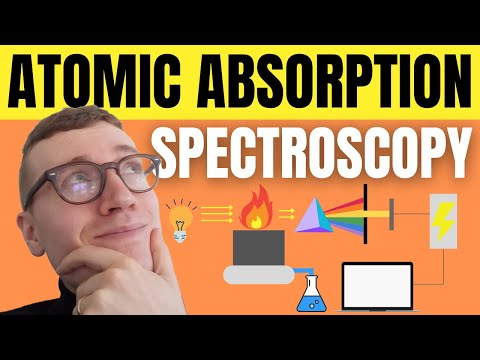
Alright, picture this: you’re at a science fair, right? You stroll by a booth where some kid is trying to explain how a rainbow comes from a glass of water. Cute, huh? But what if I told you that similar colorful magic happens when scientists look at atoms?
Yeah, seriously! Those little guys are way more interesting than you’d think. So, let’s chat about atomic absorption spectra and how they help us figure out what elements are hanging around in our samples.
You know when you get all excited to learn something new? That’s the vibe here. We’re diving into elemental analysis techniques—it’s like detective work for chemists! They use these colorful spectra to identify elements like iron or copper in different materials. It’s all about picking out the telltale signs of what’s there.
So grab your imaginary lab coat and let’s explore this colorful world of atoms together!
Understanding Elemental Analysis: A Comprehensive Guide to Atomic Absorption Spectroscopy in Scientific Research
So, you’re curious about **Atomic Absorption Spectroscopy**, huh? That’s a pretty cool subject! Let’s break it down, shall we?
Elemental analysis is essential in fields like environmental science, food safety, and pharmaceuticals. You want to know what elements are present in a sample and how much of each one there is. This is where atomic absorption spectroscopy comes into play. It helps us identify and quantify various metals in different materials.
Now, the process is based on a simple principle: atoms absorb light at specific wavelengths. Basically, when you shine light through a sample containing metal ions, some of that light gets absorbed. Each element has its unique “signature” wavelengths where it absorbs light.
How does this work? Here’s the scoop:
- The first step involves preparing your sample. It can be anything from drinking water to soil or even blood.
- You then convert that sample into an aerosol using a nebulizer, which turns your liquid into tiny droplets.
- The aerosol enters the flame or furnace where the temperature is super high—like really hot—enough to turn those tiny droplets into atoms.
- You then shine a beam of light through these atoms.
- Finally, a detector measures how much light gets absorbed at specific wavelengths corresponding to different metals.
Pretty neat, right?
Let’s say you have a water sample and want to check for lead content. After preparing it and running it through the AAS machine, you’ll see how much lead was absorbed based on its unique wavelength signature. This lets scientists determine if your drinking water is safe!
Why is this important? Well, think about it: measuring metal concentrations can help monitor pollution levels or ensure food safety. For example, testing fish for mercury levels can tell us if they’re safe to eat!
Then there’s precision! AAS provides highly accurate readings for many elements at very low concentrations. But remember; it’s not just about throwing everything into the machine and getting results out of thin air. You need proper calibration with known standards.
And here’s something interesting: sometimes samples can be complex mixtures. You might have multiple metals competing for absorption at those wavelengths! In such cases, scientists use techniques like background correction, allowing them to get cleaner data by making adjustments for interference.
Of course, AAS isn’t perfect—it has limitations too. For instance, while it’s superb for detecting metals like lead or cadmium, it doesn’t work well with non-metals like nitrogen or sulfur.
So there you have it! Atomic Absorption Spectroscopy in elemental analysis isn’t just some dry lab technique—it plays a huge role in keeping our world safe and healthy by tracking harmful substances across various sectors in science and everyday life! Cool stuff indeed!
Understanding Atomic Absorption Spectroscopy Techniques in Analytical Chemistry
So, let’s talk about **Atomic Absorption Spectroscopy** (AAS). If you’re scratching your head a bit, don’t worry! It’s one of those techniques that sound pretty fancy but can be broken down into simpler bits.
Basically, AAS is a method used in analytical chemistry to determine the concentration of elements in various samples. You know how you can sometimes see different colors when light passes through a prism? Well, this technique plays with light and atoms in a cool way!
The whole thing starts with the sample you want to analyze. This sample could be anything from water to soil or even blood. After it’s prepared, it’s usually atomized. What does that mean? Well, we want to turn it into tiny particles, specifically atoms. This is done using a flame or a furnace—it’s like giving the sample a little heat treatment.
Once we have these free atoms floating around, it’s time for the fun part: introducing light. More specifically, we shine light through the sample using a lamp that emits specific wavelengths (each element has its unique set of wavelengths). Think of this as aiming a flashlight at the dark to see what’s there!
Now here’s where things get interesting: when these atoms encounter light at their specific wavelengths, they absorb some of that light. The amount of light absorbed tells us how much of each element is present in our sample. The more absorption you see, the more atoms are there—pretty neat, huh?
To make sense of what we’ve just observed, we use something called a spectrometer. This device helps measure how much light was absorbed and creates what’s known as an **absorption spectrum**—that’s like our fingerprint for different elements!
- Elemental Analysis: AAS is widely used for analyzing metals in various samples.
- Detection Limits: It can detect very low concentrations—think parts per million!
- Specificity: It only focuses on one element at a time; so if you’re looking for lead in water, that’s all it’ll focus on.
Here’s an emotional nugget—imagine you’re testing water from your local river because you love fishing there. You find out that there’s too much mercury present after running an AAS test! That information is crucial not just for your health but also for preserving wildlife.
In terms of limitations, it’s not all sunshine and rainbows! AAS requires careful handling because interferences from other substances can mess up results. Also, since it analyzes one element at a time, getting data on multiple elements takes longer.
In short, Atomic Absorption Spectroscopy is like using laser-focused detective work to find out what makes up different substances at an atomic level—a powerful tool in chemistry making sense of the world around us!
Exploring the Application of Atomic Absorption Spectroscopy in Element Identification within Analytical Chemistry
Okay, let’s have a chat about Atomic Absorption Spectroscopy (AAS) and how it’s used in analytical chemistry to identify elements. It’s a cool technique, really! So, what’s the deal?
AAS is basically a method that helps us measure how much of a specific metal is in a sample. You’ve got your samples—like water, soil, or even blood— and you want to check if they contain certain elements, right? The way it works is pretty nifty.
First off, when you vaporize your sample, it turns into tiny atoms. These atoms absorb light at specific wavelengths. Each element has its own unique pattern when it comes to absorbing light—kinda like a fingerprint! By measuring how much light is absorbed, we can figure out how many of those atoms are in the sample.
How do we get there? Well, here are some main steps:
The beauty of AAS lies in its sensitivity. Seriously! You can detect elements in parts per million (ppm)! That means if there’s just a tiny bit of mercury in a water sample, AAS can find it.
Now, let’s talk about some real-life applications. One time I read about researchers using AAS to test for heavy metals in fish from contaminated rivers. They found elevated levels of cadmium and mercury that were harmful to both the fish and people eating them! It kind of drives home how vital this technique is for environmental monitoring.
It ain’t perfect though; sometimes there can be interference from other substances in samples which could skew results. But scientists are constantly developing ways to refine these techniques and minimize such issues.
So yeah! Atomic Absorption Spectroscopy plays an incredibly important role by helping us identify elements effectively across various fields—from environmental science to medicine and even food safety. It’s like having super-sight into our world’s tiniest components! Isn’t science just amazing?
Have you ever marveled at how scientists can tell what an object is made of just by shining light on it? Sounds a bit like magic, huh? Well, that’s where atomic absorption spectra come into play in elemental analysis. It’s a fascinating topic that brings together physics, chemistry, and some serious detective work.
So here’s the deal: every element has its own unique fingerprint when it comes to how it absorbs light. Just imagine flipping through a book of colors, and each element shows off its signature hues when you shine a light on it. That’s essentially what atomic absorption spectroscopy does. When you heat a sample to high temperatures—like super hot—you get these atoms all excited, and then when you hit them with light from a specific wavelength source, some of that light gets absorbed. The key here is that only certain wavelengths—or colors—of light are absorbed by different elements. It’s almost like an elemental concert where each musician plays their own tune!
Let me throw in a little anecdote here. A few years back, I went to this local science fair where students showcased their projects. One kid had used atomic absorption spectroscopy to analyze the minerals in soil samples from different parks around town. I remember watching him explain how he could detect lead or other heavy metals just by looking at the light patterns on his screen! His excitement was contagious—it made me feel like I was peeking into a secret world where even tiny bits of metal could tell stories about pollution or health risks.
Now, back to the science part! This technique is super valuable for all kinds of things—from checking soil quality to ensuring our foods aren’t loaded with harmful elements. And it’s not just for scientists in labs; industries use it too! Think about how crucial it is to know what’s in our water supply or even in the medicines we take.
But there’s more than just cool colors and analysis going on behind the scenes! You’ve got to think about things like calibration curves and sensitivity limits—and those can get pretty technical if you’re not careful! Calibration involves running tests with known concentrations so you can create a reference point for your results; it’s kind of like setting up your GPS before heading out on a trip.
All in all, atomic absorption spectra provide this incredible window into understanding what materials are made up of. And that knowledge? It helps us make better choices about our environment and health—a big deal if you ask me! So next time you’re out exploring or even just enjoying nature, think about all those tiny atoms absorbing light around you, quietly holding their secrets waiting for someone curious enough to take a closer look—and maybe help us learn something new along the way!