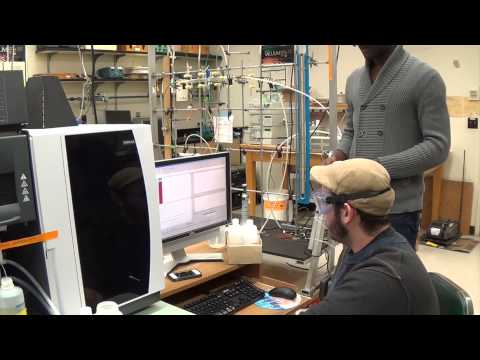
You know that feeling when you’re trying to find a needle in a haystack? Imagine doing that with tiny bits of metal in a solution! Sounds impossible, right?
Well, enter Flame Atomic Absorption Spectroscopy (FAAS) like a superhero into the science scene. It’s this cool technique that helps scientists figure out what elements are hanging around in a sample. Pretty neat, huh?
So picture this: you’re at a barbecue, and someone’s got this fancy gadget that can tell if your steak has too much iron or not enough. Okay, maybe not that dramatic, but it’s similar. FAAS is all about detecting those elements while keeping things chill in the lab.
In modern science, it’s a big deal for everything—from testing water quality to checking metals in food. Who knew flames could be so useful? Stick around; it gets even cooler from here!
Historical Overview of Atomic Absorption Spectroscopy: Invention and Evolution in Analytical Chemistry
Atomic Absorption Spectroscopy, or AAS for short, has quite a fascinating history. It’s all about how we analyze the presence of metals and some nonmetals in different samples. Let’s travel back in time and see how this technique came to life!
In the early 20th century, scientists were starting to figure out how light interacts with atoms. In 1920, a significant breakthrough happened when *Walter Nernst* introduced the concept of absorption spectroscopy. His work laid the groundwork for understanding how atoms absorb light at specific wavelengths, which would become crucial for AAS later.
Fast forward to the 1950s. That’s when *Alan Walsh* took Nernst’s ideas and ran with them! He developed the first true atomic absorption spectrometer, using flames as a source of energy. This was revolutionary because it allowed chemists to detect elements in tiny amounts—think parts per million! Imagine being able to find a drop of ink in an Olympic-sized swimming pool!
But what exactly is happening during atomic absorption? Basically, you vaporize your sample in a flame or graphite furnace, then shine light through it. If there are metal atoms present, they’ll soak up specific wavelengths of that light. The amount of light absorbed tells you how much of that metal is in your sample—pretty neat, huh?
Over time, AAS has evolved significantly! The introduction of flame atomic absorption spectroscopy (FAAS), which uses flames as the atomizing source, made things faster and more efficient. The technology went a step further with advancements like “flame nebulization,” where samples are turned into fine droplets for better analysis.
As technology kept advancing into the ‘80s and ‘90s—hello, lasers!—scientists started using techniques like *graphite furnace atomic absorption spectroscopy (GFAAS)* for even more sensitive measurements without needing high temperatures.
And now? With modern iterations combining software and hardware advances, AAS can analyze samples from environmental studies to food safety testing! Scientists around the world rely on it because it’s reliable and pretty straightforward compared to other techniques like mass spectrometry.
To sum it up:
- The groundwork began in the early 1900s with Nernst’s ideas on absorption.
- Alan Walsh brought it all together with his spectrometer in the ’50s.
- Flame atomic absorption became popular due to its efficiency.
- The technology continues evolving with new techniques and sensitive instruments.
So next time you see a chemist working away at their lab bench with their gadgets and gizmos measuring metals like they’re playing detective—you’ll know they’ve got history on their side! What a journey it’s been for atomic absorption spectroscopy!
Exploring the Most Widely Used Flame in Atomic Absorption Spectroscopy: A Comprehensive Guide
Atomic Absorption Spectroscopy (AAS) is a pretty neat technique that helps us measure specific elements in a sample. One of the most important aspects of this process is the **flame** used to atomize the sample, which is where things get interesting. So, let’s break it down!
First off, what’s a flame doing in all of this? Well, when you introduce a sample into a flame, it gets super hot—like, hot enough to turn the solid or liquid into a gas made up of individual atoms. These free atoms can then absorb light at specific wavelengths that correspond to them. And that’s how we can figure out what elements are present in your sample.
Now, you might be wondering what type of flames are used. Generally speaking, there are three main types:
- Air-Acetylene Flame: This is the most widely used flame in AAS. It burns a mixture of air and acetylene gas, reaching temperatures around 2,200 °C. It’s great for detecting many metals like lead and copper.
- Nitrous Oxide-Acetylene Flame: This one burns nitrous oxide and acetylene together, hitting even higher temperatures—about 3,000 °C! It’s awesome for detecting elements that require more energy to atomize.
- Hydrogen-Air Flame: Less common but still useful in some cases! This flame can be good for specific analyses but not as versatile as the first two.
So why do we mostly stick with air-acetylene flames? Well, they provide a good balance between efficiency and temperature for most applications. When I was in uni doing some lab work one summer, I remember getting my hands on an AAS machine with an air-acetylene setup. Honestly? Watching those flames dance while analyzing samples was almost mesmerizing! And seeing how different metals gave different absorption signals felt like uncovering little secrets.
Speaking about absorption—let’s touch on why this whole “absorption” thing matters. Each element has its own unique absorption “fingerprint” based on its atomic structure. So when light passes through the cloud of free-floating atoms from our sample in the flame, those atoms snag certain wavelengths while letting others pass through. The more concentrated an element is in your sample, the stronger the signal will be.
However—and here’s something crucial—the choice of flame affects sensitivity and precision too! An air-acetylene flame may give precise readings for certain elements but may struggle with others that require higher energy levels to fully atomize. That’s where our nitrous oxide-acetylene buddy comes back into play!
Remember though: just because one type of flame rules most applications doesn’t mean it’ll rule them all! Different labs might opt for different setups based on what they’re analyzing or their budget constraints.
In essence: choosing the right **flame** isn’t just about heat; it’s about finding that sweet spot that balances efficiency with your specific needs when conducting analysis.
So there you have it! From understanding why flames matter to appreciating their different types and uses—atomic absorption spectroscopy gets pretty exciting when you realize just how essential these fiery pals are in science today!
Limitations of Flame Atomic Absorption Spectroscopy for Aluminum Analysis in Serum: A Scientific Perspective
Flame Atomic Absorption Spectroscopy (FAAS) is a classic technique used to analyze metals in different samples, including serum. But when it comes to aluminum analysis, there are some important limitations you should know about.
First off, one of the main challenges is sensitivity. Aluminum levels in serum are typically pretty low. FAAS can struggle to detect such small quantities accurately because the instrument might not be sensitive enough. You see, aluminum levels in healthy humans usually hover around 1-10 µg/L, and that’s barely above the detection limit for many FAAS setups.
The next issue is related to interference. Serum is complex, containing a mix of proteins, enzymes, and other metal ions that can mess with the absorption readings. For instance, elements like calcium or magnesium might absorb similar wavelengths as aluminum. This can lead to inaccurate results—like trying to find a needle in a haystack when the haystack has its own set of needles!
Then there’s the matrix effects. In simple terms, this means that the composition of serum can affect how aluminum is absorbed. If the serum contains high levels of certain proteins or lipids, it could alter how much light gets absorbed by aluminum. It’s like trying to see through a tinted window—your view gets distorted.
Another point worth mentioning is calibration. For FAAS to work properly, you need good calibration standards. But creating accurate standards for aluminum in biological fluids like serum isn’t straightforward due to those pesky matrix effects we just talked about. If your calibration isn’t spot on, your results will be too!
Mistakes can also happen during sample preparation. If not done carefully—say you have contamination during collection or handling—that could throw everything off track! As they say in science: garbage in, garbage out.
Temperature control is another factor that shouldn’t be overlooked! The flame temperature needs to be just right for optimal performance; too hot or too cool can affect the absorption process itself. It’s all about finding that sweet spot where everything works harmoniously.
To wrap things up: while FAAS has its place in analyzing metals like aluminum, it’s crucial to remember these limitations when interpreting data from serum analyses. At times, using complementary techniques—like Inductively Coupled Plasma Mass Spectrometry (ICP-MS)—might provide better results for such tricky analyses.
So basically, understanding these limitations not only helps scientists make sense of their data but also aids healthcare professionals when making critical decisions based on those analyses!
Flame Atomic Absorption Spectroscopy, or FAAS for short, is one of those science terms that sounds a bit intimidating at first, but it’s actually super interesting and really useful in the modern world. Imagine you’re cooking dinner and you want to know how much iron is in that broccoli you’re about to serve up. That’s where FAAS comes into play!
Let me tell you a little story. A friend of mine was really into health foods and wanted to make sure the organic veggies she was buying were actually packed with nutrients. She was excited but also worried about contaminants; it’s hard to keep track of what goes into our food, right? So she found out about this method called FAAS that scientists use to check for different metals in food and other samples. It opened her eyes to the importance of testing!
So here’s how it works without getting too bogged down in the techy stuff: FAAS involves using flames—yes, flames!—to vaporize samples so that they can be analyzed for specific elements. When you introduce a sample into a flame, the atoms of those elements get excited and absorb light at particular wavelengths. Scientists then measure how much light is absorbed, which tells them how much of each element is present.
But why does this matter? Well, think about pollution or even checking water quality. Using FAAS helps ensure our environments—and our food—are safe for us to enjoy. The beauty of it lies in its simplicity combined with precision. You can analyze everything from soil samples to blood tests in just a few steps.
And there’s something reassuring about knowing there are tools like this out there working behind the scenes to keep us safe and informed. It connects science back to everyday life in such a tangible way, doesn’t it? It brings up reflections on trust—the trust we put into what we eat and drink.
FAAS may not be something you think about every day, but knowing that scientists are using dynamic techniques like this one makes me feel hopeful. It’s like having an invisible guardian ensuring we’re living our healthiest lives possible. So next time you’re munching on that delicious salad or sipping clean water, think about all those cool methods making everything safe for ya!