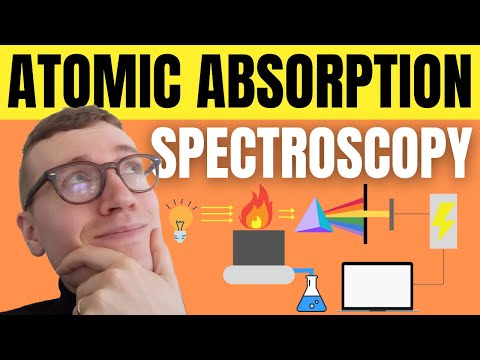
You ever notice how stars seem to twinkle? Well, it’s not just for show. It’s because of something called atomic spectroscopy. Sounds fancy, right?
Imagine this: you’re at a party, and there’s that one person who always knows the best stories about everyone. That’s a bit like atomic spectroscopy when it comes to elements. It reveals their secrets just by analyzing the light they emit.
Think of it as a cosmic game of peek-a-boo! When elements get excited—like after a little heat or light—they glow. And that glow tells us so much about what they’re made of. Pretty cool, huh?
So, let’s take a closer look at how we can unravel these elemental mysteries through light. Who knew chemistry could be so…vibrant?
Unveiling Light’s Secrets: The Insights of Spectra in Modern Science
So, light, huh? It’s not just what helps you see in the dark or makes your morning coffee look good. Light tells us a ton about the universe—especially through something called **spectra**. This is where it gets fun because we’re diving into atomic spectroscopy, which is like having X-ray vision for elements!
When light hits an atom, it can get absorbed or emitted. This interaction creates a unique signature for that element—kind of like a fingerprint but way cooler! Each element has its own specific set of wavelengths (that’s just fancy talk for colors) that it can absorb or emit when you shine light on it.
If you could imagine an artist with a palette of colors, each color represents a different wavelength emitted by an element. For example, when you look at a flame test using sodium chloride—yep, table salt—it gives off that vibrant yellow color. That’s sodium strutting its stuff!
Now, let’s talk about how this works practically. There’s this nifty tool called a **spectrometer**. It basically takes all those emitted or absorbed wavelengths and stretches them out so we can see them in all their colorful glory. You know those rainbow prisms? Well, they work on basically the same principle!
To break it down further, when light from an element is passed through the spectrometer:
- The incoming light is split into its component colors.
- This separation reveals distinct lines in the spectrum—these are called **atomic emission or absorption lines**.
- Each line corresponds to an energy transition in an atom.
Think of these lines as clues telling us exactly which elements are present in something—a star far away, your favorite beer, or even air pollution.
Remember that moment in school when you looked up at the stars and wondered what they were made of? Yeah, astronomers do this too! By analyzing the light from stars, they can figure out their chemical composition without ever leaving Earth.
But here’s another cool part: this technique isn’t just limited to astronomy. Scientists use atomic spectroscopy right here on our planet! In environmental science to check pollution levels and even in food safety to make sure there aren’t any nasty chemicals lurking around.
So yeah, every time you glance at your phone screen or follow a rainbow after rain, there’s some serious elemental magic happening behind the scenes with light and spectra unveiling secrets about the world around us. Isn’t that just mind-blowing?
Understanding Light Sources in Atomic Spectroscopy: Key Concepts and Applications in Analytical Chemistry
Sure, let’s get into it!
Atomic spectroscopy is like having a superpower to see and understand the elements that make up everything around us. This technique relies heavily on light sources to analyze materials. It’s all about how atoms absorb and emit light, which helps scientists identify what they’re dealing with.
So, first off, think about light as a way of revealing secrets. When you shine light on an atom, it can get excited—like when you see a shiny toy and just can’t help but want to play with it. The atom absorbs some of that energy. When it gets enough energy, it jumps to a higher state. But here’s the kicker: once it’s done playing around, it wants to come back down.
When atoms return to their original state, they release that energy in the form of light. This emitted light has specific colors (or wavelengths), kind of like how each element has its unique vibe. This is where atomic spectroscopy comes into play! It measures those wavelengths using some nifty equipment.
Now let’s talk about the different light sources used in atomic spectroscopy. There are a few primary types:
- Flame Sources: Imagine a campfire but scientific! In flame atomic absorption spectroscopy (FAAS), flames are used to vaporize samples and detect their elements.
- Graphite Furnace: This method uses a small furnace to heat samples until they turn into gas, making detection more sensitive.
- Plasma Sources: You know those cool sci-fi movies? Well, inductively coupled plasma (ICP) is kind of like that! It uses hot plasma to ionize atoms for detection.
- Laser Sources: Lasers are super precise and sharp. They can target specific elements very efficiently.
Each source has its own strengths and weaknesses; for instance, flame sources are great for quick measurements but might miss some trace elements that graphs or laser methods could catch.
But why should you care about this? Well, understanding these light sources isn’t just nerdy fun—it has real-world applications! From checking pollution levels in water to analyzing metals in food products or even forensics in crime scenes—atomic spectroscopy plays a huge role in keeping things safe and sound.
And then there’s the aspect of calibration—kind of like tuning your guitar before playing a song. Scientists must calibrate their instruments with known standards so they know exactly what they’re measuring when they spot those colorful wavelengths.
In summary, atomic spectroscopy harnesses the power of light from different sources to reveal the identity of elements in various samples. Whether it’s through flames or lasers, scientists have tools at their disposal that help uncover mysteries hidden beneath the surface. Just imagine all those tiny particles chatting away while we decode their messages with precision!
Unveiling Elemental Composition: The Role of Spectroscopy in Analyzing Material Components
So, let’s talk about spectroscopy. You see, it’s a pretty handy tool for figuring out what stuff is made of. Imagine you’re at a party, and there’s all sorts of people wearing different costumes. If you had some magical glasses that could help you identify each person’s outfit by the colors and patterns they wore, that would be kind of what spectroscopy does! It helps scientists identify the elemental composition of materials by examining how they interact with light.
What is Spectroscopy?
Spectroscopy involves studying the light emitted or absorbed by substances. Basically, when a material is heated or excited in some way, it gives off light in characteristic patterns—like fingerprints! Different elements will emit or absorb specific wavelengths of light, creating unique spectra. And just like that magic party trick, scientists can use these spectra to figure out which elements are present.
Different Types of Spectroscopy
There are various types of spectroscopy techniques out there—each with its own flavor:
- Atomic Absorption Spectroscopy (AAS): This method measures the amount of light absorbed by atoms in a sample after being vaporized. Think of it as checking how much color a particular substance soaks up.
- Atomic Emission Spectroscopy (AES): Here, atoms are excited and then emit light at specific wavelengths as they return to their normal state. It’s like fireworks: each element produces its own colored explosion!
- Mass Spectrometry: While not strictly spectroscopy in the traditional sense, mass spectrometry can analyze ions based on their mass-to-charge ratio. It’s super cool for identifying complex mixtures!
The Role in Analyzing Materials
Let’s say you’re studying soil samples from different regions. By using atomic spectroscopy techniques, researchers can determine the presence and concentration of metals like lead or mercury. This helps assess contamination levels—really important stuff if you think about it!
Another example: ever wonder how astronomers find out what distant stars are made of? They use spectroscopy too! When starlight passes through gases surrounding stars, those gases absorb certain wavelengths—creating absorption lines in the spectrum that tell scientists which elements exist up there.
Why It Matters
Understanding elemental composition has significant implications for health and safety. For instance, detecting heavy metals in drinking water or even checking food for contaminants can protect public health. Plus, this knowledge contributes to fields like materials science and environmental monitoring.
Think about your favorite snack: knowing exactly what’s inside makes it easier to make healthy choices! So yeah, spectroscopy isn’t just for labs—it touches our daily lives more than we realize.
In short, spectroscopy is like the ultimate detective for materials—using light to unveil their secrets. Who knew science could be so enlightening?
So, atomic spectroscopy, huh? It’s one of those topics that sounds super technical but is like a doorway to understanding the universe. I remember when I first learned about it—sitting in a lab, staring at a rainbow of colors emitted from different elements. Seriously, it was like watching magic happen right in front of my eyes!
Basically, atomic spectroscopy is all about how atoms interact with light. When you heat up an element or zap it with electricity, it gets excited and emits light at specific wavelengths. Each element has its own unique “fingerprint” in terms of the colors it puts out, kind of like a cosmic signature. It’s wild how by just looking at these colors through a spectroscope, scientists can figure out what elements are present—even if those elements are millions of light-years away!
Think about it this way: when you see a rainbow after a storm, you’re witnessing light breaking into its component colors. Atomic spectroscopy works on that same principle! Light hits the atoms and bounces back all these beautiful hues depending on the element’s structure and energy levels. Like when sodium burns—it gives off this bright yellow-orange color that’s instantly recognizable.
You know what’s even cooler? This stuff isn’t just for science nerds in lab coats. It’s used everywhere! From figuring out what stars are made of to detecting pollutants in the air or even analyzing art for restoration purposes. Like that time I went to an art exhibit and learned how they can tell if a painting was touched up using certain pigments—totally fascinating!
But here’s the catch: while it’s impressive to think about what we can do with atomic spectroscopy today, it also makes me wonder about everything we still don’t know yet. Just because we’ve uncovered so much doesn’t mean we’ve hit a dead end; there’s always more to explore.
So yeah, atomic spectroscopy isn’t just some dry academic topic; it’s an invitation to look deeper into the fabric of our universe and connect with everything on an atomic level. Every element has its own story told through light—and who knows what other secrets they might be hiding? You follow me?