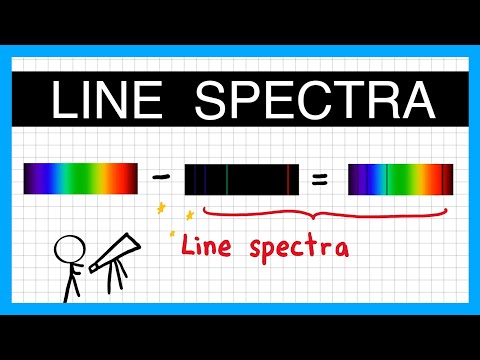
So, you know those bright colors you see when fireworks explode? Well, that’s basically a little science show happening right in front of you. Each color sparkles in the night sky because of something called emission spectra.
Alright, picture this: you’re at a party, and everyone has their unique dance moves. Some people do the moonwalk, others just bust out the robot. Elements are kinda like that too! They each have their own special way of glowing when they get excited. Crazy, huh?
In the world of atoms and elements, these glowing colors reveal so much about what they are. It’s like their personal signature. So let’s jump into this colorful world and see how emission spectra is illuminating the uniqueness of each element!
Understanding the Uniqueness of Emission Spectra in Elemental Analysis
So, let’s chat about emission spectra and why they’re super important in elemental analysis. You might be wondering, what’s the big deal with light and colors? Well, it turns out that every element has its own unique “fingerprint” of light emissions. Sounds cool, right?
When you heat an element or give it some energy, it gets a bit excited. Like when you hear your favorite song and can’t help but dance! This excitement causes the electrons in the element to jump up to higher energy levels. But then things settle down, and those electrons fall back down to their original levels. As they do this, they release energy in the form of light. That’s where the fun begins!
This emitted light can be broken down into its different colors—like a rainbow! Each color corresponds to a specific wavelength of light. Now here’s the kicker: because each element has a different arrangement of electrons, they each emit very specific wavelengths. So when scientists capture these emissions using a spectrometer, they can tell exactly what element is present in a sample by looking at these unique patterns.
Let me tell you a little story to make this clearer. A few years ago, I was at this science fair where students showcased their projects on spectroscopy. One kid had figured out how to use an emission spectrum to identify different metals in rocks he found on his hikes. When he shone a special light on them and showed us the resulting colorful bands on a screen—wow! It was like magic but grounded in real science! Each band represented different elements in those rocks.
Now, let’s break it down further:
- Energy Levels: Electrons exist in specific energy levels around an atom’s nucleus.
- Excitation: When atoms absorb energy (like heat or electricity), electrons jump to higher levels.
- Emission: These excited electrons eventually drop back down and release energy as light.
- Spectrum: The emitted light creates an emission spectrum—a unique pattern for each element.
Using those spectra is super useful for things like identifying unknown substances or even analyzing stars millions of miles away! Scientists look at the light emitted from these stars and determine their composition just by studying their emission spectra—can you believe that?
In short, understanding the uniqueness of emission spectra helps researchers unlock secrets about everything from tiny minerals to massive celestial bodies. It’s like having your very own detective toolset for unveiling the mysteries hidden within matter—how awesome is that?
Utilizing Emission Spectra for Elemental Identification in Gaseous Samples: A Scientific Exploration
Alright, let’s talk about emission spectra and how they help us identify elements in gases. It’s a fascinating topic, and I promise to keep it casual!
When you heat a gas or expose it to electricity, it gets all excited—think of it like when you drink too much coffee and start buzzing! This excitement causes the gas to emit light. The light that’s produced isn’t just any old glow; it’s unique to each element. That’s where emission spectra come into play.
So, what are **emission spectra**? Basically, they are patterns of light emitted by elements when they return from their excited state back to a calmer one. You can imagine them as fingerprints for each element. When an element emits light, it does so at specific wavelengths, which we can capture using instruments like spectrometers.
Let’s break this down a bit more:
Here’s an emotional twist for ya: Imagine being in space, looking at stars billions of miles away. Each point of light represents not just beauty but also the remnants of ancient atoms! And thanks to emissions spectra, astronomers can piece together stories about these cosmic elements.
Now let’s talk technicalities for just a moment—don’t worry; I’ll keep it simple! We often visualize this by looking at an **emission spectrum graph**, where the x-axis shows wavelength (or frequency) and the y-axis represents intensity (how bright each line is). The lines on the graph represent photons emitted at specific wavelengths as atoms drop back to their normal state after being excited.
This process relies heavily on quantum mechanics—yeah, that wacky world where particles behave weirdly! But you don’t need to be an expert in physics; just know that this science helps us understand our universe better.
In summary:
So next time you hear about gases emitting light and how we identify them through their unique signatures, just remember: it’s all about understanding those wild little energy transitions taking place within atoms. It’s pretty amazing how much we can learn from something so seemingly simple as light!
Unveiling Elemental Secrets: Insights from Light Spectra Analysis in Scientific Research
Light, huh? It does so much more than just help us see. When you fire up a light source, you get this rainbow of colors. And each color tells a story about the elements that are present. This is where **emission spectra** come into play! Basically, when elements heat up or get excited, they emit light in specific wavelengths. Each one of those wavelengths corresponds to a certain color, and that’s unique to each element.
Take hydrogen for example. When it’s energized, it produces this distinct line spectrum. You’ll see bright lines at specific colors in the visible range. That means if you ever come across hydrogen in space—or anywhere else—you can identify it just by its light signature! That’s like having an elemental fingerprint.
Now, how do scientists use this cool trick? They analyze the light using instruments called **spectrometers**. These gadgets break the light into its component colors—kind of like using a prism on your grandma’s old glass—so they can see which lines are present and what they mean.
- Calibration: Before diving in, scientists calibrate these instruments with known sources to ensure accuracy.
- Data Collection: Once calibrated, they collect the emitted light from their sample.
- Analysis: The collected data is then compared to established *spectral libraries* to identify the elements present.
Imagine peering through a telescope at distant stars and analyzing their light; that’s how we learn about the universe beyond our own planet! Each star has its unique signature based on which elements are present in its composition.
There’s this really interesting application too—think about planetary atmospheres! Scientists can determine what gases make up an atmosphere of other planets simply by analyzing the light that comes from them. Remember that time you gazed up at Saturn’s rings and felt utterly amazed? Well, scientists have done similar things with telescopes and emission spectra!
But it’s not just stars and planets; this method finds its way into labs too. In chemistry research, it helps in identifying substances in samples—like detecting pollutants or tracing chemical reactions in real time.
And here’s something cool: these emissions can occur not only due to heat but also through electrical energy! Neon lights are a fantastic example of this; you saw how they glow bright when energized? That glow is all thanks to emission spectra!
So yeah, light isn’t just pretty—it packs some serious scientific punch when it comes to unraveling elemental secrets all around us—whether it’s on Earth or across the cosmos. It turns out those vibrant colors aren’t just for show—they help scientists decode our universe piece by piece.
You know, I’ve always found it fascinating how each element has its own little fingerprint in the universe. Like, you can take a look at a star, and with the right tools, scientists can figure out what it’s made of just by studying its emission spectrum. It’s like they’re reading the stars’ secrets. Pretty cool, huh?
So, let’s break this down a bit. When elements are heated or excited in some way—think about heating up metal until it glows—they emit light. This light is actually composed of different wavelengths, and when we analyze it using something called a spectroscope, we can see these distinct lines of color that represent different energies. Each element gives off its own specific pattern of lines—kind of like their own signature song if you will! That’s why emission spectra are super handy for identifying elements.
I remember once sitting under a night sky during a camping trip with friends—with our backs on the cold ground and looking up at an endless ocean of stars. One friend pointed out that those twinkling lights are not just pretty; they hold stories about what they’re made from! It blew my mind thinking about all those unique little telltale signs floating above us.
And here’s the wild part: this isn’t just limited to stars; we can see it right here on Earth too! Think about neon lights for example—each color is due to gases within them emitting light at specific wavelengths when electrified. That’s why those colorful signs look so vibrant!
But the magic doesn’t stop there. Scientists use emission spectra in tons of fields—like astronomy, chemistry, and even forensic science—to gather information about substances in everything from distant galaxies to crime scenes. Each time they do this, they’re basically peeling back layers to reveal what makes things unique.
So yeah, every time I think about emission spectra and how they expose elemental identities—it’s like seeing the universe through a kaleidoscope of colors! It reminds me that even in all that vastness up above us or right around us in our daily lives, there’s this intricate dance of unique elements that come together to make things special. And honestly? That’s just awesome!