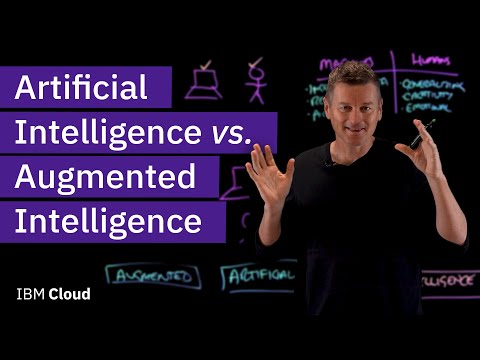
You know that moment when you accidentally ask your phone a question and it actually gives you a genius response? Like, “Hey, what’s the capital of Mongolia?” and boom, it’s right there in seconds. That’s kind of what augmented intelligence is all about!
Picture this: scientists are like detectives, piecing together clues to solve big mysteries. Now, imagine if they had a super-smart sidekick helping them out. That’s where augmented intelligence steps in. It’s like having an extra brain that makes the heavy lifting just… easier.
But don’t get it twisted. This is way more than just tech doing the work for us. It’s about teaming up with AI to spark new ideas, speed things up, and maybe even push the boundaries of what we think is possible in research.
So let’s chat about how this dynamic duo is shaking things up in scientific research and innovation! It might just change everything we thought we knew!
Exploring Augmented Intelligence: Transformative Examples in Scientific Research and Innovation
So, let’s chat about this cool thing called Augmented Intelligence. You might’ve heard of it—it’s kinda like giving a boost to our own brains with the help of technology. Think of it as teaming up with computers to make better decisions, solve complex problems, or even spark some groundbreaking ideas in science.
Basically, Augmented Intelligence isn’t about replacing human intelligence. No way! It’s more like using tech as a sidekick. Imagine Batman and Robin; the tech helps us do what we do even better. This partnership is popping up all over the place in scientific research and innovation.
Now, let’s look at some neat examples that show how this combo works in real-life scenarios:
- Medical Research: Picture doctors using super-smart algorithms to analyze tons of medical data. These systems can sift through patient records, research papers, and clinical trials way faster than any human could. It helps doctors find patterns or potential treatments for diseases—like a recent study where AI helped identify new drug candidates for cancer.
- Personalized Medicine: Think about how each person is different, right? With Augmented Intelligence, researchers can analyze genetic information alongside lifestyle data to tailor treatments specifically for individuals. This means more effective therapies and fewer side effects.
- Environmental Science: Here’s something that really gets me excited! Scientists are using augmented intelligence to monitor climate change impacts more accurately. AI models predict weather patterns or track deforestation—kind of like having a crystal ball that shows future scenarios based on real data.
- Astronomy: Ever stared up at the stars and wondered what’s out there? Astronomers are leveraging AI to analyze massive datasets from telescopes. One team discovered a new planet just by teaching an AI system to recognize patterns in light variations from distant stars!
As you can see, these examples really highlight how powerful this tech-human duo can be. But it’s not just about crunching numbers or spotting trends; it also sparks creativity! For instance, scientists brainstorming solutions use augmented intelligence tools to simulate experiments quickly before diving into costly lab work.
Of course, using these advanced tools doesn’t come without its challenges. There’re ethical questions around bias in algorithms or privacy concerns over sensitive data. So while Augmented Intelligence opens up incredible doors for innovation, we gotta walk through those doors responsibly.
In a nutshell, Augmented Intelligence is reshaping how we think about science and innovation every day. As researchers team up with tech smarter than your average bear (or human!), they’re breaking barriers previously thought impossible—and that’s pretty exciting stuff!
Leveraging Augmented Intelligence to Drive Innovation in Scientific Research: Insights and Applications
Sure, let’s break down how augmented intelligence can really change the game in scientific research. You know, it’s not just about robots trying to take over the world; it’s about scientists and computers teaming up to make discoveries that were once way out of reach.
What is Augmented Intelligence? Basically, it’s a blend of human intelligence and machine capabilities. Think of it like having a super-smart buddy who can process tons of data in seconds while you keep your creativity and problem-solving skills sharp. This partnership can fuel innovation and speed up groundbreaking research.
Key Areas Where Augmented Intelligence Shines:
- Data Analysis: A mountain of data can be overwhelming. With augmented intelligence, researchers use algorithms that sift through data sets super fast to spot patterns or anomalies that humans might miss. For example, AI systems analyze genetic information to suggest potential treatments for diseases by recognizing complex relationships.
- Predictive Modeling: Imagine forecasting the spread of diseases! Researchers utilize augmented intelligence to create models that predict outbreaks based on various factors like weather, travel patterns, and social interactions. This insight is crucial for public health responses.
- Curation of Literature: There’s just so much research out there—keeping up is tough! Augmented intelligence tools help scientists find relevant studies faster than ever by analyzing previous research papers and linking them with current inquiries.
- Experimental Design: Sometimes designing experiments feels like trying to solve a Rubik’s cube blindfolded! With AI assistance, researchers can simulate different scenarios before running an experiment, saving time and resources.
- Collaboration Enhancement: Communication across disciplines is key for innovation. Augmented intelligence helps translate complex technical language into simpler terms or visual data representations so people from different fields can work together more effectively.
Okay, let me tell you a quick story here—imagine a team working on climate change studies. They use augmented intelligence tools that compile massive datasets from satellites monitoring deforestation patterns globally. The machine identifies correlations between deforestation rates and carbon emissions faster than they could by themselves. As a result, they come up with actionable solutions for sustainability measures much quicker than traditional methods would allow.
The Future Looks Bright: Moving forward, as technology evolves further, the role of augmented intelligence will only grow in importance within scientific research. Its capacity to complement human skills ensures we remain at the forefront of discovery while keeping our unique talents intact.
So yeah, when you put human creativity together with machine precision through augmented intelligence in science? The outcome could be nothing short of extraordinary! It’s all about blending those strengths for awesome innovations that push boundaries beyond what we thought was possible.
Enhancing Scientific Research and Innovation: The Role of Augmented Intelligence
So, augmented intelligence—what’s the deal with that in scientific research and innovation? Well, it’s kind of like having a really smart friend who helps you think things through. It’s not about taking over jobs or replacing humans; it’s more about enhancing our abilities. You know how sometimes we get stuck on a problem and just need a little nudge? Augmented intelligence can be that nudge.
Augmented Intelligence combines the power of machines with our human brainpower. When scientists use these smart tools, they can sort through mountains of data way faster than if they were doing it alone. It’s like having a super-efficient assistant who digs through all the boring stuff while you focus on the cool insights.
Imagine you’re trying to find new cures for diseases. Researchers have to analyze tons of clinical data and research papers. That’s a lot! But with augmented intelligence, they can use algorithms to pinpoint relevant information quickly. Instead of spending weeks searching for answers, they might find them in just hours or days.
Now let’s talk about some key ways this tech is shaking things up:
- Data Analysis: Machines can sift through data sets that are way too big for us to handle on our own.
- Predictive Models: They help simulate outcomes based on existing data, which means researchers can anticipate what might happen next.
- Personalized Research: With special algorithms, researchers can tailor treatments based on an individual’s needs rather than using a one-size-fits-all approach.
- Collaboration: Augmented intelligence promotes teamwork by connecting ideas from different fields, sparking innovation.
Let me share an example that really drives this home: Think about when researchers were trying to tackle COVID-19. They gathered unprecedented amounts of data in record time. Using augmented intelligence tools allowed them to analyze viral patterns and vaccine responses much quicker than usual—speeding up both development and distribution.
You see? This isn’t just some fancy tech talk; it has real-world impacts! It’s revolutionizing research not only by making it faster but also more accurate.
And there are challenges too, no doubt—like ensuring these systems are fair and don’t just replicate existing biases present in data. It’s super important we keep an eye on that. We want science to be as inclusive as possible.
In short, augmented intelligence is becoming *the* secret weapon in scientific research and innovation. It’s like adding turbo boosters to our brainpower! So next time you hear about AI or augmented intelligence in science, just remember—it’s here to lend a hand while keeping us at the helm of discovery. And isn’t that refreshing?
Alright, so let’s chat about augmented intelligence. You might hear a lot of fancy terms these days—AI, machine learning, big data—but augmented intelligence? That one feels a bit more personal, right? It’s like teaming up with a really smart buddy who helps you think better rather than just doing stuff for you.
I remember sitting in my college lab, surrounded by stacks of papers and scribbled notes. I was knee-deep in a research project that felt like it was going nowhere. Days turned into nights as I searched through data, feeling completely overwhelmed. Then, someone introduced me to some software that analyzed all those numbers for me. It was like turning on the lights in a dark room! Suddenly, patterns emerged from the chaos that I couldn’t see before. That burst of clarity made me realize how powerful this tech could be.
Augmented intelligence in scientific research is all about enhancing human capabilities—doing what we do best but with a little help from our digital pals. Think about it: scientists have to sift through gigantic amounts of information today to make groundbreaking discoveries. Seriously, with the pace at which new data is generated, trying to find meaningful insights can feel like finding a needle in a haystack.
What’s cool is that this collaboration between humans and machines can lead to some amazing breakthroughs. For instance, researchers can use algorithms to predict the spread of diseases based on past data or analyze complex biological systems more efficiently than ever before. You know? It’s like having superpowers for problem-solving! But here’s the catch: while machines can crunch numbers way faster than we ever could, they still rely on our intuition and creativity to steer them in the right direction.
And let’s not forget about innovation! With augmented intelligence tools, scientists are not just stuck in their labs anymore; they’re collaborating globally. Imagine researchers from different parts of the world sharing insights instantly and working together on projects without borders—how awesome is that? This interconnectedness opens doors to fresh ideas and perspectives that might’ve been overlooked otherwise.
But here’s where it gets kind of tricky: we have to be careful not to let this tech dictate what we think or how we feel about our research. There’s always the risk that we might lean too heavily on data and algorithms and forget the human side of science—the curiosity, passion, and persistence behind every discovery.
In wrapping up my thoughts here—it’s comforting yet thrilling to think about how augmented intelligence is reshaping the landscape of scientific inquiry and innovation. Just like my experience back then taught me—a little help goes a long way! We need each other: humans bring creativity and empathy; machines offer speed and efficiency. Together? Well, that’s where magic happens!