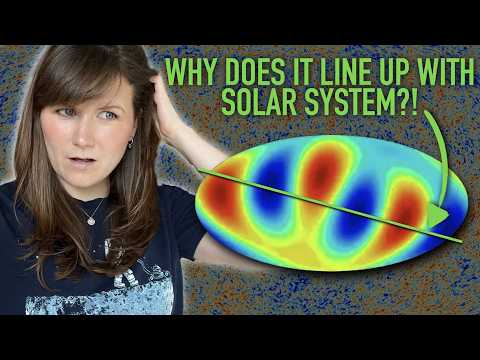
So, picture this: you’re standing in front of a giant empty canvas, and someone tells you it’s your job to fill it with the craziest, most mind-bending ideas about the universe. Sounds daunting, right? But that’s kinda how cosmologists feel when they’re trying to make sense of the cosmos.
Here’s the thing: they’ve got this so-called “Axis of Evil.” Pretty dramatic name, huh? It refers to some sneaky anomalies in the cosmic microwave background radiation—basically, the afterglow of the Big Bang. And believe me, these anomalies are shaking things up in a big way.
I mean, we’re talking about potential game changers for our understanding of how everything came to be. There’s always something new popping up in this field. Seriously, just when you think you’ve got a grip on things, boom! Something flips everything upside down.
So let’s chat about these cosmic mysteries and what they really mean for our view of the universe. Buckle up! It might get a little weird… but then again, what part of space isn’t?
Exploring the Axis of Evil in Cosmology: Understanding Its Implications for the Universe
So, let’s chat about this thing called the Axis of Evil in cosmology. Sounds pretty dramatic, right? But it’s not some sci-fi story; it’s actually a real puzzle scientists are trying to figure out.
The Axis of Evil refers to a peculiar alignment of large-scale cosmic structures and the Cosmic Microwave Background Radiation (CMBR). Now, the CMBR is like the leftover glow from the Big Bang, and it fills the universe with a faint light. The weird part? When researchers looked at this radiation, they noticed that certain patterns seemed strangely aligned with our solar system’s orientation. That’s where it gets its name—like an evil plot twisting through the cosmos.
Now, why does this matter? Well, here are some key points to consider:
But here’s where it gets really interesting: people disagree about whether or not there’s actually something “wrong” with these findings. Some argue that maybe it’s just random chance or even measurement errors from telescopes. Think about when you look at clouds and see shapes; it’s all subjective interpretation.
And then there’s this human connection—you know? A lot of scientists pour years into their research only to find something unexpected scrolling across their screens. It’s kind of thrilling but can also be scary! Like uncharted waters for explorers long ago.
In short, while the Axis of Evil might sound ominous, it’s really an exciting enigma in cosmology. It forces us to rethink everything we thought was settled in our understanding of the universe. Who knows what other surprises are lurking out there?
So yeah, keep your eyes peeled because as science evolves (like everything else!), so does our understanding of such cosmic conundrums!
Exploring the Challenges in Cosmology: Insights into the Complexities of the Universe
Cosmology, the study of the universe’s origin and structure, is full of mind-bending questions. It’s like trying to solve a giant cosmic puzzle with pieces that keep changing shape. One big challenge? The so-called “Axis of Evil.”
The Axis of Evil refers to a peculiar alignment observed in the cosmic microwave background radiation (CMB). This radiation is basically the afterglow of the Big Bang, filling the universe. When researchers analyzed it, they noticed something odd: certain structures seemed to point in a specific direction. Imagine looking up at a starry sky and spotting constellations that don’t quite align with what you’d expect. That’s what’s happening here.
So, what makes this alignment such a headache for cosmologists? Well, it contradicts our understanding of an isotropic universe. Basically, isotropy means things should look pretty similar no matter which direction you’re facing – like how all sides of a basketball look alike if you spin it around.
There are several theories trying to explain this phenomenon:
- Local Structures: Some say nearby cosmic structures might influence the CMB’s properties.
- Statistical Fluke: Others propose it could just be some weird statistical coincidence.
- Cosmic Variance: Another idea is that we’re simply not looking at enough data for a clear picture.
But here’s the kicker: these hypotheses shake up our models and force scientists to rethink or tweak what they thought they already knew about cosmology. And it’s not just theoretical—you can feel how important this is when you realize everything from galaxy formation to dark energy could be impacted.
On a personal note, I remember going through my first astrophysics book. I was totally fascinated but also felt overwhelmed by how much mystery still surrounds space. Each question led to another! It truly shows how exciting yet complex exploring the universe can be.
And let’s not forget—this challenge ties into broader themes in science like how we understand evidence and validation. Every time we think we’ve nailed a concept down, new findings pop up and make us take another look.
To sum it up: tackling issues like the Axis of Evil helps push boundaries in cosmology. These challenges remind us that there’s so much more out there waiting for us to discover. Who knows? Maybe one day we’ll figure out how all these cosmic puzzles fit together—and I can’t wait for that day!
Unveiling Dark Matter: The Role of the Cosmic Microwave Background in Astrophysical Evidence
Alright, let’s chat about dark matter and this cosmic microwave background (CMB), which is like the afterglow of the Big Bang. It’s a bit mind-bending but stick with me!
First off, dark matter is this mysterious stuff that makes up about 27% of the universe. You can’t see it or touch it, but we know it’s there because of how it affects things around it, like galaxies. Imagine trying to explain your friend’s car moving fast down a road at night while you can only see the shadows. That’s kind of what we’re doing with dark matter—it’s there, and we feel its influence.
Now, here comes the CMB into play! After the Big Bang, when everything was super hot and chaotic, things cooled down enough for light to travel freely through space. This light is still around today, and it shows up as that faint glow we measure everywhere in the universe. So basically, that glow tells us a lot about what happened in those early moments!
Now back to our cosmic riddle. Some researchers talk about “the Axis of Evil,” which sounds dramatic but refers to a strange alignment in the CMB data that seems odd compared to what we expect from isotropy—which means things should look similar all over if you squint your eyes at them from Earth. This axis has led some folks scratching their heads wondering if there’s something funky going on in our understanding of cosmology.
So why should you care? Well, data from the CMB helps scientists piece together how much dark matter exists and how it’s distributed throughout the cosmos. If there are unexpected patterns or alignments like this Axis of Evil thing, maybe our whole picture of dark matter—and how universe works—isn’t quite right.
When observations from satellites like COBE or WMAP came in back in the day showing tiny fluctuations in the CMB temperature—like little bumps on a cosmic blanket—it helped astronomers understand how structures like galaxies formed over time due to gravity pulling everything together amidst all that dark matter chilling out there.
We can think about these fluctuations also as echoes. Just imagine throwing pebbles into a calm pond; they create ripples that spread out evenly across your view. But if suddenly one side gets all wobbly while other parts stay calm? There’s something off with our pond!
In summary:
- Dark Matter: Invisible mass affecting galaxies.
- CMB: Glow from early universe providing clues.
- Axis of Evil: Weird alignment raising questions.
- CMB data challenges existing theories on dark matter.
So yeah, unlocking these cosmic secrets doesn’t just satisfy human curiosity; it reshapes how we think about existence itself! And who wouldn’t want to be part of such a cool exploration?
So, let’s chat about this thing called the Axis of Evil in cosmological research. Sounds pretty dramatic, huh? It’s not some new superhero movie, but rather a serious topic that has stirred up some interesting debates among scientists.
You see, the Axis of Evil refers to a peculiar alignment of anomalies in the cosmic microwave background radiation (CMB). This is basically the afterglow of the Big Bang and gives us a peek into the early universe. But here’s where it gets spicy: some researchers found that certain patterns in this radiation seem to align with our solar system and galaxy. And that’s kind of weird! It makes you wonder if there’s something we’re missing or if there’s just a quirk in our understanding of the cosmos.
I remember sitting under a starry sky one night with my friends, feeling so small yet so connected to everything out there. It was one of those moments where you really ponder your place in the universe. And then you hear about stuff like this Axis of Evil and it messes with your mind just a little bit more—like, what else don’t we know?
Now, challenging these findings isn’t easy. Scientists have to wade through tons of data, battling the noise from our local environment and cosmic radiation. It’s like trying to hear your favorite song at a bustling concert; you’ve got to tune out all that chaos! Some researchers think it might just be an illusion created by our own orientation in space or local structures affecting what we observe.
But here’s where it really gets exciting: these debates push us to think deeper about how we interpret data and challenge existing theories. This whole back-and-forth keeps science fresh and evolving, which is pretty cool when you think about it. The universe is vast and mysterious—it’s nice knowing there’s still so much for us to figure out!
So when you read about these cosmic controversies, remember they’re not just geeky arguments among scientists; they’re part of what makes understanding our universe so thrilling! And who knows? Maybe one day we’ll look back at today’s challenges as stepping stones toward some groundbreaking discoveries. How wild would that be?