You know what’s wild? Back in the day, if you wanted your computer to learn something, you had to teach it step by step. Kinda like trying to explain TikTok to your grandma.
Now, we’ve got this whole bagging and boosting thing going on in machine learning. Seriously, they sound like cool new dance moves, but they’re actually techniques that help computers get way better at guessing stuff!
Imagine stacking a bunch of opinions together—like asking five friends about the best pizza place. You’ll probably get a better answer than just asking one person, right? That’s basically what bagging does!
And then there’s boosting—it’s like giving your computer a pep talk every time it messes up. The more it stumbles, the more it learns! How neat is that?
So stick around; we’re about to unravel how these two game-changers are shaking things up in the world of machine learning!
Exploring Real-World Applications of Bagging in Scientific Research and Data Analysis
So, bagging, huh? It’s one of those cool techniques in machine learning that’s really changing the game in scientific research and data analysis. Bagging, or Bootstrap Aggregating, is all about improving the stability of machine learning algorithms. What’s interesting is how it combines multiple models to get better results. Let’s talk about this a little more.
The basic idea behind bagging is pretty simple: you take multiple samples of your data and train different models on each sample. This way, if some data points are problematic or noisy, they won’t ruin everything for the whole model. A classic example of this is the Random Forest algorithm, which uses lots of decision trees to make predictions. It literally builds a forest! So, when one tree makes a mistake, others can still guide the way.
Now let’s dig into how bagging plays out in real-world applications:
- Healthcare: Imagine you’re trying to predict patient outcomes based on their medical history. Using bagging can help researchers combine various models from different datasets so they can spot trends and make predictions much more accurately than just relying on one model.
- Finance: In finance, risk assessment is key. When banks want to predict whether someone will default on a loan, they can use bagging to merge multiple risk models together. This gives them a clearer picture rather than relying on single assessments.
- Agriculture: Farmers use sensors and data analytics to monitor soil health and crop conditions. By employing bagging techniques with various predictive models, they can get better insights into how different factors affect their crops—like weather patterns or soil types.
- Sociology: Social scientists often analyze large survey datasets. Bagging helps them create more robust models when predicting public opinion trends from various sample groups across different regions.
Here’s another angle that blows my mind: how effective it is at cutting down overfitting! Overfitting happens when your model learns too much from the training data and ends up being less accurate with new data. By aggregating results from multiple models trained on different subsets of data through bagging approach, you help generalize well across datasets.
But that’s not the end of it! Is there anything better than improving accuracy? Well, yeah! We also see efficiency improvements in processing time because sometimes it allows for parallel processing of those smaller samples instead of waiting for one big batch.
Let me tell you a quick story here. A while back, I read about some scientists who were using bagging techniques to analyze climate change data more effectively. They were struggling because climate datasets can be super noisy due to variations in temperatures across regions and timespans. Turns out that by stacking up several predictive models using bagging methods helped them find clearer patterns that would have otherwise been lost in all that noise.
So yeah, whether it’s predicting health outcomes or financial risks or even understanding social dynamics—bagging’s got your back as an invaluable tool in scientific research and analytical processes! It’s definitely lightening up our path through complex datasets while keeping things organized. Who knew combining a bunch of simple models could lead us to such powerful insights?
Evaluating Machine Learning Techniques for Successful Aging: A Comparative Analysis of Prediction, Bagging, and Boosting
When it comes to machine learning and how it relates to successful aging, we’re diving into a really interesting area. It’s like using tech to help people live their best lives as they get older. Let’s break down some methods you might have heard of: **prediction**, **bagging**, and **boosting**. Each one has its own flavor, you know?
First up is **prediction**. This basically means using data to forecast outcomes. Think about it like this: if you want to predict who might develop certain health issues as they age, you gather tons of data—like lifestyle habits, medical history, and even social engagement levels. The machine learning model then looks at patterns in that data to make informed guesses about individuals. And let me tell ya, having accurate predictions can make a huge difference in proactive healthcare.
Now let’s talk about **bagging**. This stands for Bootstrap Aggregating—a fancy term for a pretty neat idea! Bagging minimizes errors by combining the results from multiple models. Picture a bunch of different chefs making the same recipe; each one might add their twist, and when combined, the final dish is way better than any single one on its own! So in aging research, bagging takes various models trained on subsets of data and averages their outputs for more reliable predictions.
And then there’s **boosting**, another cool technique that works differently from bagging. Instead of averaging outcomes, boosting adjusts its focus on training by paying more attention to mistakes from previous models. Imagine you’re playing darts: each time you miss the bullseye, you learn where your aim went wrong and adjust your throw accordingly. Boosting builds a strong model step-by-step by correcting earlier errors with newer models. This can lead to really powerful insights into factors affecting aging.
Now here’s where things get even more interesting: when we compare these techniques for evaluating successful aging outcomes! You see, researchers often run experiments comparing both bagging and boosting against traditional prediction methods.
Why does that matter? Because it helps them figure out which technique gives better results in predicting health issues or quality of life measures as people age.
- If bagging wins out in accuracy but takes longer to run—well, maybe researchers should use it when they have infinite time.
- On the other hand, if boosting provides super quick results with high accuracy—then it’s go-time for practical applications!
So again: why compare? Well, understanding which methods work best allows scientists to tailor approaches specifically geared toward enhancing the aging experience through technology!
In recent studies exploring these techniques’ advancements in machine learning frameworks, researchers have found that tweaking parameters can lead every method down different paths of success or failure! It’s fascinating how small adjustments can lead to such varied outcomes—it gives you hope for future innovations aimed at improving quality of life!
To wrap this up nicely: evaluating these machine learning techniques not only advances our understanding but opens new doors for enhancing how we approach successful aging itself. The possibilities are exciting!
Comparative Analysis of Boosting vs. Bagging: Enhancing Predictive Models in Data Science
So, let’s chat about two cool techniques in machine learning: Bagging and Boosting. They’re like two different approaches to making our predictive models better. Both have their strengths, but they work a bit differently.
First off, what’s bagging? Well, it stands for Bootstrap Aggregating. It’s all about creating multiple versions of your data set, training a model on each one, and then combining the results. So, think of it like an ice cream sundae. You take scoops (or samples) from the same big container (your whole data), mix them up with different toppings (different algorithms), and what do you get? A yummy blended flavor!
Now here’s how bagging works:
- Sampling: You randomly pick subsets of your data with replacement. Some data points might show up more than once while others might not show up at all.
- Model Training: Each subset gets its own model trained on it. These models could be decision trees or any algorithm really.
- Averaging or Voting: Finally, you average the predictions (for regression) or use majority voting (for classification) to get the final result.
One example where bagging shines is with Random Forests. Imagine you’re trying to guess how much money people will spend on a Sunday brunch based on their age, location, etc. Instead of just using one decision tree that might be swayed by outliers or noise in the data, multiple trees (like opinions from friends) are created through bagging. The final prediction is way more stable!
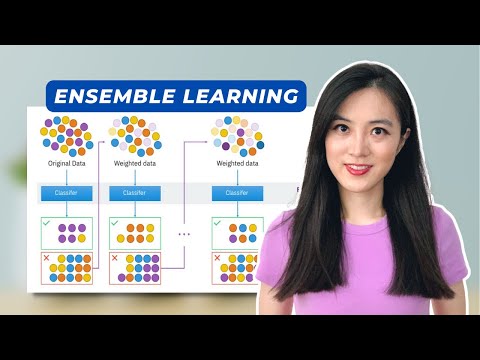
On the flip side is boosting. This technique takes a different route. Boosting focuses on sequentially training models where each new model tries to correct errors made by the previous ones—like adding more layers to a cake as you learn from your mistakes.
Here’s how boosting generally goes:
- Sequential Learning: You start with a simple model and gradually add more models.
- Error Focus: Each subsequent model pays special attention to the predictions that got messed up previously.
- Pooled Predictions: At the end, you combine these models in such a way that it emphasizes stronger predictions over weaker ones.
A classic example of boosting is AdaBoost, which focuses on improving misclassifications by adjusting weights for misclassified samples in each round of training. Imagine you’re trying to teach a friend how to bake cookies but each time they mess something up—say they forget sugar—you give them tips on fixing that specific mistake next time.
Now let’s talk about some differences between these two techniques! Bagging reduces variance while boosting aims to reduce both bias and variance. In other words:
- Bagging: Great for handling overfitting issues because it averages out errors across many models.
- Boosting: Works wonders at improving simplicity while getting rid of those pesky biases by focusing on errors directly.
But remember, neither approach is perfect for every situation. Bagging can sometimes miss complex patterns because it treats everything equally while boosting can be sensitive to noise since it really focuses in on those tricky spots.
So there you go! Bagging and boosting are like picking different tools from your toolbox when working on predictive modeling problems in data science. Sometimes you need one over another depending on what kind of data challenges you’re facing!
You know, when you think about machine learning, it can seem a bit like black magic sometimes. The algorithms are all hidden away in complex codes, creating predictions and making decisions on their own. But there’s something really cool happening with techniques called bagging and boosting that makes these models smarter.
Let me share a little story. A few years back, a buddy of mine was trying to predict his fantasy football team’s performance using machine learning. He tested various models but kept getting mediocre results. After chatting about it, we ended up looking into these ensemble methods—bagging and boosting—to see if they could help him get an edge. It was pretty awesome to see how these approaches can take a bunch of models and combine their strengths to make better predictions.
So bagging, right? It’s like rounding up your friends for a group project where everyone does their part independently. You take multiple samples from your data set, build separate models for each sample, and then average the results. This way, you balance out individual mistakes since different models might get things wrong in different ways. It’s like having a relay race where each runner might not be the fastest on their own but together they finish strong.
And then there’s boosting, which is sort of the opposite vibe. Instead of working independently, boosting focuses on learning from mistakes made by previous models—like that friend in group chats who keeps picking teams based on last week’s performance instead of the whole season! With boosting, you build a sequence of models where each one tries to correct the errors of the last one. They work together more closely than in bagging and end up being super powerful.
Honestly? Watching how these methods make machine learning more accurate feels like seeing an underdog team come together at just the right moment—way more than I’d expected! Each model supports another’s weaknesses while amplifying strengths.
The advancements with both bagging and boosting have really changed the game in fields like finance or healthcare where accuracy matters so much—think about it: predicting disease outcomes or financial risks isn’t trivial! And what’s even cooler is that as technology evolves, these methods are getting refined even further.
So yeah, when you break it down, bagging gives us stability while boosting gives us power. And isn’t that what we all want? To be just a bit smarter than our past selves?