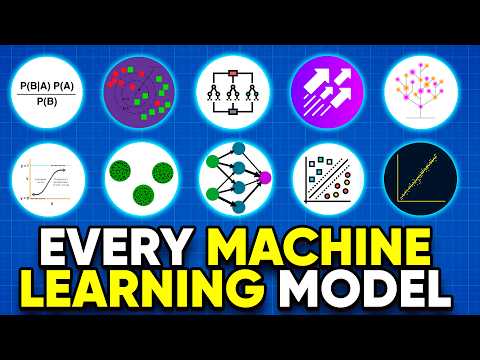
So, picture this: you’re at a party, and there’s that one person who just drifts around, taking everything in without really engaging. They’re kind of like the unsupervised machine learning algorithms—just absorbing data without guidance!
Now, isn’t that wild? These algorithms learn patterns and insights all on their own. It’s pretty neat when you think about it. No teachers or strict rules telling them what to do. Just raw data and their own brainpower figuring things out.
But hey, what’s so cool about all this? Well, as we dive deeper into advancements in these techniques, you might be surprised at how they can change the game in various fields, like healthcare or marketing. Seriously! It’s not just techy geek stuff; it’s shaping our world in ways we never really imagined.
Ready to explore how these clever little systems are making sense of chaos? Let’s jump into the exciting world of unsupervised machine learning!
Exploring the 4 Types of Unsupervised Learning in Scientific Research
Unsupervised learning is like a treasure hunt in big piles of data. You’ve got all this info just sitting there, and instead of telling the computer exactly what to do with it, you let it figure stuff out on its own. Pretty cool, right? So, there are basically four main types of unsupervised learning that scientists use to dig deeper into research.
Clustering is the first one. Imagine throwing a bunch of marbles onto a table and just watching them group together by color. In scientific research, clustering helps identify patterns or groupings within data without any labels. For example, if you’re looking at customer preferences in a store, clustering could reveal natural groupings of shoppers who like similar products.
Then we have Dimensionality Reduction. Picture this: you’ve got a massive pile of colorful balloons but can only see the top layer because they’re stacked high. Dimensionality reduction takes those complex layers and squashes them down so you can see the bigger picture. It simplifies data while retaining as much important information as possible. A classic technique here is Principal Component Analysis (PCA), which scientists use to visualize complex datasets easily.
Next up is Anomaly Detection. This one’s super interesting! Think about a flock of birds flying in formation; if one bird flies off in a totally different direction, you notice it right away—that’s an anomaly! In scientific research, anomaly detection helps identify unusual patterns or outliers in data that could indicate something important—like fraud detection in banking or spotting rare diseases in medical databases.
Finally, there’s Association Rule Learning. Ever been shopping online and seen “Customers who bought this also bought…”? That’s association rule learning at work! It finds relationships between variables within large datasets. In scientific research, it can help uncover correlations between different variables—like how certain genes might be linked to specific diseases.
So yeah, unsupervised learning techniques play a significant role in scientific research and are super useful for making sense of complex information without needing prior labels or categories. Each type has its unique charm and application that helps us unlock new insights from data we already have!
Exploring the Latest Advances in Machine Learning: Innovations and Breakthroughs in Scientific Research
Machine learning, especially unsupervised techniques, is like this super-smart friend who can figure things out without you needing to hold their hand. Seriously! You give it data, and it starts to uncover patterns all on its own. Pretty cool, huh?
Now, when we talk about unsupervised machine learning, we’re diving into methods where the model isn’t told what to look for. It’s a bit like letting kids explore a park without adult supervision. They find hidden slides and secret paths all by themselves!
One of the biggest advancements in this area is something called clustering algorithms. These are like those group projects in school where everyone naturally forms into teams based on shared interests. Algorithms such as K-means and DBSCAN help group similar data points together. For example, think about how Spotify recommends music based on your listening habits—those algorithms are working behind the scenes!
Another exciting breakthrough is with dimensionality reduction. Imagine trying to save space in your closet by organizing clothes, so you can fit more in. Techniques like PCA (Principal Component Analysis) help simplify data by reducing its dimensions while keeping its essence intact. It’s super handy when handling large datasets with tons of variables.
This tech isn’t just sitting in labs; it’s making waves everywhere! From healthcare—where it’s being used to analyze medical images—to finance for spotting irregular transactions—it’s all about finding what usually goes unnoticed.
Anecdote time: I once read a story about researchers who used unsupervised learning to discover new types of stars in astronomical data. They didn’t know what these patterns meant at first, but the algorithm pointed them toward something entirely unexpected—it was a total breakthrough!
So yeah, the future looks bright with unsupervised machine learning techniques leading the charge in scientific research innovations! As these models become smarter and more refined, we’re only scratching the surface of what they can achieve. Exciting stuff ahead!
Exploring Unsupervised Learning: Key Machine Learning Models in Scientific Research
Unsupervised learning is kind of like letting a child explore their room without any direction. They figure out where things are and how they relate to each other through exploration. In the same way, unsupervised learning lets computers analyze data without being told what’s what. This has serious implications in scientific research.
What exactly is unsupervised learning? It’s a machine learning technique that looks for patterns or groupings in data when there’s no pre-labeled output or categories. Basically, it’s like trying to find hidden treasures in a sea of information without any guidance. This means the algorithms need to do all the heavy lifting, which can be incredibly powerful!
One of the most commonly used models in this area is k-means clustering. This method groups data points into clusters based on their features, like how you might group your shoes by color or style. For example, if scientists are studying genetic data from different species, k-means can help them identify distinct groups of genes that might perform similar functions.
Another important model is hierarchical clustering. Imagine stacking your favorite books into categories of genres and then subcategories; that’s what hierarchical clustering does with data—it creates a tree-like structure for better understanding. In environmental research, this method helps scientists categorize different species based on their traits and relationships with ecosystems.
Then there’s principal component analysis (PCA). This one’s super handy when you have tons of variables—like all those measurements from an experiment—because it helps reduce the dimensions while keeping the most important information. This way, researchers can visualize complex datasets and see trends they might otherwise miss. Think about trying to fit all your friends into a small car; PCA figures out who really needs to come along without losing sight of everyone else!
Don’t forget about autoencoders, either! These neural networks learn how to compress data into a lower-dimensional space and then reconstruct it back again. It’s like squishing a sponge so you can carry it more easily but still have it return to its original shape later on! They’re particularly useful in image processing where details matter a lot.
The magic of these models lies not just in crunching numbers but also in making sense of complex scientific questions. Scientists use these techniques for everything from analyzing cosmic background radiation to understanding patterns in climate change data.
So here’s the thing—unsupervised learning isn’t just about algorithms running wild on datasets; it truly empowers researchers to make informed decisions, spot trends, and generate hypotheses that might lead to groundbreaking discoveries. It’s like having a toolkit full of possibilities for investigating our world!
Overall, every time you hear about advancements in machine learning techniques being used in research, think about those unsupervised models lurking behind the scenes—analyzing mountains of data and helping us glean insights into everything from biology to astronomy!
So, machine learning, huh? It seems like every time you scroll through the news, there’s something new popping up about it. But have you heard much about unsupervised machine learning? Honestly, it’s a pretty cool area that doesn’t get as much hype as it deserves.
Picture this: You’re trying to find your way in a maze without any directions. You just wander around, trying to make sense of the twists and turns until you stumble upon some hidden paths. Well, that’s kind of what unsupervised learning does. Instead of being told exactly what to look for—like with supervised learning—it figures things out on its own by analyzing patterns in data. It’s like when you meet someone new and gradually discover their quirks without anyone stating the obvious.
I remember when I first got into data science; I was overwhelmed by all the terms thrown around. It felt like studying magic spells or something! One day, my friend showed me how he used clustering algorithms—like K-means—to group customers based on their shopping behaviors. He didn’t tell the algorithm what to look for; it just sorted them out based on similarities! Seeing that in action blew my mind. Imagine the potential applications! From marketing strategies to understanding social networks or even improving healthcare outcomes—there’s so much going on there.
Now, advancements in unsupervised techniques keep rolling in like waves on a beach. Researchers are finding smarter ways to harness this technology—think deep learning models that can identify trends or anomalies without really knowing what they are beforehand. This process can uncover insights we never thought were possible!
And let’s not forget about the ethical side of things either. With great power comes great responsibility, right? As these models get more capable, we need to be cautious about how they’re applied and ensure they don’t reinforce biases hidden within the data.
In short, unsupervised machine learning has a ton of potential waiting to be unleashed—all it needs is some creative minds and a sprinkle of curiosity! Each tiny advancement opens up new possibilities and gives us better tools for understanding our complex world—and honestly? That sounds pretty exciting to me.