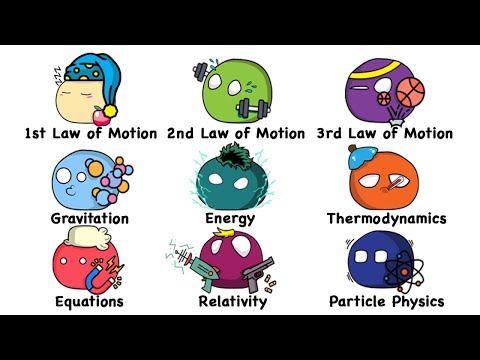
Okay, picture this: You’re at a party, right? Suddenly, someone throws a drink across the room and—bam!—you’re hit with the realization that you just dodged a physics experiment gone wrong. Seriously, I often think about how everyday moments are buzzing with physics.
Like, when you kick a football, you’re capitalizing on Newton’s laws of motion without even realizing it. That’s wild! You may not be a physicist, but trust me, you’ve got physics swirling around your life constantly.
From the way your car handles those sharp turns to how your phone knows exactly what to do when you swipe it—you’re soaking in principles of physics every single day. And yeah, this stuff might seem all theoretical and stuffy at times, but it’s actually super cool and relevant.
So let’s chat about the fundamentals of physics and how they shape the little things we do. You’re gonna see just how much fun science can be when it’s woven into our daily lives!
Fundamental Concepts of Physics: Understanding Their Impact on Everyday Life
So, physics, right? You might think it’s all about fancy formulas and high-tech labs, but honestly, it’s way more connected to your daily life than you might realize. Whether you’re reflecting on why your coffee spills while driving or how your phone knows where you are, the fundamentals of physics are right there behind the scenes.
1. Newton’s Laws of Motion
You know those moments when you slam on the brakes in your car? That’s a great example of Newton’s First Law. Basically, it says that an object in motion stays in motion unless acted upon by an outside force. So when you brake suddenly, your body wants to keep moving forward. It’s why seatbelts are a must! This law is all about inertia and helps us understand everything from why we feel pushed back in our seats when a plane takes off to how sports work.
2. Gravity
Ever thought about how gravity keeps us grounded (literally)? This invisible force pulls everything toward the Earth. Without it, well… we’d all be floating around like balloons! Think about that apple falling from a tree—that little moment sparked theories that changed science forever. Gravity not only keeps us on the ground but also influences things like tides in the ocean and even the way planets orbit around the sun.
3. Energy and Conservation
Energy is a big deal in physics! Everything we do requires energy—like cooking your food or charging your phone. The Law of Conservation of Energy tells us that energy cannot be created or destroyed; it merely changes forms. When you ride a bike downhill, potential energy (the energy due to position) transforms into kinetic energy (the energy of motion). This principle pops up everywhere: from heating our homes with electricity to powering our cars with gas.
4. Thermodynamics
Now let’s talk heat! Thermodynamics, which sounds super complex but really isn’t, deals with heat and temperature—basically how things get hot or cold. Ever tried cooking pasta? The heat transfers from the stove to the pot and then to the water, bringing it to a boil so you can make dinner! Understanding thermodynamics helps engineers design better engines and refrigerators.
5. Electromagnetism
You’ve probably noticed how magnets stick to your fridge or how your phone connects to Wi-Fi; that’s all about electromagnetism! It combines electricity and magnetism into one nifty package; think of it like two best pals who never want to hang out apart! The technology we have today relies heavily on this concept—everything from generators that produce electricity to wireless charging pads for our gadgets.
Incorporating these fundamental concepts into everyday life paints a picture of just how interconnected everything is—like pieces of an intricate puzzle that makes modern living possible. You might not be aware of all these mechanics happening around you every day, but they’re working harder than we give them credit for!
When you stop and think about it—a simple walk down the street involves forces at play, energy transformations happening every second as people go about their lives—it’s fascinating stuff! Physics isn’t just something for scientists; it’s something we live every day without even realizing it. And that’s pretty cool if you ask me!
Exploring the Top 5 Everyday Applications of Physics in Daily Life
Physics is all around us, and it plays a huge role in our daily lives. You might not notice it, but understanding the basics of physics helps us navigate the world better. Here are five everyday applications of physics that you probably experience without even thinking about it!
1. Cooking
When you cook, you’re actually doing some pretty cool physics! For example, when you boil water, it’s all about heat transfer. The heat from the stove is transferred to the pot, and then to the water. This process is called conduction. Once your water reaches a certain temperature, it turns into steam—another neat phase change!
Ever tried to bake a cake? The process of rising involves gas expansion and chemical reactions that require a bit of thermal dynamics knowledge. Seriously, that fluffy sponge does not just happen by accident!
2. Transportation
Think about all those times you’ve jumped into a car or hopped on a bike. The motion involved in these activities falls under the laws of motion formulated by Sir Isaac Newton. Like when you’re driving, if you accelerate suddenly or hit the brakes hard, your body feels those changes due to inertia—basically, your body wants to keep moving at the same speed.
Also, whether it’s planes flying or trains speeding along tracks, physics governs how we travel every day through concepts like lift and friction.
3. Electronics
Your phone? Yeah, that’s loaded with physics principles! Everything from how screens display images to how sound waves travel through speakers depends on electricity and magnetism—two fundamental areas of physics.
You know when your phone buzzes with an alert? That’s electromagnetic waves zipping through the air to deliver notifications straight to you in real-time.
4. Sports
Ever watched a basketball game and been amazed by how athletes perform gravity-defying dunks? Well, that’s all thanks to projectile motion! When they jump and shoot hoops at just the right angle and velocity—boom! Physics in action!
And think about playing football or even throwing a frisbee; understanding forces like drag can help those players improve their skills—I mean who wouldn’t want a perfect spiral throw?
5. Weather Predictions
Next time you check your weather app before heading out, know there’s some solid physics behind it! Meteorologists use principles involving fluid dynamics to study air movement and temperature changes in our atmosphere.
This helps them predict everything from rain showers to big storms so you can carry an umbrella or stay cozy inside when needed.
So yeah, whether you’re cooking up some delicious food or enjoying a day out in nature; physics is right there with you! It’s quite amazing how intertwined our daily lives are with these fundamental principles—even if we don’t always see them directly!
Exploring the 4 Essential Roles of Physics in Everyday Life: A Scientific Perspective
Alright, let’s chat about physics and why it totally matters in your day-to-day life. You might be thinking, “Physics? Really?” But hang on! It’s not just a bunch of equations and theories. It’s all around you, shaping how things work—and how you live. So, let’s break down four key roles of physics in your everyday life.
1. Motion and Transportation
Ever hopped on a bus or driven a car? Well, that journey involves basic principles of motion. Physics explains how things move—like acceleration, velocity, and friction. You know when you slam the brakes? That’s physics at play! The car slows down because of friction between the tires and the road. Plus, understanding motion helps engineers design safer vehicles—so you’re more secure traveling around.
2. Energy Consumption
Think about all those gadgets you use daily: phones, computers, microwaves—you name it! Each one relies on energy to function. Physics helps us understand different types of energy, from potential energy (like a stretched rubber band) to kinetic energy (like a ball rolling). This knowledge is crucial for making devices more efficient, which means less power wasted and lower bills. Seriously! Knowing how to harness energy can even help tackle bigger problems like climate change.
3. Sound and Communication
Here’s something cool: Have you ever stopped to consider what makes your favorite song sound awesome? That smooth flow is all thanks to physics! The way sound waves travel through air (or water) is based on physical properties like frequency and amplitude. When you chat with someone or listen to music, you’re experiencing these waves firsthand! Understanding sound helps improve everything from headphones to public speaker systems.
4. The Science of Safety
Now think about safety features in buildings—ever heard of an earthquake-resistant structure? Yep, that’s physics too! By studying forces like gravity and tension, architects can create designs that keep us safe during natural disasters. Even wearables like helmets or seat belts follow principles of force distribution. They’re designed by applying physics concepts to protect our noggins when things go sideways!
So there you have it! Physics isn’t just for nerdy scientists in labs; it’s a huge part of our lives every single day—from how we get around to staying safe while we do it. Next time you’re using your phone or driving your car, take a moment to appreciate the fascinating world behind those simple activities—because it all comes back to good ol’ physics!
Physics is like the invisible hand that shapes the world around you. Picture this: a sunny afternoon, you’re lounging with friends on the lawn. Suddenly, someone tosses a frisbee your way. As you reach out to catch it, you’re unknowingly applying some key principles of physics. Isn’t that cool? The way you move, how the frisbee flies through the air—it’s all physics in action!
So, let’s break this down a bit. First off, there’s gravity. You know how when you drop something, it falls to the ground? That’s gravity pulling it down. It’s not just a fancy term for science classes; it’s what keeps us grounded and holds everything together on this spinning rock we call Earth.
And then there’s motion! Whether you’re driving to work or just rolling out of bed, motion governs almost everything in your life. The speed of your morning jog or how fast a car zooms past you—they’re all explained by physics! Like, think about Newton’s laws; they describe how objects move and interact with forces around them. You push a door and it opens because you’ve applied force, which makes it swing—simple as that!
Now, have you ever made popcorn in the microwave? It’s not just about heat; it’s about energy transfer too! In that moment, you’re seeing kinetic energy at play as those tiny kernels pop into delicious fluffy treats. It’s amazing how something so small can relate back to these big concepts.
Honestly though, physics isn’t just relegated to classrooms or lab coats—it pulses through our daily lives! From cooking and cleaning to playing sports or using tech gadgets, every time something moves or changes form—yep, that’s physics involved!
And let me tell you a little story: my younger sibling once decided to build a ramp for their toy cars with blocks in our living room one day. We watched as they became an experimental physicist on the spot! They learned about incline angles and potential energy while laughing their heads off as their cars either flew off wildly or rolled perfectly down the ramp.
So next time you’re going about your day-to-day stuff and something seems ordinary or even mundane—take a moment to appreciate the magic of physics behind it all! It’s everywhere; whether we’re aware of it or not. And that connection between us and those fundamental concepts is what makes life so much richer—you follow me?