You know, there’s this old joke about particle physicists. They say, “Why did the physicist break up with the electron? Because she said he had too much negativity!”
Okay, it’s a bit cheesy, but here’s the deal: particles are like the building blocks of everything around us. Seriously! Everything you see, touch, or even think about is made up of these tiny bits. It’s wild when you start to think about it.
Now, let’s talk basics. Elementary particles are the superheroes of physics. They’re like those little Lego pieces that fit together to create massive structures—like your favorite superhero movie or your morning coffee!
But here’s what gets really interesting: these particles behave in ways that seem totally bonkers at times. Like, they can be in two places at once or just vanish into thin air. Yeah, wrap your head around that!
So if you’ve ever been curious about this strange and amazing world where reality gets a bit fuzzy and science feels more like magic, stick around. We’re about to explore the fundamentals of elementary particles in modern physics together!
Exploring the 17 Fundamental Particles in Physics: A Comprehensive Overview
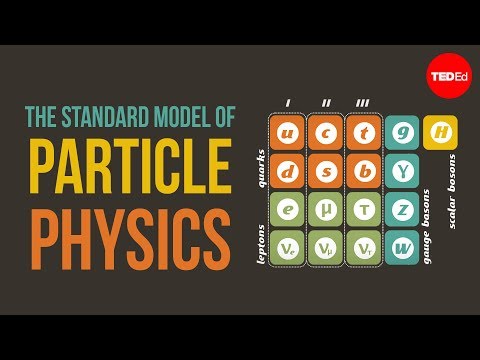
Alright, let’s chat about the 17 fundamental particles that are like the building blocks of everything around us. You know, it’s kind of mind-boggling to think about how all the stuff we see—and a ton of stuff we don’t—are made from these tiny entities. They’re part of something called the **Standard Model of particle physics**, which is basically our best attempt to understand what everything is made of and how it all works together.
So, here’s the deal: these 17 particles are divided into two main categories: **fermions** and **bosons**. Fermions make up matter, while bosons are responsible for forces. Let’s break this down.
Fermions: There are 12 fermions, and they include quarks and leptons.
- Quarks: These guys come in six flavors: up, down, charm, strange, top, and bottom. They’re like the ingredients in your favorite recipe—but way smaller. They combine to form protons and neutrons.
- Leptons: There are six leptons too. The most famous one is the electron (you know, that tiny particle zipping around in atoms). Then you have muons and taus—kind of like electrons’ bigger cousins—and their corresponding neutrinos.
Now, quarks love to hang out in groups because they can’t exist alone due to something called “color confinement.” It sounds fancy but basically means they’re bound together by a force carried by particles called gluons.
Bosons: These are force-carriers—it’s like they’re making sure everything plays nice with each other in the universe.
- Photons: The light particles! These beauties carry electromagnetic force.
- W and Z Bosons: They’re responsible for weak nuclear forces—like what happens during radioactive decay.
- The Higgs Boson: Oh man! This one’s famous because it gives mass to other particles through something called the Higgs field. Without it? Well, things would be pretty ghostly!
- Gluons: Remember those quarks? Gluons keep them together inside protons and neutrons.
It’s incredible when you think about it; just a handful of these particles combine in different ways to create all matter—from stars in the sky to you chilling with your coffee cup.
So why should you care about all this? Well, understanding these fundamental particles helps us peep into how the universe works on a super-small scale. Plus, it’s not just theoretical; this knowledge leads to real-world applications like medicine (think PET scans) or even tech advancements.
If you ever get lost thinking about how we got from quarks to galaxies, remember: it all starts with those 17 little wonder-particles dancing around in their invisible playground! Isn’t science just wild?
Exploring the 6 Fundamental Laws of Quantum Physics: A Comprehensive Guide to Modern Science
Alright, let’s talk about some cool stuff happening in the quantum world! Quantum physics is like the wizardry of science. It’s all about understanding the tiniest particles that make up everything around us. So here’s a rundown on six fundamental laws that, kind of, wrap around this mind-bending topic.
1. Wave-Particle Duality
Picture this: light behaves like both a wave and a particle. Crazy, right? This duality means that photons (the particles of light) can act like waves when they move through space but also like little balls when they collide with something. It’s as if light has a split personality!
2. The Uncertainty Principle
So, there’s this famous dude named Heisenberg who said you can’t know both the position and momentum of a particle at the same time—like trying to catch a slippery fish! The more accurately you measure one, the less accurate your measurement of the other will be. Imagine trying to take aim while blindfolded; it’s tricky!
3. Quantization
In quantum physics, energy isn’t just flowing smoothly like a river; it comes in chunks or “quanta.” Think of it as stepping stones across a pond—you can only stand on certain stones and not in between. Electrons orbiting an atom are similar—they jump between different energy levels instead of moving smoothly.
4. Superposition
Here’s where things get wild! Particles can exist in multiple states at once until you measure them—like Schrödinger’s cat being both alive and dead until you peek inside the box! This concept opens up new possibilities for technology, especially quantum computing.
5. Entanglement
This one sounds straight out of sci-fi! When particles become entangled, they stay connected no matter how far apart they are—like having an invisible string tying them together. If you change one particle, its partner reacts instantly, even if it’s light-years away! It challenges our understanding of space and time.
6. The Observer Effect
The act of observing affects what you’re studying—think about someone sneaking up on you while you’re immersed in your phone game; you’re suddenly not as focused anymore! In quantum physics, when we measure particles, we influence their behavior because we’re interacting with them.
So there you have it! These fundamental laws show how weird yet fascinating our universe is at its core level. Just remember: quantum physics is not something to master overnight; it’s more like an endless adventure filled with surprises—and boy, does it flip our everyday logic upside down sometimes!
Fundamentals of Elementary Particles in Modern Physics: Comprehensive PDF Guide for Researchers and Students
Alright, let’s break down the wild world of elementary particles. You might be thinking, what even are these things, right? So, picture the universe as a gigantic Lego set. Now, elementary particles are basically the tiniest Lego blocks that make everything around us—matter, energy, you name it.
These little guys are so small that you can’t see them even with the best microscope. They’re what scientists study to understand how everything fits together. Here’s a quick rundown of some fundamental concepts:
- What are elementary particles? These are the basic building blocks of matter. They fall into two main categories: fermions and bosons. Fermions make up matter (like electrons and quarks) while bosons are responsible for forces (like photons and gluons).
- The Standard Model: This is like the ultimate guidebook for particle physics. It describes how all these particles interact through three of the four fundamental forces: electromagnetism, weak force, and strong force.
- Quarks and Leptons: Quarks combine to form protons and neutrons (the stuff in your atomic nucleus), while leptons include electrons—the guys buzzing around the nucleus.
- Forces and Exchange Particles: Each force has its exchange particle. For example, photons carry electromagnetic force while gluons carry strong force—think of them as messengers in this cosmic communication system!
You might also hear about things like Higgs boson, which is super important because it helps explain why particles have mass. Finding it was such a big deal that scientists at CERN high-fived each other when they confirmed its existence in 2012!
If you’re curious about how all this works together in nature, consider this: every time you turn on a light or sip coffee—it’s not just atoms doing their thing; it’s these particles interacting according to some seriously complex rules from quantum mechanics. Wild stuff!
The idea is that researching these elementary particles helps unravel mysteries about our universe—like dark matter and energy which make up most of what we can’t see.
So yeah, if you’re diving into particle physics as a researcher or student, understanding these fundamentals is key! They’ll help you navigate through more advanced topics later on.
If you wanna get into the nitty-gritty details later on—think PDFs filled with equations or experimental data—that’s cool too! But remember: getting to know basics like these makes everything else way easier to digest.
You know how when you look at a really tiny ant, you can’t help but wonder what’s happening in its little world? It’s like this whole universe going on down there that we can’t even see. Well, in modern physics, when we talk about elementary particles, it kind of feels the same way. These are the building blocks of everything around us—atoms, molecules, even your morning coffee!
So, let’s get into it. Elementary particles are super small, like ridiculously small. Think of them as the Lego pieces of the universe. They come in different shapes and sizes—quarks, leptons, and even some folks call them bosons. Each one has its own role and personality. Quarks make up protons and neutrons (you know those guys hanging out in the nucleus of an atom?), while leptons include electrons that buzz around outside.
I remember this time in school when we had a science fair project on atoms. We built a model of an atom using different colored balls to represent these particles. I was really excited! But I’ll be honest; it wasn’t until much later that I truly grasped how those tiny particles affect everything from fireworks to why ice floats on water! It was like unlocking a secret door to understanding how stuff works at its core.
Now, there are forces too—like gravity or electromagnetism—that mess around with these particles all the time. You could say they’re like invisible hands guiding their movements or interactions with each other. And here’s where it gets mind-blowing: these interactions are what create all sorts of phenomena in our universe! Like seriously cool stuff—black holes forming, stars shining brightly, or even just your ability to hold that cup of joe without exploding.
It’s fascinating to think about how all these tiny bits come together to create everything we see—or don’t see—in our world. The more scientists study them through giant machines like particle accelerators (which looks super sci-fi), the more we learn about our own existence and how everything is connected.
But there’s still so much mystery around these particles! It feels like every answer leads to more questions—like a never-ending rabbit hole but way cooler because it’s real science! And honestly? That keeps things exciting for everyone from physicists in labs to regular folks sitting around sipping drinks.
So next time you’re staring at something mundane—a pencil maybe—just remember that within it lies an elaborate world made up of these little guys dancing around, interacting and shaping reality as we know it! Isn’t science just wild?