You know that feeling when you trip over your own two feet? Ugh, right? Well, Newton probably had his share of clumsy moments too! Legend has it that he got inspired by an apple falling from a tree. Crazy, but that little incident kicked off some serious thinking about why things fall.
So, here’s the deal: Newton was like the rockstar of physics back in the day. He came up with this whole idea of gravity. And believe it or not, his work set the stage for basically all modern science. I mean, without him? Who knows where we’d be!
Gravity isn’t just about apples and people tumbling down stairs, though. It’s this invisible force pulling everything together—from planets to your morning coffee—it’s everywhere! So let’s chat about how Newton’s ideas shaped our understanding of the universe. Sound good?
Exploring Newton’s Pioneering Contributions to Modern Physics: A Historical Perspective
Isaac Newton is a name that often pops up in science classes, but have you ever stopped to think about what he actually did? I mean, this guy was a game-changer! He laid down the groundwork for modern physics back in the late 17th century, and his contributions are still super relevant today. Let’s break it down.
One of Newton’s biggest contributions was his law of universal gravitation. The idea is pretty straightforward: every object in the universe attracts every other object with a force that’s proportional to their masses and inversely proportional to the square of the distance between them. It sounds complicated, but picture this: if Earth didn’t pull on us with gravity, we’d just float away into space—no thanks! So, the apples falling from trees? Yeah, it’s not just because they’re ripe; it’s gravity saying, “Hey, put me back on the ground!”
Then there’s Newton’s three laws of motion. They might seem simple at first glance, but they set the stage for how we understand movement. Let’s go through them quickly:
- First Law: An object at rest stays at rest unless acted upon by an outside force. Like when you’re chilling on your couch, right? You won’t move until someone yells for pizza.
- Second Law: Force equals mass times acceleration (F=ma). This means if you wanna push your friend on a swing faster, you have to either push harder or make them lighter! (Just kidding—don’t do that).
- Third Law: For every action, there’s an equal and opposite reaction. Think of it as life telling you that whatever you throw out there is gonna bounce back in some way.
These laws may seem basic now, but they were revolutionary at the time and helped people understand everything from how planets move to why cars speed up or slow down.
Another cool thing about Newton was his work with light and optics. He showed that white light is actually made up of different colors through a prism—like how rainbows work! Imagine being him back then: having all these great ideas swirling around in your head and realizing that light could be split like music notes into different colors!
You might wonder why his findings weren’t just a passing fad. Well, here’s where things get interesting. His work paved the way for scientists like Einstein who would later expand on these ideas with relativity. In fact, if Newton hadn’t laid down those foundation stones about gravity and motion, our understanding of space-time might look totally different today.
Now let’s not forget about how Newton’s writings influenced not just physicists but also philosophers and mathematicians over centuries. His book “*Philosophiæ Naturalis Principia Mathematica*”—often called simply *Principia*—is considered one of the most important works in science/history ever written. It sparked conversations and debates that shaped modern scientific thought.
So next time you drop something or look up at the stars, remember Isaac Newton—not as some dusty old figure from textbooks but as a pioneer who literally changed our perspective on everything around us! His ideas are still bouncing around today like those apples he loved so much!
Exploring Isaac Newton’s Perspectives on Gravity: Foundations of Modern Science
So, let’s talk about Isaac Newton and Newton’s gravity. Seriously, this guy was a total game-changer in the world of science.
First off, Newton was born in 1643, and he had some pretty wild ideas that would go on to shape modern science—especially when it comes to gravity. You know how when you jump, you come right back down? That’s because of gravity. It pulls everything toward the center of the Earth. But Newton didn’t just stop at that simple observation.
He came up with three laws of motion that pretty much explain how stuff moves. Think about it: if you push something, it moves. If you don’t push it, it stays still. It sounds obvious now, but back then? Not so much! His first law says an object at rest stays at rest unless acted upon by an external force. This means if nothing’s pushing or pulling on something, it’s just gonna chill there.
Then there’s his second law which is all about acceleration—how fast something speeds up depending on how hard you push it and how heavy it is. Basically, more force means more movement! And his third law eloquently states that for every action, there’s an equal and opposite reaction. So if you jump off a boat, guess what? The boat goes backward!
Now onto gravity specifically! What really set Newton apart was his Universal Law of Gravitation. He said that every mass attracts every other mass in the universe—like magnets but way cooler! It’s not just Earth pulling you down; even tiny objects are tugging on each other a bit too!
It gets better: Newton figured out that the force of gravity depends on two things —the masses of the objects involved and the distance between them. So like, think of two bowling balls sitting in space; they might pull each other closer if they’re not too far apart but will have a weaker pull if they’re miles away from each other.
And then there’s this awesome story about him sitting under an apple tree when he saw an apple fall. Legend has it (and maybe some drama added over time) that this sparked thoughts about why apples fall straight down instead of sideways or up into space! That moment led him to wonder why planets orbit around the sun as well.
Newton’s work laid down a framework for thinking about physics that lasted for centuries—literally! And though we’ve since learned more with Einstein and quantum physics shaking things up even further, without Newton’s insights into gravity and motion first? Who knows where we’d be today?!
So yeah, next time you’re out enjoying a sunny day and feel that pull toward the ground or watch things roll around—think of good old Isaac Newton who helped us understand those everyday wonders through his brilliant mind!
Understanding Newton’s First Law of Gravitation: Foundations of Classical Physics
So, gravity, huh? It’s like that invisible friend we all have but don’t really notice until we trip over our own feet. Newton’s First Law of Gravitation is one of those cornerstones in physics that helps explain why things fall and why planets orbit around the sun.
First off, let’s break down what Newton said. He basically laid it out like this: “An object at rest will stay at rest unless acted on by a net external force.” And if something is moving? Well, it’ll keep moving in a straight line at a constant speed unless something gives it a nudge.
Now, you might be wondering what all this has to do with gravity. Let’s get to that! Gravity is that “nudge,” or force, that pulls objects toward each other. The bigger the object, the stronger the pull. Like when you jump and come right back down—that’s Earth saying, “Hey! Get back here!”
Here’s where it gets cool: everything has a gravitational pull. Yup! Even you! But because you’re not as massive as Earth (sorry), your pull doesn’t really make waves—unless you’re picking up groceries for someone who dropped them.
Think about it: if you’re sitting on a stool (that’s your mass), and your friend is holding a bowling ball (that’s their mass), they’re both pulling on each other slightly. But if they drop it? Boom! You see that bowling ball accelerating toward the ground faster than you can say “law of gravitation.”
Now imagine planets, stars, or even black holes. Their gravitational pull is way stronger than anything we experience daily. For example, the reason moons circle planets and planets circle stars isn’t just random luck; it’s all about how gravity keeps ‘em in line.
So here’s an interesting little side note: when astronauts go into space, they often talk about being weightless. It sure seems strange at first sight—they’re floating around like kids on trampolines! But it’s just because they’re in free fall along with their spacecraft. Sounds technical? It kinda is—but think of them falling towards Earth without ever hitting it!
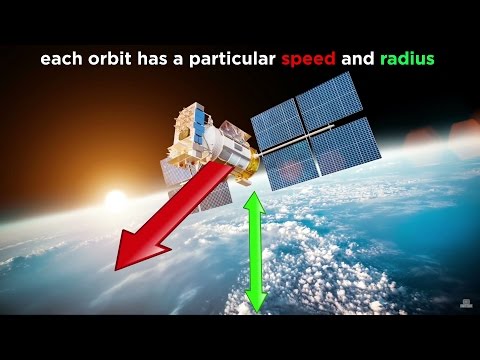
And let’s not forget about orbits—those are basically extreme cases of continuous free falls influenced by gravity. It’s like throwing a ball forward while also letting it fall towards the ground; if done right (and fast enough), it’ll keep going around instead of crashing down.
To tie all this together: Newton’s First Law of Gravitation set the stage for classical physics by giving us an understandable framework for motion and forces in our universe. From apples falling from trees to satellites orbiting our planet—all underpinned by good old gravity.
In short, understanding this law helps us grasp how everything interacts in space—from tiny pebbles to enormous galaxies—and how life on Earth just works day-to-day due to these invisible forces playing their part behind the scenes. Pretty neat, huh?
You ever sit back and think about how some ideas just totally change everything? That’s what happened with Newton and his concept of gravity. It’s like, before he came along, people looked at the world in one way, and then boom—he flipped the script.
So picture this: it’s the late 1600s. Newton, this guy known for being kind of reclusive and a bit intense (like seriously, he was into alchemy and all sorts of crazy stuff), is just sitting there under an apple tree. Allegedly, an apple falls on his head—though I doubt it was a sharp one—and suddenly he thinks about why it fell straight down instead of floating away or doing some weird dance in the air. That moment sparked a revolution!
What he realized is that there’s this invisible force pulling objects toward each other—what we now call gravity. It sounds simple enough, right? But think about how mind-blowing that is! He basically said that every little thing has mass and pulls on other things with mass. That means not just apples but also planets and stars. It’s like they’re all in this cosmic dance, influenced by each other’s gravitational grace.
Remember learning about gravity in school? Maybe you were trying to calculate how long it would take a ball to hit the ground when dropped from different heights? Those equations weren’t just random numbers—they were built on Newton’s laws! You know what his three laws of motion did? They set the stage for everything else in physics that followed. From rockets to roller coasters, they all hinge on those principles.
Sometimes I think about how easy it is to take these concepts for granted. Imagine living in a world where nobody understood why things fall or why the moon hangs around us instead of crashing into Earth. It kinda makes you realize that understanding something like gravity doesn’t just satisfy our curiosity; it opens up pathways for modern science.
Now here we are, centuries later. Newton’s theories led us to Einstein’s relativity and way more advanced physics concepts than he could’ve probably imagined! But honestly? There’s something incredibly poetic about how such an everyday thing—a falling apple—could spark such profound discoveries.
So next time you trip over your shoelaces or see an apple roll off your kitchen counter (maybe not hit you on the head), remember there’s a little bit of magic there—an invisible force keeping everything grounded while also allowing your mind to soar through scientific imagination. Isn’t that something?