You know that feeling when you’re staring at the night sky, and it suddenly hits you—like, whoa, there are billions of stars out there? Picture each one as a tiny party on its own. But here’s the kicker: all those stars and planets are made up of even tinier things—the fundamental particles.
Yeah, I know. It sounds like something out of a sci-fi movie. But seriously, these little guys are the building blocks of everything in our universe! Think about atoms, which make up everything around us—those atoms are just clumps of particles playing together.
So, what are these particles really? And why should we care? Well, they’re kind of like the ingredients in a cosmic recipe. Without them, nothing would exist as we know it today! How about we break it down together?
Exploring the Fundamental Particles of the Universe: A Comprehensive Guide to Particle Physics
So, let’s talk about the tiny building blocks of everything around us—the fundamental particles of the universe. It may sound super complicated, but it’s really just about what things are made of. Seriously, these little guys are the foundation of all matter and energy.
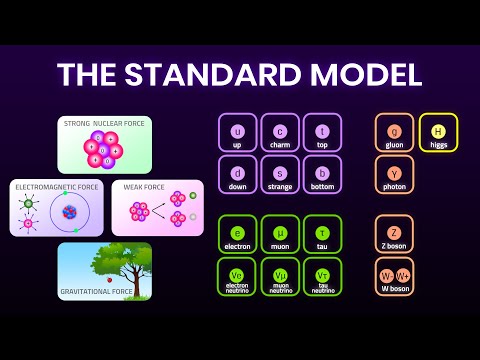
To start off, let’s break it down: there are two main categories of fundamental particles—fermions and bosons. Fermions make up matter, while bosons are responsible for forces. Basically, without them, nothing would hold together—like a house without walls!
- Fermions: These include quarks and leptons. You can think of quarks as the smallest bits that combine to form protons and neutrons—the stuff hanging out in atomic nuclei. Leptons include electrons, which are buzzing around those nuclei.
- Bosons: These guys are like the messengers in a game of telephone. They help transmit forces between particles. For instance, photons carry electromagnetic force (light), while gluons hold quarks together.
Let me hit you with an anecdote: I remember watching a science documentary as a kid where they showed particle collisions at a huge accelerator. It was like fireworks but on an atomic scale! They examined how particles behave under these extreme conditions and made me realize that even the tiniest particles can create massive effects.
Now, you might wonder about how these particles actually interact with each other. That’s where the four fundamental forces come into play: gravity, electromagnetism, weak nuclear force, and strong nuclear force.
- Gravity: Well-known for keeping us on Earth and planets in orbit—though its force is pretty weak compared to others at this scale.
- Electromagnetism: This one governs how charged particles interact; it’s what keeps electrons attracted to protons in atoms.
- Weak nuclear force: Responsible for radioactive decay—think about how some elements break down over time.
- Strong nuclear force: This is what binds protons and neutrons within an atom’s nucleus; it’s incredibly powerful but only works at super short distances!
The beauty of particle physics lies in its ability to explain *how* everything fits together. For example, consider water (H2O). It’s made from hydrogen and oxygen atoms held together by chemical bonds formed from interactions between electrons—those little fermions we talked about!
A fascinating point is that scientists often explore these particles using devices called particle accelerators. Remember those collisions I mentioned? These machines smash particles together at incredible speeds to see what happens when they break apart or transform. Through this research, physicists have discovered various new particles over time!
You might be surprised to know there’s still so much we don’t fully understand about these fundamental players! For instance, dark matter is thought to represent much of our universe’s mass yet doesn’t interact with light in any way we can currently measure—it’s like trying to catch smoke with your bare hands!
The quest for knowledge never stops here! With advancements in technology and experiments planned for the future, who knows what new discoveries await? Isn’t it exciting to think about?
This whole world of fundamental particles teaches us that everything is connected in this vast universe—from the smallest bits we can’t see all the way up to galaxies far away.
Exploring the Four Fundamental Forces of the Universe: A Scientific Overview
So, let’s chat about the four fundamental forces of the universe, right? These forces are like the invisible strings that hold everything together. When you look at the universe, it’s hard to believe how much is happening behind the scenes.
First up, we’ve got gravity. Think of it like a giant magnet that pulls everything towards each other. You know how when you jump, you eventually come back down? That’s gravity at work. It keeps planets in orbit around stars and holds galaxies together too. It’s also what gives us weight! Without gravity, I mean, we’d all be floating around like balloons.
Then there’s electromagnetism. This force is super interesting because it affects both electricity and magnetism. You can feel it when you rub a balloon on your hair and then stick it to a wall—crazy stuff! Electromagnetism is responsible for holding atoms and molecules together. Without it, there’d be no light, no heat, and definitely no life.
Next in line is the strong nuclear force. Now this one is really powerful—like superhero level! It holds protons and neutrons together in an atom’s nucleus. Imagine trying to hold a bunch of marbles tightly packed into one space; that’s kind of what this force does on a tiny scale. Without it, atoms wouldn’t exist as we know them.
Last but definitely not least is weak nuclear force. This one’s a bit shy compared to the others but still plays a crucial role. It’s responsible for certain types of radioactive decay—the kind that helps stars like our Sun shine by changing hydrogen into helium through fusion. So while it’s weak compared to strong nuclear force or electromagnetism, its effects are vital for processes in nuclear physics.
So here’s why all this matters: these fundamental forces interact with all matter in the universe. They govern everything from how galaxies move through space to how atoms combine to form molecules—and even how living beings exist!
Imagine sitting under a starry sky at night; every twinkling light up there is part of this grand design influenced by these forces. It’s mind-boggling when you think about how they connect everything around us.
In summary:
- Gravity: pulls objects toward each other.
- Electromagnetism: affects electricity and magnetism.
- Strong Nuclear Force: binds protons and neutrons in atomic nuclei.
- Weak Nuclear Force: involved in radioactive decay processes.
So yeah, understanding these four fundamental forces gives us insight into not just physics but life itself! Isn’t that cool?
Exploring the Five Fundamental Forces of the Universe: A Scientific Overview
Okay, let’s talk about the fundamental forces of the universe. You know, those invisible strings pulling everything together—or tearing it apart. There are five main ones, and they each play a crucial role in how our universe works. So, buckle up!
1. Gravitational Force
This is the force that keeps your feet on the ground! It’s what makes apples fall from trees and planets orbit stars. Basically, everything with mass attracts everything else with mass. Ever noticed how much stronger gravity feels when you jump? That pull is universal—it’s just way weaker compared to other forces.
2. Electromagnetic Force
This one’s all about electric charges. Like, think of magnets sticking together or how your hair stands up after you rub a balloon on it! The electromagnetic force is responsible for keeping atoms tied together and allows us to have light and chemical reactions. It’s super important for life as we know it!
3. Strong Nuclear Force
This force holds the nucleus of an atom together—the part that houses protons and neutrons. Now, it’s called “strong” for a reason; it overcomes the repulsion between positively charged protons packed so closely together in the atom’s heart! It’s short-range but incredibly powerful.
4. Weak Nuclear Force
The weak force is another player in atomic processes but works at an even shorter range than the strong nuclear force! It’s responsible for processes like radioactive decay, which is when unstable atoms lose energy by emitting radiation. Think of it as nature’s way of balancing things out.
5. Gravitational Interaction (Yet Again)
You might be thinking that gravitational force was covered already, but here we’re talking specifically about how gravity interacts with particles at quantum levels. It connects smaller scales to cosmic scales—it plays a massive role in how structures in the universe form over eons!
The cool thing about these forces? They don’t just exist separately—they often work together in pretty amazing ways! Imagine being at a carnival: sometimes you’re on different rides (like different forces), but occasionally you hit up a ride that combines elements from several attractions!
An emotional moment: I’ll never forget staring at the night sky with my little brother as we tried to count stars—suddenly realizing there were more galaxies out there than we could ever imagine! These forces formed not just our world but every dazzling piece of what surrounds us.
The fundamental forces are basically like nature’s rules for playing this cosmic game we call existence! And understanding them helps us figure out everything from why an apple falls to why stars twinkle—even what makes up just about everything around you.
Phew! So much to unpack here, right?
So, let’s talk about fundamental particles. You know, those tiny building blocks that make up everything around us? It’s kind of mind-blowing when you really think about it. Like, when I was in school, I remember looking at diagrams of atoms and getting totally lost in all those complicated structures. But here’s the thing: at the end of the day, everything boils down to these super tiny particles.
Okay, picture this: you’re at a concert, and there’s a massive crowd. All those people are like atoms making up a solid mass—like a big ol’ universe full of noise and energy. But if you zoom in on just one person in that crowd? That’s where fundamental particles come into play! They’re like the little quirks of personality that make each concert-goer unique.
At the heart of it, we’ve got quarks and leptons. Quarks are like the VIPs; they combine to form protons and neutrons (you know, the stuff that lives in an atom’s nucleus). Leptons include electrons—those pesky little guys zipping around atoms like they own the place! And yeah, there are other particles too, but let’s not get too lost in the weeds here.
Anyway, thinking about these fundamental particles makes you realize how connected everything is. Like when you look at a tree or even your pet goldfish (if you’ve got one!). Those things have atoms made up from quarks and electrons just chilling together. It feels unreal that such minuscule bits can influence so much around us!
You might even start to feel a bit nostalgic thinking back to times spent with friends or family under vast starry skies. Those stars? Made from hydrogen and helium—atoms formed by these fundamental particles! So next time you’re looking up at night or marveling at nature’s beauty, remember there is this intricate dance happening on levels we can’t even see.
What I’m getting at is this: understanding fundamental particles gives us insights into how everything works—from why we have matter and forces to what keeps our universe expanding! It’s wild to think about how something so small holds the keys to such big mysteries. And honestly? That connection between the universe’s tiniest bits and our daily lives can be pretty humbling—and awe-inspiring—all at once.