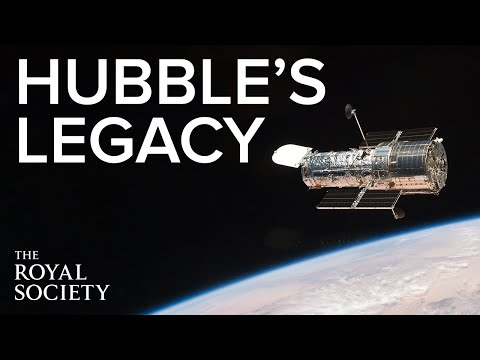
Alright, so picture this: It’s 1990, and a group of scientists is anxiously waiting for the first images from a shiny new telescope that’s just been launched into space. Yeah, I’m talking about Hubble! You could almost hear the collective breath held across the world.
Turns out, Hubble wasn’t just any telescope. It was like putting glasses on our blurry understanding of the universe. Seriously! Before it came along, we were squinting at the cosmos like a kid trying to see a movie through a foggy window.
And here’s the kicker: Hubble’s been hanging out in orbit for over three decades now! Can you believe that? It’s like that one friend who keeps showing up to every party, bringing fascinating stories and mind-blowing images from across the universe.
So, let’s talk about Hubble’s legacy and how it’s reshaped our cosmic vision forever. Buckle up; it’s gonna be a wild ride through space!
Understanding Hubble’s Law: Insights into the Expanding Universe and Cosmic Dynamics
So, let’s talk about Hubble’s Law. This is one of those mind-blowing ideas that really changes how we see the universe. The main takeaway? The universe is expanding. How cool is that?
The story begins with Edwin Hubble, an astronomer who lived in the early 20th century. Back then, we thought the universe was static. Can you imagine? Hubble was like, “Wait a minute!” He observed that galaxies weren’t just sitting still; they were actually moving away from us. The further away a galaxy is, the faster it’s retreating.
To explain this in simple terms: picture a balloon. When you blow it up, all those little dots on its surface move apart from each other as the balloon expands. That’s pretty much how our universe works! So, a galaxy that’s far away is traveling faster than one that’s nearby.
- Doppler Effect: You know when an ambulance drives by and its siren sounds different as it approaches and then moves away? That’s known as the Doppler Effect! It helps illustrate that wavelengths of light from distant galaxies stretch out, making them appear redder when they move away—hence the term “redshift.”
- The Cosmic Scale: Hubble’s findings support what we now refer to as “the Big Bang theory.” Imagine everything in our universe squished into a teeny-tiny point and then suddenly expanding billions of years ago!
- Hubble Constant: This is basically a number that tells us how fast the universe is expanding today. It gives scientists insight into measuring distances to galaxies and understanding their speed.
This idea can feel overwhelming but think of it this way: If you could look far enough into space—and I mean really far—you’d be peeking back in time too! Light takes time to travel from galaxies to our telescopes, so we’re seeing those distant stars and galaxies as they were billions of years ago.
A personal anecdote here: I remember gazing up at a starry sky during a camping trip with friends. We tried to count shooting stars while talking about space stuff—someone said something like “Imagine all those stars are actually moving away right now.” That just blew my mind! It really put into perspective how dynamic and ever-changing our universe truly is.
So getting back to Hubble’s Law—it’s more than just numbers; it shows us that our universe has this incredible history and future ahead of it. It goes on expanding at an astonishing rate! Seriously, every time you think about it, there’s something new to discover.
In short, Hubble helped us realize that nothing stays still in space; everything’s on the move! And understanding this can lead us down paths exploring dark energy—the mysterious force behind this expansion—and even someday answering whether the universe will keep stretching or eventually come back together.
Now doesn’t that make you see those twinkling stars differently?
Georges Lemaître: The Father of the Big Bang Theory and His Impact on Modern Cosmology
Alright, so let’s talk about Georges Lemaître. This guy is a big deal in the world of cosmology – basically, he’s known as the father of the Big Bang theory. How cool is that? Born in Belgium in 1894, Lemaître was not just a physicist but also a priest. You know what they say—sometimes the most unexpected combinations lead to fascinating insights!
Now, here’s the thing: Lemaître came up with some groundbreaking ideas back in the 1920s. Imagine sitting around with your friends and suddenly proposing that the universe wasn’t static but actually expanding! He suggested that it all began from a “primeval atom,” which was like a super tiny point that exploded and started everything we see today. This idea laid down the framework for what we now call the Big Bang theory.
Just think about it: before Lemaître, many believed the universe was unchanging. But then along came Hubble with his observations of galaxies moving away from us, proving Lemaître right! So you have these two brilliant minds—Lemaître theorizing and Hubble providing evidence—which really pushed our understanding forward.
- Lemaître’s Primeval Atom: His description of an initial singularity that expanded gave us a fresh perspective on how everything started.
- The Expansion of the Universe: His work laid down principles for understanding how galaxies move and change over time.
- The Relationship with Hubble: While Lemaître theorized about expansion, Hubble’s findings offered proof of it through redshift observations.
You might be wondering: why does this even matter? Well, it totally reshaped modern cosmology. Thanks to these theories, we can now understand things like cosmic background radiation and the age of the universe—a staggering 13.8 billion years!
I remember reading about how excited scientists were when they discovered evidence supporting Lemaître’s ideas decades later. It’s like finally finding out that your wildest childhood dreams could actually be true! The universe wasn’t just an endless void; instead, it had a dynamic past full of explosive beginnings.
Lemaître also had this knack for bridging science and faith, which is pretty rare in today’s world where people often feel they have to pick one side or another. He believed scientific inquiry complemented religious faith rather than conflicted with it—a perspective that’s still worth reflecting on today.
In summary, Georges Lemaître didn’t just throw out some cool ideas; he transformed our entire understanding of how the universe works. It’s amazing to think how one person can impact something as enormous as cosmology while juggling life as a priest! So next time you gaze at stars or ponder where everything came from, remember this brilliant mind who helped us take those first steps into understanding our cosmos.
Hubble’s Legacy: A Comprehensive Review of Its Impact on Our Understanding of the Universe
The Hubble Space Telescope is like that friend who always shows up with a killer camera at parties, capturing moments you didn’t even know you missed. Launched in 1990, Hubble has snapped over a million pictures of space, revealing mysteries and wonders we simply couldn’t see before. Its legacy? Well, it’s pretty massive.
First off, Hubble has radically changed our understanding of the universe’s age. Before Hubble, astronomers thought the universe might be about 10 to 20 billion years old. But through its observations of distant galaxies and their redshifts, it’s more like 13.8 billion years—an age that gives us insight into how everything began. Seriously! That’s older than dinosaurs!
Then there’s the whole dark energy thing. Imagine a cosmic mystery so baffling that it makes you question everything you thought you knew about the universe. That’s dark energy for you. It was Hubble’s observations that helped us realize this mysterious force is driving the acceleration of the universe’s expansion. That’s just mind-blowing! It turns out we’re not just drifting apart; we’re speeding up!
Another key point is the incredible detail Hubble provides. With its high-resolution images, it allows us to see deep into space—like peeking at exotic celestial events millions or billions of light-years away. For instance, when it captured the stunning Pillars of Creation in the Eagle Nebula, it didn’t just provide eye candy; it revealed how stars are born from gas and dust in those colorful towers.
Of course, there are also those breathtaking moments where we get to witness cosmic collisions and interactions between galaxies. One famous example is when Hubble observed two galaxies merging—it looked like a cosmic dance! These insights help astronomers understand how galaxies evolve over time.
On top of that, Hubble has played a crucial role in exoplanet discovery. By studying light curves from distant stars while planets pass in front of them, we’ve learned about worlds outside our solar system—sometimes in surprising places! This was possible thanks to Hubble’s ability to analyze starlight for traces of gases in exoplanet atmospheres.
But let’s not forget about our own backyard: the solar system. Hubble has given us spectacular views of planets and their moons. Remember when it captured those incredible images of Jupiter? You could almost feel the storms swirling. This helps scientists learn more about planetary processes right here at home.
And then there’s outreach! Hubble’s images have sparked interest in astronomy across generations. I mean who hasn’t seen those colorful cosmic masterpieces? They inspire people—kids and adults alike—to gaze at the night sky with wonder.
So yeah, this telescope isn’t just some fancy piece of gear orbiting Earth. It’s been an essential tool for pushing boundaries and expanding our knowledge base about space and time itself. As we continue to explore the cosmos with new technology coming up after Hubble, its impact will echo through time for generations to come.
In short:
Hubble may be getting older but its legacy is as fresh as ever—a reminder that there’s always more to discover if we keep looking up!
You know, sometimes I find myself just staring up at the night sky, lost in thought. It’s like all those twinkling stars are little reminders of stories waiting to be uncovered. That’s where the Hubble Space Telescope comes in, right? Launched way back in 1990, this little piece of technology has totally changed the way we see our universe.
Seriously, can you imagine being part of that first team looking through Hubble’s eyes? You probably felt this mix of excitement and nervous energy. The first images it sent back were stunning! Suddenly, we weren’t just looking at blurry blobs; we were peering into galaxies that are billions of light-years away. That kind of perspective really hits home when you think about it.
The thing is, Hubble isn’t just about pretty pictures. It’s unlocked secrets about how galaxies form and evolve. Like its observations showed us that some galaxies are actually colliding and merging into new forms! Crazy, right? And it even helped us figure out that the universe is expanding, not slowing down as we once thought. That discovery led to the concept of dark energy—still wrapping my head around that one!
And then there’s its role in finding exoplanets! Can you picture scientists excitedly analyzing data to spot planets outside our solar system? Hubble helped confirm their existence and even hinted at their atmospheres—like a cosmic treasure hunt. I mean, every new piece of information adds to this vast puzzle.
But what really gets me is how Hubble brings people together—scientists from all over working collaboratively and sharing their findings with the world. Its legacy isn’t just about equipment or data; it’s about curiosity and wonder. We connect over these discoveries because they remind us how small we are yet how grand the universe can be.
So as I look up at those stars on a clear night, I realize how much Hubble has expanded our vision—not just literally but emotionally too. It reminds us that there’s always more to explore beyond what meets the eye. And for me, that keeps the spark alive!