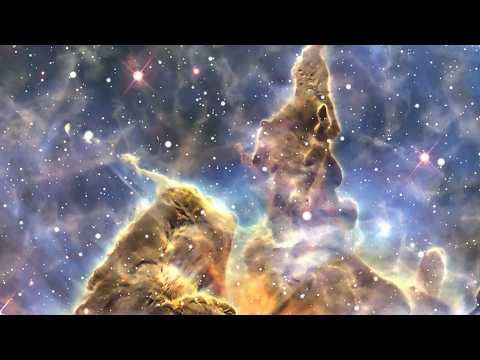
You know what’s wild? The Hubble Space Telescope has been hanging out in space for over 30 years! That’s like having a super cool friend who can see things way better than you can, just hovering above Earth.
Imagine peeking through a cosmic window and catching glimpses of galaxies that are billions of light-years away. Seriously, it’s mind-blowing! Hubble did just that—unraveling mysteries about the universe that blew our minds and shattered old beliefs.
I remember the first time I saw one of those stunning Hubble images. It was like getting lost in a painting where every swirl of color tells a story. I couldn’t help but wonder what else is out there.
Hubble’s legacy isn’t just about pretty pictures, though. It’s transformed how we understand our universe, affecting everything from the age of stars to the existence of black holes. So, let’s chat about how this telescope changed the game forever. You’re in for a ride!
Edwin Hubble’s Pioneering Impact on Cosmology: Unraveling the Expanding Universe
So, let’s chat about Edwin Hubble. You know, he’s a pretty big deal when it comes to understanding the universe. Back in the early 20th century, he made some groundbreaking discoveries that changed our perspective on how the cosmos works. Seriously, this guy helped us realize that the universe is much bigger—and more dynamic—than we ever thought possible.
Firstly, Hubble figured out that there are galaxies beyond our Milky Way. Before his work, many scientists believed that our galaxy was basically the whole universe. Can you imagine that? Just one little spiral among billions! Hubble’s observations showed that these other galaxies were not just fuzzy blobs of light—they were entire systems of stars and planets like ours.
Now, here comes the super cool part: Hubble discovered that these galaxies are moving away from us. He looked at how the light from distant galaxies changes as they speed away—a phenomenon called “redshift.” It’s like when a car zooms past you and its sound gets deeper; light does something similar! So, what did he find? The farther a galaxy is from us, the faster it moves away. This led to what we now call Hubble’s Law.
Hubble’s Law essentially says that there’s a direct relationship between distance and speed for galaxies. If you think about it, this implies everything is expanding! Imagine blowing up a balloon with dots on it; as it inflates, all those dots move away from each other. That’s kind of what’s happening with our universe!
But wait—there’s more! His work also contributed to the idea of an expanding universe. This was a bit revolutionary since most people thought everything was static or unchanging. Knowing the universe was stretching out meant we could start thinking about its origins and eventual fate—like how stars live and die over billions of years.
Now here’s where things get emotional for me: Imagine being in the early 1900s when all this information was coming out. People probably felt both thrilled and scared at the idea that there were so many unknowns out there! Think of nights spent staring up at the stars with newfound wonder—it must have been magical!
To sum it up:
- Hubble revealed other galaxies exist.
- He discovered they’re moving away from us.
- This leads to Hubble’s Law—more distance means more speed.
- This all points to an expanding universe.
When you take a step back and think about it, Edwin Hubble didn’t just unravel some cosmic mystery; he changed humanity’s view of its place in this vast universe. We went from thinking we were in a static world to one that’s ever-changing and full of possibilities. Talk about elevating our cosmic perspective!
Edwin Hubble’s Discovery: Transforming Humanity’s Understanding of the Universe and Its Implications for Science
Edwin Hubble changed the game for our understanding of the universe, and it’s wild to think about how that happened. Before him, most folks believed we lived in a static universe, where everything was pretty much set in stone. But Hubble stepped onto the scene and flipped that idea on its head.
So here’s how it went down. In the 1920s, Edwin Hubble observed galaxies through the newly built Mount Wilson Observatory telescope in California. He found out that some galaxies were moving away from us. Now, you might be thinking, “What’s the big deal?” Well, he measured how fast they were moving based on their light—seriously rad stuff! This led to what we now know as Hubble’s Law, which states that the farther away a galaxy is, the faster it seems to be moving away from us.
And honestly? That’s where things got really interesting. It suggested that our universe is expanding! This idea was groundbreaking because it opened the door to questioning our existence within such an ever-changing cosmos. You see, this indicated that there was a time when all matter was concentrated in one tiny point—a concept later known as the Big Bang Theory. Can you imagine realizing we’re living in an expanding universe? It’s like finding out you’re just a speck on an ever-growing balloon!
Now let’s talk implications for science and beyond. Hubble didn’t just change astronomy; his discoveries laid crucial groundwork for cosmology—the study of the universe itself! With his work, scientists began to understand things like dark energy and cosmic microwave background radiation—both pivotal in explaining how our universe functions today.
But it goes deeper than science alone; it has a philosophical edge too! Think of all those starry nights you’ve spent wondering about life beyond Earth. Hubble’s findings make us question our place in this ginormous universe filled with billions of galaxies. You know that feeling when you look up at a sky full of stars and feel so small yet so connected? That’s Hubble’s legacy at work.
In addition to deepening our understanding of space, he inspired generations of astronomers and enthusiasts alike—pushing people to gaze into the night sky with curiosity rather than fear or indifference. His work has become foundational for future missions and telescopes aimed at unraveling more cosmic puzzles out there.
In short:
- Universe Expansion: Hubble found galaxies moving away from us.
- Hubble’s Law: The farther away a galaxy is, the faster it’s receding.
- The Big Bang Theory: Implied by his findings about expansion.
- Cosmology Development: Influenced modern astrophysics concepts.
- Philosophical Impact: Shifted our view on humanity’s place in the cosmos.
So yeah, Edwin Hubble didn’t just look through a telescope; he looked into infinity and beckoned all of us to follow him down this path of exploration and wonderment. We may still be figuring things out up there, but thanks to him, we’ve got much better questions than ever before—and what’s cooler than that?
Exploring the Cosmos: The Impact of Chandra X-ray Observatory on Astrophysics and Cosmic Discoveries
Sure, let’s talk about how the Chandra X-ray Observatory has made waves in astrophysics and cosmic discoveries. Seriously, it’s like peeking into a whole different universe!
First off, let’s get down to what Chandra is all about. Launched in 1999, it’s a space telescope designed to capture X-rays from some of the hottest and most energetic spots in the universe. You know, places like black holes, neutron stars, and supernova remnants? The thing is, regular telescopes can’t see these high-energy phenomena because they only pick up visible light. But Chandra? It specializes in X-rays that reveal so much more.
Why is this important? Well, understanding these cosmic events helps us grasp the fundamental processes that shape our universe. For example, when *supernovae* explode, they don’t just vanish; they send shockwaves through space that create new stars! When Chandra captures these X-ray emissions, we can study how matter behaves in extreme conditions.
Here are some cool ways Chandra has impacted our understanding of the cosmos:
- Black Holes: Before Chandra came along, we had hints that black holes existed but not much proof. It showed us how material spirals into them and even provided evidence for supermassive black holes at the centers of galaxies!
- Cosmic Evolution: By observing galaxy clusters with Chandra, scientists discovered how they grow over time by merging with other clusters. This helps map out how galaxies formed and evolved.
- X-ray Binaries: Chandra helped uncover the behavior of *X-ray binaries*—systems where a normal star orbits a compact object like a black hole or neutron star. These grow brighter as material from the normal star gets sucked in!
A quick story comes to mind that shows just how striking this discovery can be. There was this one time when scientists used data from Chandra to observe an area known as 1E 0657-56 (pretty catchy name huh?). They found that two galaxy clusters collided at lightning speed! The result? They discovered dark matter behaves quite differently than ordinary matter during such events.
Now let’s talk about collaboration because that’s huge! Chandra doesn’t work alone; it plays well with others—like Hubble and ground-based observatories. While Hubble gives us stunning color images of galaxies and nebulae using visible light, Chandra reveals hidden secrets lurking within those same structures through its X-ray vision.
So yeah, thanks to tools like the Chandra X-ray Observatory jumping into action with its unique perspective on cosmic phenomena, we’re gaining insights into everything from fundamental physics to the composition of distant worlds. Isn’t that wild?
In essence, what happens here blends art and science beautifully—you have breathtaking images alongside groundbreaking discoveries about our universe’s history and future possibilities! The legacy left by both Hubble and Chandra continues to shape our exploration of space forever.
You know, I’ve always been fascinated by the night sky. There’s something just awe-inspiring about looking up at all those stars, wondering what’s out there. And that’s where the Hubble Space Telescope comes in. This piece of tech has seriously transformed our understanding of the universe.
I remember when I first saw one of Hubble’s stunning images—a picture of the Pillars of Creation in the Eagle Nebula. These incredible towers of gas and dust looked like something straight out of a sci-fi movie! I felt this rush of excitement, like, whoa, how is this even possible? Can you imagine being able to peer into such distant corners of space?
Hubble has been up there for over thirty years now, floating above Earth and capturing breathtaking photos that reveal things we’d only dreamed about. It’s told us stories about galaxies billions of light-years away, helped us grasp how old our universe really is, and shown us supernovae that explode with more force than we can even fathom. It’s kind of like having a cosmic time machine!
What’s really cool is how Hubble has not only deepened our understanding but also sparked curiosity. Each image it sends back isn’t just data; it tells us about the birth and death of stars, black holes lurking in galaxies, and even planets orbiting other suns. With every snapshot, there’s a sense that we’re unraveling some grand mystery—like cosmic detectives.
Sure, Hubble isn’t perfect—there have been hiccups along the way with its mirrors and technology—but talk about resilience! Those fixes just made it even better. The upgrades were like giving it a cosmic facelift! Now it’s more powerful than ever.
And let’s not forget how Hubble serves as a reminder that we’re part of something so much bigger than ourselves. When you look at those images and realize you’re seeing light from millions or billions of years ago… well, it makes your everyday worries seem pretty small.
In a world where things can often feel chaotic or overwhelming, Hubble gives us hope and perspective. It whispers to us: “Look beyond your little world.” And really, isn’t that what life’s all about? Exploring what lies ahead while appreciating where we’ve come from?
So yeah, let’s raise a glass to Hubble—not just for its scientific achievements but for inspiring countless dreamers to look up and wonder!