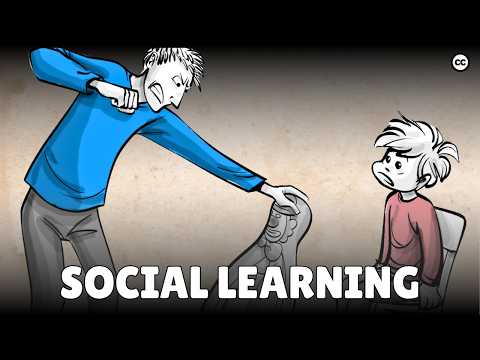
You know how sometimes you really want to teach your dog a new trick, like rolling over? So you give him a treat every time he even thinks about doing it? That’s kinda what behaviorism is all about. It’s all about how we learn through rewards and consequences.
But let’s not stop there! Social learning theory throws another twist into the mix. Picture this: You watch your friend nail a cool dance move at a party, and suddenly, you wanna do it too. Like, who doesn’t love breaking out some moves?
These ideas aren’t just for dogs or parties. They help explain how we pick up habits, behaviors, and even social skills from those around us.
It is wild when you think about it. The way we learn is super interesting! So grab a snack, and let’s dive into this fascinating world of behaviorism and social learning theory together!
Understanding the Social Learning Theory: Its Role and Implications in Scientific Education
Let’s talk about something really interesting: Social Learning Theory. This theory, created by Albert Bandura, is all about how we learn from each other. You know, seeing someone do something and then thinking, “Hey, I can do that too!” It’s kinda like being in school and watching a classmate solve a tricky math problem. You watch, you learn, and sometimes you even pick up their shortcuts.
So, basically, Social Learning Theory says that we can learn not only through direct experience but also by observing others. Think about when you were a kid and saw your friend ride a bike for the first time. You might have been nervous at first, but after seeing them zoom around, you felt inspired to hop on too! It’s all about that social interaction.
Now let’s dig deeper into this idea. The theory highlights four main processes in learning:
- Attention: You gotta pay attention to what others are doing. If you’re distracted or not interested, good luck learning!
- Retention: This is where memory kicks in. You need to remember what you’ve observed to use it later.
- Reproduction: Here’s the fun part—you actually try it out yourself! Maybe you fall off the bike a few times at first but get up and keep going.
- Motivation: Lastly, why would you want to repeat what you’ve learned? Seeing your friend successfully ride the bike motivates you to keep trying!
The role of Social Learning Theory in scientific education is pretty remarkable too. For instance, imagine a science class where students are conducting experiments together. When they see their peers making observations and getting excited about results, it boosts their motivation to engage in similar activities. It’s like forming a little study tribe!
You can also link this theory back to behaviorism, which focuses on how our environment shapes our actions through rewards and punishments. While behaviorism emphasizes direct reinforcement (like getting a gold star for answering questions correctly), Social Learning Theory suggests that learning can happen without direct rewards—just by watching someone else succeed or fail.
A great example of this is when scientists collaborate on research projects. New researchers often observe seasoned ones while they conduct complex experiments or analyze data. They pick up methods just by being around experienced scientists—no one handed them a manual! So every lab becomes not just a place of hard work but also a rich social environment for educational growth.
This approach has amazing implications too! By fostering collaborative practices in scientific education, we can help create an atmosphere where learners feel comfortable asking questions or sharing ideas instead of competing against one another.
If we think about the future of science education with Social Learning Theory in mind—and maybe throw some technology into the mix—we can truly transform classrooms into vibrant hubs of exploration and creativity!
The bottom line? Learning doesn’t happen just in isolation; it’s woven into our social experiences. Emphasizing Social Learning Theory could lead us toward better teaching strategies that benefit everyone involved—students and teachers alike!
Exploring the Impact of Behaviorism on the Evolution of Psychology as a Scientific Discipline
Behaviorism has played a massive role in shaping psychology, don’t you think? It all kicked off in the early 20th century, when psychologists like John B. Watson decided to focus on observable behavior instead of the abstract concepts of consciousness or feelings. They believed that if you can’t see it, you can’t study it. So, they tossed out ideas about mental states and zeroed in on how people respond to different stimuli. It was a game changer!
A big player in this game was B.F. Skinner, who introduced the idea of operant conditioning. Basically, he showed that behaviors could be shaped through reinforcement or punishment. Want to teach a pigeon to play ping pong? Just reward it every time it gets closer to hitting the ball! It’s all about making connections between actions and consequences.
So, what’s the deal with this shift? Well, before behaviorism took center stage, psychology was more like philosophy—you know, diving deep into thoughts and emotions without solid evidence. But once behaviorists came along, they brought a scientific rigor that made psychology feel more legit. This approach encouraged researchers to rely on experiments and observations instead of just sitting around pondering life’s big questions.
Behaviorism also opened doors for later theories like social learning. Think about it: Albert Bandura stepped in with his famous Bobo doll experiment, which showed that kids imitate behaviors they see in adults. This added a social layer to behaviorism—saying that we learn not only from direct experience but also by watching others.
You might wonder—does this mean feelings and mental processes don’t matter? Not really! While behaviorists focused mainly on external actions, later developments highlighted the importance of cognitive processes too. So now we have cognitive-behavioral therapy (CBT), blending both worlds into something pretty effective for treating various issues.
The influence of behaviorism is still strong today. Even what we see on social media—how likes and shares can shape our behaviors—is kind of an echo of those early principles! The thing is, understanding how our environment influences us is crucial for many modern psychological applications.
In summary:
- Behaviorism shifted psychology from focus on internal mental states to observable behaviors.
- B.F. Skinner’s operant conditioning showed how reinforcement could shape actions.
- Social learning theory, introduced by Bandura, added another dimension by incorporating observation into learning.
- This foundation led to modern therapies like CBT, merging behavioral and cognitive techniques.
You see? The evolution of psychology owes a lot to those early days of behaviorism. It laid down some serious groundwork for understanding how we learn and change over time—even if there’s still so much more to explore!
Understanding Behaviorism in Social Science: Foundations, Principles, and Applications
Alright, let’s chat about behaviorism. It’s like a lens through which social scientists view how we humans act and interact. At its core, behaviorism focuses on observable behaviors rather than things like thoughts or feelings. So, if you’re looking for the root of why people do what they do, this is a solid start.
Foundations of Behaviorism are like the building blocks of this whole idea. It started off with folks like B.F. Skinner and John B. Watson in the early 20th century. They believed that all behaviors are learned through interactions with the environment, kind of like how you learn to ride a bike by practicing—falling and getting back up until it sticks.
Key Principles include a few big ideas:
- Conditioning: There are two types: classical and operant conditioning. Classical conditioning is when you learn through association—like when your dog knows it’s dinner time because it hears the can opener.
- Reinforcement: This is all about rewards and punishments shaping behavior. If you get a cookie for doing your chores, you’re more likely to do them again!
- Observable Behaviors: Basically, behaviorists believe you can only study what you can see and measure—thoughts? Nah, they don’t count.
The cool part? Behaviorism doesn’t just hang out in labs; it finds its way into everyday life too! Take schools for example: teachers often use positive reinforcement to encourage kids to behave well or perform better academically. You might remember getting a gold star on your homework—that’s classic behaviorism at work!
Applications? Oh man, they’re everywhere!
- Psychology: Therapists might use behavioral techniques to help clients change their actions or habits—for instance, using reward systems to quit smoking.
- Sociology: Researchers look at how groups behave based on environmental influences—a great example being crowds at events; some people get hyped up while others may feel anxious.
- An Education: Schools implement programs based on behaviorist principles to improve student engagement and learning outcomes.
This history dives deep into our social fabric! Honestly, as I think back on my school days—remember the thrill of being rewarded for good grades? That was all behaviorism in action!
You might wonder though: Is behaviorism everything? Well, no—it has its limitations since it overlooks mental processes that also play huge roles in our actions. But it’s still super useful in understanding certain patterns of human conduct!
If you’re ever curious about why we respond differently in various environments or situations, just dive into some behaviorist theories! They really shed light on how our surroundings shape who we are and what we do every day. So next time you’re busting over an exam or deciding whether to join a group project—just remember: you’re not alone in these choices; it’s science at play!
You know, I was thinking about how we learn and behave, and it hit me just how fascinating these theories are. When I was a kid, I remember watching my older brother build model airplanes. He was super into it, like, all day long! I just sat there and soaked it up. Eventually, I picked up some tools and started my own little projects. That’s kinda how behaviorism and social learning theory work.
Behaviorism says that our behaviors are shaped by what we experience in the environment. So whenever my brother built something cool, he didn’t just show me once; he kept at it, reinforcing his skills over time. It’s like when you get a cookie for doing your chores—those rewards can keep you going!
Then there’s social learning theory, which takes things a step further. It’s not just about rewards or punishments; it’s also about observing others and figuring out what works. Like when I watched my brother fiddle with the glue or paint—by seeing him mess up sometimes or nail it perfectly, I learned without even realizing it! Bandura really nailed this concept when he showed that we can learn vicariously through others’ experiences.
Both theories highlight that learning isn’t just this lonely journey in a vacuum—it’s rooted in our interactions with the world around us. You might notice this every time you’re scrolling through social media or even just chatting with friends; we pick up habits and ideas from each other all the time.
So yeah, whether it’s building model airplanes or picking up new slang from friends at school, it’s clear we’re always learning—from our environment or from each other—and that’s pretty amazing if you ask me!