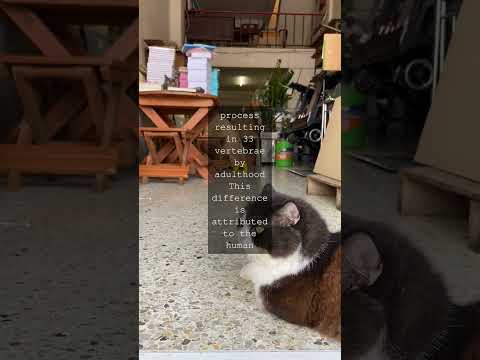
So, you know how cats just seem to glide around like little ninjas? Seriously, one minute they’re lounging in the sun, and the next, they’re launching off a bookshelf like it’s no big deal. It’s wild!
Well, that graceful move has a lot to do with their vertebrae. Yeah, those little bones that make up their spine play a huge role in why they’re such acrobatic stars.
Cats have this super flexible spine—like Stretch Armstrong if he were a cat! Each vertebra helps them twist and turn in ways we could only dream of doing without ending up in physical therapy.
Stick around as we chat about feline vertebrae anatomy and how it all ties into those epic leaps and graceful landings. Trust me, you’ll start seeing your furry friend in a whole new light!
Understanding Cat Vertebrae Anatomy: Insights into Feline Movement and Neuromuscular Coordination
So, let’s talk about cat vertebrae anatomy and why it’s super interesting when you think about how these little furballs move. Seriously, if you’ve ever watched a cat leap across a room or make that epic stretch, you know there’s something special going on there.
First off, cats have a really flexible spine, and this is mainly because they have more vertebrae than we do. Most cats have about 30 vertebrae in their spine, which helps them twist and turn with grace. This flexibility is key for agility—like when they’re sneaking up on their favorite toy. You follow me?
Now, let’s break down the anatomy a bit. The cat’s spine consists of several sections:
- Cervical vertebrae: There are seven of these in the neck area. They allow for a wide range of head movement.
- Thoracic vertebrae: These are attached to the ribs and help protect vital organs while allowing some movement.
- Lumbar vertebrae: There are usually seven of these in the lower back. They provide strength for jumping and running.
- Sacral vertebrae: These fuse to form one solid piece called the sacrum, helping to support all that leaping around.
- Coccygeal vertebrae: This is basically the tailbone area. It gives cats balance as they walk or pounce.
Each part plays a role in how a cat moves and coordinates its muscles. The lumbar region, for instance, is super important when it comes to jumping—those muscles need to work together perfectly for them to land gracefully.
Speaking of coordination, let’s not forget about the neuromuscular aspect! The way a cat’s brain talks to its muscles through nerves is essential for everything from walking to climbing trees. When a cat decides it’s time to dart after that pesky laser pointer, all those signals fly from its brain down through its spinal cord out to the muscles in its legs.
Here’s where it gets kind of emotional for pet owners: watching your kitty splay out on the floor after an epic chase shows how much they rely on that coordination and flexibility! You can visibly see them rest after all those acrobatic feats.
Another cool thing? Cats can actually extend their spines while they run or jump. This stretching helps them gain extra distance during jumps—like when they seem to defy gravity just before landing on that perfect sunbeam spot!
In short, understanding how cat vertebrae work reveals just how amazing these creatures are at moving effortlessly through their world. Those little details probably make you appreciate your furry friend even more!
Understanding Cat Vertebrae Anatomy: The Key to Feline Movement and Mobility in Science
You know, when you watch a cat gracefully leap from one spot to another, it’s easy to forget there’s some serious anatomy at play. Let’s break down the vertebrae anatomy of cats and see how it contributes to their amazing mobility.
Cats have this incredible flexibility and agility, right? Well, a big part of that is thanks to their spinal column. It’s made up of 30 vertebrae—and each one plays a unique role in their movement. They have cervical (neck), thoracic (back), lumbar (lower back), sacral (pelvic area), and caudal (tail) vertebrae. This whole system is like a well-oiled machine working together.
- Cervical Vertebrae: There are seven of these guys. They help support the head and allow for amazing neck movement, which is super handy when they’re spotting prey.
- Thoracic Vertebrae: With thirteen of these, they connect with the ribs. This part keeps the chest protected while also allowing expansion when they breathe, especially after an intense chase.
- Lumbar Vertebrae: Cats have seven lumbar vertebrae, making this section really flexible. This flexibility is crucial for all those twisting and turning movements—think about how they twist in mid-air!
- Sacral Vertebrae: These are fused together into one solid bone called the sacrum. They connect the spine to the hind limbs, providing stability during running or jumping.
- Caudal Vertebrae: The tail bones! There can be anywhere from around 18 to 23 of them. The tail helps balance when they’re scaling heights or making sharp turns; it’s like their very own rudder!
You might’ve seen your cat stretch or arch its back—it’s a common sight! This isn’t just stretching for fun; it’s a natural way for cats to keep their spine flexible and maintain muscle tone. A well-toned spine allows them to pounce quickly or sprint away if needed.
The intervertebral discs located between each vertebra are also packed with fluid which acts like shock absorbers during those high jumps or sudden stops. It’s really mind-blowing how these elements work together! Imagine your favorite athlete performing—they need strong core muscles just as much as flexible joints, right? Same goes for our feline friends!
If you ever get the chance to observe a kitten’s early pawing at things, it’s pretty cute but also important for their development. Those little stretches and attempts at climbing help strengthen their muscles and learn balance. So with every playful pounce or stretch, they’re actually training for agility!
The combination of all these aspects gives cats that distinct ability to move elegantly yet swiftly—from lounging around on your couch all day to suddenly dashing after a toy mouse like an Olympic sprinter.
So next time you’re captivated by your cat’s athleticism or gracefulness, remember: there’s some serious science behind that sleek movement! Each vertebra plays its part in crafting what we see as pure feline finesse.
Exploring the Anatomy of Female Cats: A Scientific Overview
Exploring the anatomy of female cats is super fascinating! You know, every part of their body works together like a well-oiled machine. You follow me? Let’s break it down, starting with their amazing spine!
The cat’s spine has about 30 vertebrae that give them both flexibility and strength. This skeleton acts like a spring, allowing them to twist and leap with stunning agility. Seriously, ever seen a cat jump up five feet in the air? Yeah, that’s all thanks to those nifty bones.
Now, let’s talk about these vertebrae in more detail. They’re divided into several sections:
- Cervical vertebrae: These are in the neck area. Cats have seven of them, just like us! They let the head pivot and turn easily.
- Thoracic vertebrae: There are around 13 of these guys. They connect to the ribs and help protect vital organs while also supporting their upper body.
- Lumbar vertebrae: Cats usually have seven lumbar vertebrae. This region is crucial for movement and flexibility in the lower back.
- Sacral vertebrae: There are three fused sacral vertebrae at the base of their spine that connect to the pelvis.
- Coccygeal vertebrae: These are the tail bones. Cats can have anywhere from 18 to 23 of them! The tail helps with balance and communication.
Each section plays a role in how female cats move around—whether that’s sprinting after a toy or navigating tricky rooftops.
Have you ever noticed how gracefully a cat walks? That’s also due to something called kinetic chain mechanics. The way their joints and muscles interact allows for fluid movements. Their front legs move independently from their back legs when they walk or run! So cool, right?
And speaking of muscles, those play a huge role too! Female cats have different muscle structures compared to males but still pack quite the punch when it comes to strength-to-weight ratio. Their leg muscles are especially important for jumping—you know how they can leap onto your kitchen counter as if they’re defying gravity?
Another thing worth noting is how flexible cats are; this flexibility comes from their unique spine structure combined with elastic tendons. Think about it: when they land after a jump, they seem to float down effortlessly.
Anyway, while anatomy can get super technical, keep in mind these elements work together harmoniously. That’s what gives your furry friend that effortless gracefulness we all admire!
So next time you’re watching your kitty play or lounge around (which let’s be real—they do a lot), remember there’s an incredible anatomy at work allowing them this beauty in motion! It’s all just nature showing off its design skills—pretty amazing stuff!
So, you know how cats always seem to move with this effortless grace? It’s like they float from one place to another without even trying. Well, a big part of that magic comes down to their vertebrae and how they’re built.
Let’s talk about cat vertebrae for a second. A typical house cat has around 30 vertebrae in its spine. Doesn’t sound like much, right? But each one is specially designed to give them an incredible range of motion. Those little bones let them twist, turn, and bend in ways that make them expert climbers and hunters. Seriously, if you’ve ever watched your cat jump from the top of your fridge to the floor without breaking a sweat, you know what I’m talking about.
I remember when I was younger; my cat – a fluffy little thing named Whiskers – used to chase after shadows on the wall like it was some kind of epic hunt. I’d be sitting there, giggling at how she would leap and contort herself into these wild positions just to catch *nothing*. It’s almost like she had superpowers! But all those amazing moves come from her flexible spine acting like a spring, absorbing shock and allowing her to land perfectly every time.
Cats have something called intervertebral disks in between those vertebrae; they work kind of like cushions. These disks help with flexibility and movement by reducing friction as the spine bends and twists during activities like climbing or sprinting after a toy mouse – or in Whiskers’ case, an imaginary foe.
And here’s the thing; their spines are also super lightweight compared to other animals considered agile. While most four-legged creatures have more rigid backs that don’t allow for quite as much agility or fluidity—cats can just be themselves: sleek and stealthy.
Now consider their tails too! The tail acts as a counterbalance when they’re making sharp turns or jumping high up on shelves (or wherever they decide is the best napping spot). That connection between their vertebral anatomy and movement is just so cool—from those tiny bones supporting leaps tall enough to make us jealous!
So next time you see your feline friend adrift in their graceful world—whether they’re lounging in sunbeams or pouncing on that elusive string—you might just remember that behind all that charm lies an intricate system of bones making it possible. They’re not just stretching out; they’re masterfully orchestrating every leap and bound with precision thanks to their anatomy. Almost feels like art in motion if you ask me!