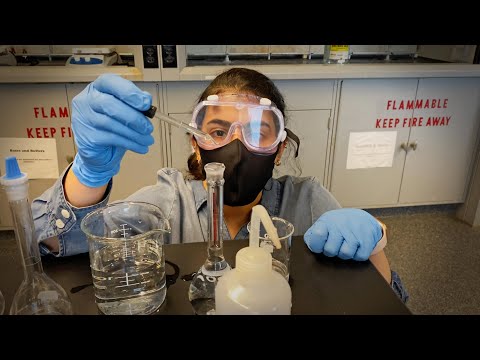
You know that feeling when you mix vinegar and baking soda, and it erupts like a mini volcano? Pretty cool, right? Well, chemistry isn’t just about making a mess in the kitchen. It’s super important for understanding the world around us.
Now, imagine if we’re not just talking about basic reactions. Think about how scientists can analyze stuff at an atomic level. That’s where instrumental analysis comes in. It’s like having a super-sophisticated set of tools to peek into the secrets of matter.
These techniques are changing the game! They help us figure out what everything is made of—from the air we breathe to the food we eat. So, buckle up as we explore some of these innovative techniques that make chemistry exciting and, believe me, totally relatable!
Exploring Instrumentation Techniques in Chemistry: Essential Methods for Accurate Analysis
Sure! Let’s dig into the fascinating world of **instrumentation techniques in chemistry**. You know, when chemists want to figure out what’s going on with a chemical sample, they can’t just look at it and guess. That’s where these cool tools come in. They help provide accurate info about the composition and properties of substances. So, let’s break it down!
First off, you’ve got **spectroscopy**, which is like having super-sight for studying molecules. By examining how light interacts with a sample, you can uncover its secrets.
- UV-Vis Spectroscopy: This technique shines ultraviolet or visible light through a sample to see how much light gets absorbed. It’s super useful for analyzing colored solutions.
- NMR Spectroscopy: Nuclear Magnetic Resonance uses magnetic fields and radio waves to provide detailed info about molecular structure—think of it like taking a selfie of the molecule!
- Infrared (IR) Spectroscopy: This method looks at how infrared light is absorbed by a compound, giving insights into functional groups within the molecule.
Then there’s **chromatography**. It’s not just something you hear about in fancy labs; it’s everywhere! This technique separates components in a mixture so you can analyze each part distinctly.
- Gas Chromatography (GC): Here, gas is used to carry a vaporized sample through a column packed with material that separates its components.
- Liquid Chromatography (LC): Instead of gas, liquid moves the sample through a column, great for compounds that don’t vaporize easily.
Now let me tell you about my friend Tom who once worked on a project using chromatography to analyze plant extracts for medicinal properties. He spent hours fine-tuning the method until he could clearly separate different chemicals from each other—amazing! You really appreciate how precise science needs to be when you’re standing there hoping your results are spot on.
Another important technique is **mass spectrometry (MS)**. Think of it as weighing molecules but in a super high-tech way. It takes samples and breaks them apart into ionized fragments before measuring their mass-to-charge ratio.
- Molecular Identification: Mass spectrometry is especially good for identifying compounds by looking at their molecular weights.
Last but definitely not least is **electrochemical analysis**. This one involves measuring electrical properties to give clues about chemical composition.
- Potentiometry: Here you measure the voltage in an electrochemical cell, often using pH meters.
- Cyclic Voltammetry: This involves cycling voltage and measuring current responses; it offers insight into reaction mechanisms and kinetics!
So basically, instrumentation techniques are crucial for accurate analysis in chemistry because they help answer essential questions about substances we encounter every day—from detecting toxins to understanding new materials for technology.
In short, these various analytical methods work together harmoniously like pieces of an intricate puzzle, helping scientists like Tom and others unlock the mysteries hidden within chemical compounds. Chemistry isn’t just formulas and beakers; it’s all about understanding our world—and instrumentation techniques are key players in that adventure!
Exploring Instrumental Techniques in Chemistry: Essential Methods and Applications
Sure! Let’s jump into the world of instrumental techniques in chemistry—it’s both cool and super useful.
When you think about chemistry, you might picture a lab full of bubbling beakers and crazy color changes. But behind all that excitement, there are some pretty amazing tools that scientists use to figure out what’s going on at the molecular level. It’s like having a superhero toolkit!
One of the most common instrumental techniques is spectroscopy. This method helps us understand how molecules interact with light. Depending on what you’re studying, there are several types:
- Infrared (IR) Spectroscopy: This technique helps identify functional groups in organic molecules by measuring how they absorb infrared light.
- Nuclear Magnetic Resonance (NMR) Spectroscopy: NMR is fantastic for figuring out the structure of complex compounds by looking at how nuclei respond to magnetic fields.
- Mass Spectrometry (MS): In this one, molecules are ionized and then separated based on their mass-to-charge ratio. It’s like weighing tiny particles and can tell you what they’re made of!
And get this: each type of spectroscopy has its own vibe and application. Like IR is great for organic compounds, while NMR shines when dealing with things like proteins or sugars.
Another essential technique is chromatography. This one basically separates mixtures into their individual components. Imagine trying to separate jellybeans by color—chromatography does something similar but with chemicals!
- Gas Chromatography (GC): Used for analyzing volatile substances, it heats samples until they vaporize and then pushes them through a column.
- Liquid Chromatography (LC): In contrast, this method uses liquids to separate molecules based on their interactions with a stationary phase.
So why do we even bother with these techniques? Well, think back to that time when your friend couldn’t figure out what was in that mystery drink. Scientists often face similar puzzles but on a much larger scale! They need to know the composition of everything from environmental samples to pharmaceuticals.
Then there’s also electrochemical analysis, which measures chemical properties through electrical signals. For example:
- Pulsed Voltammetry: A specific type where current is measured while varying voltage in pulses—this can get really detailed insights about redox reactions!
- Ionic Strength Measurement: Helps determine concentration levels in solutions; it’s crucial for fields like environmental science.
I remember once being fascinated watching my professor measure pH levels using an electrode—it was pure magic seeing numbers change right before our eyes!
In addition to these methods, newer techniques such as X-ray diffraction and TEM (Transmission Electron Microscopy), push our understanding even further. They allow chemists to see crystal structures or even individual atoms!
So basically, instrumental techniques are like a treasure map leading us toward understanding matter better than ever before. By combining different tools, scientists can solve complex problems like developing new materials or analyzing pollutants in our air and water.
To wrap things up: these methods are not just fancy toys; they’re essential for pushing the boundaries of what we know about chemistry every day—noticing patterns in the chaos of molecules just waiting to be discovered!
Exploring Recent Advances in Analytical Chemistry: Innovations Driving Scientific Progress
Analytical chemistry is like the detective of the science world. It digs deep to uncover what stuff is made of, how it’s put together, and what happens when it interacts with other materials. Recently, there’s been a whirlwind of innovations in this field that are making waves in various scientific areas. So, let’s take a closer look at some exciting advancements driving progress.
One big leap is in mass spectrometry. This technique has evolved from bulky machines to compact handheld devices. Seriously, you can now carry around equipment that would fit in your backpack and still gather precise data about chemical compositions. Imagine being able to analyze substances on the spot—it’s like having superpowers for chemists!
And don’t even get me started on chromatography. New methods, like ultra-high-performance liquid chromatography (UHPLC), are speeding things up significantly. Instead of waiting hours for results, you might only need a few minutes now. This quick turnaround can be crucial in areas like forensic science or food safety where time really matters.
Another noteworthy technique is infrared spectroscopy. In simple terms, it’s about using infrared light to identify materials based on how they absorb energy. The recent advancements here involve making these instruments more sensitive and portable. So now, chemists can analyze samples in real-time—like right there during a field study!
You know what’s cool?
These little gadgets can detect specific chemicals or biological markers almost instantly! They’re being used everywhere from health diagnostics (think glucose monitoring) to environmental monitoring (like checking water quality). That kind of instant feedback is changing the game.
Here’s one more interesting tidbit:
It isn’t just for sci-fi movies anymore! Researchers use nanomaterials to enhance analytical techniques. For example, tiny gold nanoparticles help improve sensitivity in tests by amplifying signals from chemicals. It’s like turning up the volume on your favorite song—everything’s clearer and more vibrant!
While juggling all these advancements might seem overwhelming, it’s really about finding better ways to solve problems we face every day. Whether it’s ensuring our food is safe or tracking pollutants in the environment, these innovations are crucial.
So yeah, as we move forward into this new era of analytical chemistry, it’s clear we have some fantastic tools at our fingertips that make us better at asking questions and finding answers about our world. Keep an eye out; who knows what they’ll come up with next?
You know, when I think about chemistry and all those crazy instruments scientists use, it kind of blows my mind. I mean, these tools can tell us so much about matter—like what it’s made of, how it reacts, and even if it’s safe to eat. But let’s face it; not everyone finds analytical chemistry super exciting. It sounds a bit nerdy, right? Yet, there’s this whole world of innovative techniques that are shaking things up!
So picture this: you’re in a lab, surrounded by all these machines with blinking lights and the faint hum of technology working its magic. One day last summer, I went to visit a friend who was deep into her chemistry research. She was using mass spectrometry to analyze some compounds she had isolated. Honestly, the amount of information you can get from a single sample is mind-boggling! You’d think chemistry would be all about mixing stuff in beakers and watching them bubble away. But no—it’s about precision and understanding at a molecular level.
Now let’s talk about some cool techniques that are really changing the game here! Take high-performance liquid chromatography (HPLC), for instance. It’s like putting your sample through an obstacle course where different components get separated based on how they behave in the liquid phase versus stationary phase. And the results? Stunningly detailed! It can tell you what’s in your drink or even if there are any nasty impurities lurking around.
Then there’s infrared spectroscopy. Ever heard of it? It basically lets you figure out what bonds are present in molecules by shining light on them and measuring how they absorb energy. This tech is wild because it doesn’t just show you what is there; it gives insights into how those compounds might interact with each other as well!
And then there’s this super fancy technique called nuclear magnetic resonance (NMR). Now, don’t let the name scare you off—it sounds complicated but think of it as spinning molecules giving you their secrets when you apply a magnetic field. It tells chemists so much about structure and purity without having to destroy the sample.
I mean, sure, these methods require skill and expertise—it’s not like anyone can just stroll into a lab and whip up results like they’re making breakfast pancakes! But it’s incredible how far we’ve come thanks to these advancements. It’s like opening a door to another level of understanding.
Thinking back on that summer day in my friend’s lab made me realize something important: innovation isn’t just about creating new gadgets but also reimagining old methods so we can better understand our world…or even make discoveries that could lead to breakthroughs in medicine or environmental science! Pretty neat for melting hearts over science at family gatherings, huh?
Anyway, it’s one thing to study chemistry; another dimension entirely when you’re harnessing these innovative tools for real-world applications. The next time you’re scrolling through your feed or sipping your coffee from an organic mug—remember that behind those simple actions lies complex science powered by fantastic techniques! And who knows? You might just find yourself inspired too!