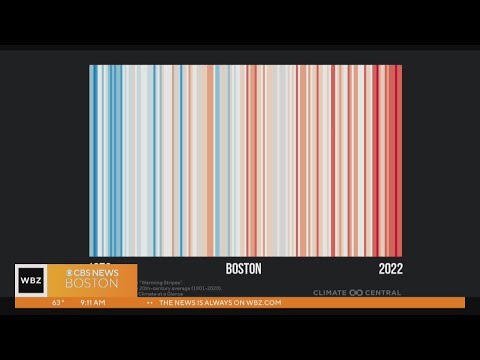
So, picture this: you walk into a coffee shop on a chilly morning, and the barista says it’s actually warmer today than it was during last summer’s heatwave. You’re like, “What?” It’s one of those moments that makes you go, “Wait, how is that even possible?”
That’s kinda how climate change sneaks up on us—mixing things up in ways that can be super confusing. One minute it’s freezing, the next you’re sweating like you just ran a marathon.
Then there’s this cool thing called Climate Stripes. It’s a visual way to see how our planet’s warming trends have changed over the years. You know, like if your favorite shirt had stripes that showed all the wild weather we’ve experienced?
It’s not just pretty colors either! These stripes tell stories about our environment and how it’s shifting around us. Like they say, a picture’s worth a thousand words, right? So let’s unpack what these stripes mean because honestly? They might just change how you see climate change altogether!
Visualizing Global Warming Impacts: Climate Stripes PDF Guide for Scientific Analysis
When we talk about global warming, it’s easy to feel overwhelmed. But one way to really grasp its impacts is through something called Climate Stripes. These striking visualizations use colored stripes to represent changes in temperature over time. Basically, each stripe corresponds to the average temperature of a specific year, creating a kind of tapestry of our planet’s heating journey. Pretty neat, right?
The original idea behind the Climate Stripes comes from climate scientist Ed Hawkins. He started this project because he wanted people to see just how dramatically temperatures have changed over the years. The result? A powerful visual that shows warming trends at a glance.
- Color Coding: The colors start with blue for cooler years and transition to red for warmer ones. So, when you look at a graphic filled with mostly red stripes, it’s a clear signal that things are heating up.
- Timeframes: Usually, these stripes cover data from as far back as the late 1800s up to today. This long timeframe helps illustrate not just fluctuations but alarming trends.
- Global vs Local: Each visualization can be tailored to different regions or even specific countries. This means you can see how global warming is affecting your backyard compared to other parts of the world.
This method of visualizing data can pull on your heartstrings—or at least make you stop and think! I remember seeing my first Climate Stripes graphic at a local event and feeling that chill down my spine as I realized just how quickly things were shifting. It wasn’t just numbers on a page anymore; it was emotion stitched into those colorful lines.
If you’ve ever felt lost in climate science jargon and complex data sets, these visuals cut through the noise. You don’t need to be an expert; you just need to feel what those stripes are saying about our planet’s future.
A PDF guide on these Climate Stripes would typically include sections detailing their creation process, how you can interpret them, and maybe some ideas on sharing them with others—it’s all about spreading awareness! And while creating your own variations might sound daunting, there are user-friendly tools available that let you play around with temperature data and visualize your own findings.
The takeaway here? Climate Stripes not only present scientific data but also resonate on a personal level—like an emotional wake-up call regarding climate change impacts. Just take one look at those stripes against the backdrop of our lives; it puts everything into perspective!
Explore Climate Stripes Merchandise: A Fusion of Art and Science in Climate Awareness
Alright, so let’s talk about Climate Stripes. You’ve probably seen these colorful striped designs floating around. They’re not just pretty pictures; they actually tell us something important about climate change!
The idea behind Climate Stripes is super cool. It’s a way to visualize global warming impacts over time. Basically, each stripe represents the temperature for a specific year, with colors changing from blue (cooler years) to red (warmer years). The more you look at it, the clearer it becomes: our planet is getting hotter!
Now, merging this concept with art and merchandise is where things get really interesting. Artists and designers have taken these stripes and created everything from t-shirts to tote bags. This fusion helps spread awareness in a way that’s eye-catching and engaging.
- Artistic expression: Using bold designs can catch people’s attention faster than graphs or long reports.
- Conversation starter: Wearing or using these items often leads to discussions about climate change.
- Supportive funds: Sometimes the sales of this merchandise support environmental organizations working on climate solutions.
I remember the first time I saw a Climate Stripes shirt at an event. It was worn by someone who explained what it represented in such an enthusiastic way. I found myself drawn into a conversation about climate action and solutions—just because of a simple design on their shirt! Isn’t that powerful?
The science behind these stripes comes from actual data collected over many decades. Researchers use historical temperature records to create a visual representation of warming trends. This isn’t just some random art project; it’s grounded in real science!
If you’re curious about how this all started, it goes back to Dr. Ed Hawkins, a climate scientist who wanted to make complex data accessible and understandable for everyone. His idea sparked creativity in various fields, leading to collaborations between scientists and artists worldwide.
This blend of art and science can help bring more people into the conversation about climate change—people who might not usually engage with scientific data or reports. As these items become more popular, they carry an important message: we all have a role in tackling climate issues.
So next time you see Climate Stripes merchandise, remember that it’s not just fashion; it’s an invitation to think about our planet’s future! Every piece carries the weight of scientific evidence wrapped up in vibrant colors—a unique combination that makes you stop and think.
The thing is, creating awareness through art is not just effective; it can also be very inspiring! Everyone has their own way of contributing—whether through art, activism, or simply having conversations when you see someone wearing those stripes!
Unveiling the Science Behind Stripes: Understanding Patterns in Nature and Their Impact
Patterns in nature are mind-blowing, right? I mean, have you ever just stopped to look at the stripes on a tiger or the spots on a ladybug? There’s something so captivating about how these designs show up again and again across different species and in various environments. One of the coolest things about stripes is that they can also tell us a lot about shifts happening in our world, especially when we talk about climate change.
Climate Stripes is a fantastic visual representation that helps unpack the impact of global warming. Basically, it’s a series of colored stripes showing temperature changes over decades or even centuries. The colors go from blue (cooler years) to red (warmer years). It’s not just pretty art; it screams the story of our planet’s health! If you see more reds than blues, it’s like your favorite sports team winning more games—definitely not good for our environment.
You know what’s crazy? These patterns can be found everywhere in nature! Think about zebras’ stripes. Some say their black and white design confuses predators and helps with temperature regulation. It’s all about physics, really! The striped pattern can create airflow around their bodies, keeping them cooler under the blazing sun.
And then there are trees! Yep, you heard me right. Tree rings offer another glimpse into the past and present. Each ring represents a year of growth; thick ones mean good conditions while thin ones indicate tough times, usually due to droughts or cold spells. If you look at these rings closely enough, you might notice patterns that align with significant climate events!
The impact of these natural patterns extends beyond mere visuals. They affect ecosystems and human life too. For example:
- The migration patterns of birds change based on temperature shifts.
- Marine animals adapt their spawning seasons due to warming ocean waters.
- Crops might bloom earlier or later depending on seasonal temperatures.
It’s all interconnected—like one big web! And when one thing changes, it ripples through everything else.
So next time you’re out in nature or scrolling through those climate stripe images, take a moment to appreciate how beautiful—and vital—these patterns are. They remind us how deeply woven our lives are with the natural world. We need to pay attention to these signs because they’re not just part-of-the-background noise; they’re crucial indicators of what is coming next!
In short: stripes aren’t just for fashion—they’re essential clues about our planet’s health and what we need to do to protect it!
You know what? Climate change can sometimes feel like this abstract, far-off thing. But when you see something like climate stripes, it kind of hits home, right? These simple, colorful graphics show temperature changes over time. Each stripe represents a year from a specific location, like a little flag waving for the planet’s health.
I was scrolling through social media one day and saw these stripes for my hometown. It had this weird mix of blues and reds—one year freezing cold, and the next blazing hot. I mean, I couldn’t help but think back to my childhood: sledding down snowy hills in winter or wearing shorts on the last day of school in June. Nowadays? The seasons feel all out of whack. Sometimes it’s hard to believe how much our weather has changed in just a couple decades.
It’s not just pretty colors; there’s serious meaning behind those stripes. They scream urgency! When you look at them, it becomes clear how temperatures are rising globally. Every stripe tells a story—some years were cooler than average (the blues), while others were downright scorching (the reds). It’s a powerful visual reminder, making statistics more relatable.
People often debate about climate change because it feels so massive and overwhelming. But seeing these stripes can transform that big concept into something tangible. You can literally see the shift happening over time! And it makes you wonder what other aspects of our environment are changing too.
So yeah, climate stripes really emphasize the need for action and awareness without needing to throw a ton of data at us. They make you feel connected to this global issue while also reflecting on your local experience—like connecting the dots between personal memories and broader trends.
In many ways, those vibrant stripes are like nature’s call to us: “Hey! Pay attention!” It’s an interesting way to wrap your head around something so critical for our future—you know? Just by looking at them, we can start conversations that might change minds or inspire someone else to care more deeply about our planet’s health.