You know that feeling when you take a selfie, and your phone magically knows how to spice it up? Like, it brightens your face, smooths out the skin—a little filter here and there? Well, you can thank computer vision for that!
It’s kinda like magic, but it’s really just science doing its thing. The truth is, computer vision has come a long way. Remember back in the day when facial recognition was more “who’s that?” than “gotcha!”? Now it’s like your phone is basically your personal photographer.
And here’s a fun fact: computers today can analyze images faster than a blink of an eye! Seriously! With deep learning techniques at play, they’re seeing the world in ways we never imagined. So grab your favorite drink and let’s chat about how this tech is shaping our lives. It’s super cool stuff!
Exploring the Role of Deep Learning in Advancing Computer Vision within Scientific Research
Alright, let’s talk about the intersection of deep learning and computer vision in scientific research. It’s a fascinating area that’s really taking off. Basically, deep learning is a subset of artificial intelligence that mimics how our brains work to process information. You know, like when you see a puppy and your brain instantly goes “aww”? Deep learning makes computers do something similar with images.
Computer vision itself is all about enabling machines to interpret and understand visual information from the world—think of it as teaching a computer to “see.” Combine this with deep learning, and we get some powerful tools for scientific discovery.
So, what exactly is the role of deep learning in advancing computer vision?
- Image Recognition: One major area is image recognition. This means identifying objects within images. For instance, researchers can train models to recognize different types of cells under a microscope.
- Data Analysis: With deep learning algorithms, scientists can analyze vast amounts of visual data quickly. Imagine sifting through thousands of satellite images to spot environmental changes—way easier with computers doing the heavy lifting!
- Disease Detection: In healthcare, computer vision powered by deep learning helps detect diseases from medical images. For example, algorithms can identify tumors in X-rays or MRIs more accurately than some human radiologists.
- Autonomous Systems: And let’s not forget about drones or robots that use computer vision for navigation in complex environments! Here’s where it gets cool—these systems can collect data for research while exploring areas like oceans or uneven terrains where humans can’t easily go.
You probably remember seeing some viral videos of robots doing impressive things? Well, behind those feats are advanced algorithms trained with deep learning techniques that allow them to perceive their surroundings and react accordingly.
A little anecdote here: I once watched a documentary about how scientists use drones equipped with cameras to monitor wildlife populations. These drones are programmed with computer vision strategies; they can identify animal species from above! It’s awe-inspiring how technology is helping us observe nature without disturbing it.
The potential applications are endless!
- Astronomy: In space research, telescopes capture massive amounts of data daily. Deep learning helps astronomers classify celestial bodies by analyzing their images automatically!
- Sustainability: Environmentalists can monitor deforestation rates or track endangered species’ movements using these technologies too. Every pixel counts when you’re trying to save the planet!
- Cultural Heritage: Some researchers even use computer vision for preserving art. By analyzing paintings or sculptures digitally, they can document deterioration over time without touching them.
The bottom line is that deep learning breathes new life into the realm of computer vision within scientific research. Instead of relying solely on human capacity—which has its limits—scientists now have this incredible tool at their disposal that processes data faster and often more accurately than we could ever hope to achieve alone.
This balance between human intuition and machine efficiency creates opportunities for breakthroughs across various fields! Pretty cool when you think about all the possibilities on the horizon! So next time you hear someone mention AI and computers seeing like us, remember—it’s not just sci-fi anymore; it’s shaping our future right here and now!
Emerging Trends in Machine Learning and Deep Learning for Computer Vision: Insights into the Future of Scientific Innovation
Machine Learning and Deep Learning in Computer Vision are pretty hot topics these days. You might’ve seen stunning applications like facial recognition, self-driving cars, or even those AI-generated paintings. It’s a lot more than just algorithms; it’s about how we’re teaching computers to “see” and understand the world through images and videos.
So, let’s break this down a bit. Machine learning, basically, is about training algorithms using data, and deep learning is like a supercharged version of that with neural networks mimicking brain functions. These networks have layers upon layers (hence the “deep” part), which helps them learn really complex patterns in huge datasets.
Current Trends in Computer Vision are super exciting. Here are some key points to think about:
- Transfer Learning: This technique is all about taking a pre-trained model and tweaking it for specific tasks. Imagine you’ve got a model that can identify cats in photos. Instead of starting from scratch to teach it to spot dogs, you just adjust the existing model—saves tons of time!
- Generative Adversarial Networks (GANs): Ever heard of GANs? They’re pretty wild! One part of the network generates images while another checks if they look real or not. It’s like having two competing artists, which leads to unbelievably realistic outputs.
- Few-Shot Learning: This is where things get interesting! Instead of needing thousands of labeled images for training, few-shot learning aims to recognize items with just a few examples. It’s kind of how you might recognize your friend even if they wear sunglasses.
- Explainable AI: As cool as these technologies are, we also need to understand them better. Explainable AI focuses on making machine learning decisions more transparent so that you know why the computer made a certain choice.
You know? I remember when I first saw an AI program accurately identifying plants based on pictures people took at the park. It was mind-blowing! The models weren’t just spitting out guesses; they were analyzing colors, shapes, even textures—all that glorious detail we sometimes overlook.
Looking ahead into the future, we can expect more collaboration between humans and machines. These tools will likely help scientists analyze vast amounts of data more efficiently—think medical imaging and diagnosing diseases early on simply by looking at scans or X-rays.
Also, advancements in hardware mean we’ll get faster computation speeds—which is music to any data scientist’s ears! New chips specifically designed for machine learning tasks will be arriving soon too. Basically, it means better models without all those frustrating wait times.
So yeah, while there’s still stuff to figure out—like ethical concerns around privacy with computer vision technology—the future feels bright! We are on the brink of some amazing things happening in this field where science meets innovation every day.
Understanding the Superiority of YOLO Over CNN in Object Detection: A Scientific Analysis
Object detection has evolved a lot with deep learning. You might have heard about YOLO (You Only Look Once) and CNNs (Convolutional Neural Networks). Both are powerful, but they have different strengths. Let’s break it down a bit.
First off, **YOLO is like a speedy superhero** when it comes to detecting objects in images. Unlike traditional CNNs, which analyze an image in multiple passes, YOLO looks at the whole image in one go. This approach is super efficient! It’s like if you’re scanning a crowded room for your friend instead of checking each individual person one by one.
So why is YOLO often considered superior? Check this out:
- Speed: YOLO processes images faster than most CNN approaches. It can run in real-time, which is key for applications like self-driving cars or live video analysis.
- Global Context: Since YOLO examines the entire image at once, it understands the overall context. This helps it identify objects better, especially when they’re close together.
- Bounding Boxes: YOLO predicts bounding boxes and class probabilities simultaneously. So you get both the location of the object and what it is at the same time. Imagine standing in a field of flowers—you not only spot a flower but also know its type almost immediately!
- Fewer False Positives: It tends to produce fewer false alarms compared to CNNs because of its unified approach to detection and classification.
Now, don’t get me wrong—CNNs have their place too! They excel in tasks where detailed feature extraction is crucial, like medical imaging or specific tasks that require heavy classification. But here’s the catch: using them for real-time object detection can be cumbersome since they usually need more processing power and time.
Back when I was learning about these technologies, I remember experimenting with simple models on my laptop to recognize everyday objects around me—like my dog or random snacks on my kitchen counter. It was exciting when I started using YOLO; everything moved so much faster! I felt like I could almost see things as quickly as my brain processed them.
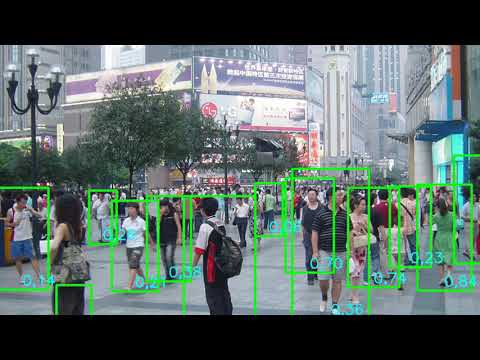
In summary, while both YOLO and CNNs offer powerful capabilities in deep learning for object detection, YOLO’s speed, efficiency, and ability to grasp overall context often put it ahead. It’s ideal for scenarios where quick and accurate detections matter most—like tracking pedestrians in busy streets or spotting items on shelves in retail stores.
So next time you hear about these technologies being used for something cool—like augmented reality apps or surveillance systems—you’ll know why many lean towards YOLO: it’s just quicker on its feet!
So, let’s talk about computer vision for a sec. You know, that cool stuff where computers can actually “see” and understand what’s going on in images and videos? It sounds kind of sci-fi, right? But it’s becoming super real, thanks to deep learning techniques.
I was recently watching old home videos from my childhood. There’s one where my dad tries to catch me when I’m running around with a water balloon—classic! But here’s the thing: he’s got the camera all shaky, and half the time you can’t really see what’s happening. Imagine if there was a computer that could zoom in on that moment, clear up the blur, and even track me as I dashed around. Well, fast forward to today, and tech like deep learning is making some parts of that dream a reality.
With deep learning, we’re giving computers the ability to learn from heaps of images and videos. This means they can recognize things like faces or objects with jaw-dropping accuracy. Seriously, you’ve probably seen apps that can turn your selfies into cartoon versions or detect your emotions in real-time—crazy stuff! The algorithms are kinda like kids learning through experience: they get better by looking at more data.
But it gets even wilder! Think self-driving cars or AI that helps doctors identify diseases from medical images. Imagine cruising down the road without needing to steer while your car spots pedestrians and traffic signs like a pro. Or how about an AI diagnosing skin conditions from just a picture? That could be life-changing for many people out there.
Yet, there’s always this little voice somewhere saying we need to tread carefully. Like with any powerful tool, there are ethical questions swirling around privacy concerns and biases in algorithms. If computers are trained on biased data sets—they might make skewed decisions which is definitely not cool.
Honestly speaking, as exciting as these advancements are, there’s also this weighty responsibility tugging at our sleeves. It feels like we’re standing on the edge of something enormous—like uncharted territory—and it makes you wonder how we’ll shape these technologies moving forward.
So yeah, while we’re seeing amazing breakthroughs with computer vision thanks to deep learning techniques, let’s make sure we keep our eyes wide open—not just looking at what they can do but also considering how they fit into our lives responsibly. After all, it could change everything from how we capture memories to how we navigate the world around us—one pixel at a time!