So, picture this: you’re scrolling through social media, and you come across a video of a cat perfectly playing the piano. It’s super cute, and you can’t help but think, “How on earth did they teach that cat?” Turns out, it’s not just about clever training. Nah, it’s all thanks to deep learning algorithms.
Yeah, those magical bits of code that are making waves in tech. They’re like the secret sauce behind everything from your favorite streaming recommendations to self-driving cars.
But what exactly is deep learning? And why should we care? The thing is, it’s not just tech jargon; it’s changing how we interact with the world around us.
Let me take you on a little journey through the wild world of deep learning advancements. You’ll see how they’re shaping our lives in ways you probably didn’t even think about! So grab your snack, get comfy, and let’s chat about these amazing algorithms and all the cool stuff they can do!
Exploring Recent Advances in Deep Learning: Transforming the Landscape of Science
So, deep learning, huh? It’s like a buzzword that’s everywhere these days. But let me break it down for you. Deep learning is a type of machine learning that’s inspired by how our brains work. Imagine a massive web of neurons connecting and processing information. When we talk about recent advances in deep learning algorithms, we’re really talking about some seriously cool stuff that’s changing the way we approach scientific problems.
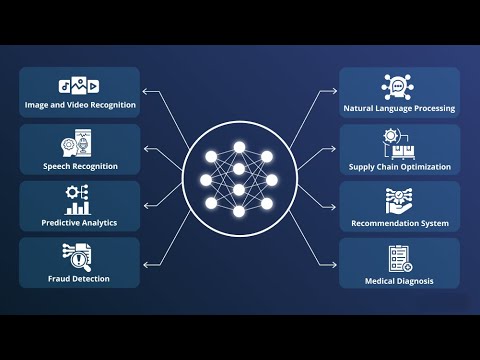
First off, let’s get into what makes deep learning so special. These algorithms can learn from vast amounts of data without being spoon-fed every detail. That means they can recognize patterns and make predictions all on their own. For example, in healthcare, deep learning models analyze medical images like X-rays or MRIs to detect diseases at much earlier stages than traditional methods.
- Natural Language Processing (NLP): Ever chatted with a virtual assistant? That’s deep learning at work! Recent advancements have made these systems not just understand commands but also carry on conversations, making them feel more human-like.
- Computer Vision: This is huge! From self-driving cars that need to see their environment to apps that identify objects in photos, advancements here rely heavily on improved algorithms that can interpret images faster and more accurately than ever.
- Reinforcement Learning: Think video games. Algorithms are trained by getting feedback from their actions—like winning points or losing lives! This has led to breakthroughs in robotics where machines learn to perform tasks through trial and error.
The applications are popping up everywhere, transforming fields like biology, environmental science, and even physics! For instance, researchers are using deep learning to analyze climate models with more precision. They can sift through mountains of climate data and discover trends that humans might miss.
A fun little story: I once read about a team using deep learning to predict protein folding—basically how proteins shape themselves—which is crucial for drug discovery. They analyzed thousands of protein structures in no time at all! This kind of rapid insight could potentially speed up the development of new medicines!
But it’s not all sunshine; there are challenges too. One biggie? Data bias. If an algorithm learns from biased data, guess what? It keeps repeating those biases! Scientists are currently working hard to create fairer systems by improving the training datasets.
In short (or long!), deep learning isn’t just techy jargon; it’s reshaping how we tackle complex scientific issues today and tomorrow. And though there’s still a lot to figure out—like ethical concerns and biases—the potential outcomes are honestly thrilling!
Exploring Advanced Deep Learning Algorithms: Innovations and Applications in Scientific Research
So, deep learning, huh? It’s this super cool branch of artificial intelligence that’s really shaking things up in scientific research lately. Basically, it’s all about teaching computers to learn from data and recognize patterns, kind of like how we humans learn from experiences. But hey, let’s break it down a bit!
What are Deep Learning Algorithms? You can think of deep learning as a more advanced version of machine learning. While machine learning relies on algorithms that can learn from data without being explicitly programmed for specific tasks, deep learning takes it a step further by using **neural networks**. These are systems inspired by the human brain! They have multiple layers (hence “deep”) that help analyze information in a hierarchical way.
Now about those innovations. There’s been some serious progress lately! For instance, convolutional neural networks (CNNs) have become the go-to for image processing tasks. Imagine training a model to look at thousands of photos and then being able to identify anomalies or even classify diseases from medical images—like spotting tumors in X-rays! It’s seriously impressive how this tech is being applied in healthcare.
Another fascinating advance is in natural language processing (NLP). Think about tools like chatbots or voice assistants—they’re powered by deep learning algorithms that help them understand and generate human-like text. This has huge implications for fields like psychology and linguistics because researchers can analyze large sets of language data to uncover trends or insights about human behavior.
- Astronomy: Deep learning helps astronomers sift through massive amounts of data from telescopes to discover new celestial bodies.
- Bioinformatics: Scientists use these algorithms to model biological processes and predict outcomes, like how certain proteins interact!
- Climate Science: By analyzing climate models with deep learning, researchers are getting better predictions about weather patterns and potential natural disasters.
A little personal story: I once chatted with a biologist who told me how they used deep learning to decode genetic sequences. They had tons of data but no clear way to see patterns until they applied these algorithms—it was as if someone turned on the lights in a dim room! Suddenly, things started making sense that seemed chaotic before.
The applications seem endless. But it’s not all smooth sailing; there’s still lots of work needed on ethical considerations around bias in AI models and ensuring accountability when using these technologies.
The bottom line is that advanced deep learning algorithms are opening doors we never thought possible in scientific research. With every innovation comes new ways to understand our world—who knows what breakthroughs lie ahead? So keep your eyes peeled because science is moving fast!
Exploring the Applications of Deep Learning Algorithms in Scientific Research and Innovation
So, picture this: deep learning algorithms are like the super-smart kids in class, you know? They learn from examples and get better over time. These algorithms are a branch of artificial intelligence that mimics how our brains work to recognize patterns and make decisions. They’ve been making big waves in scientific research and innovation lately. And it’s pretty cool!
Applications in Medicine
One major area where deep learning shines is in medicine. For instance, have you ever seen those medical images—like MRIs or CT scans? Deep learning helps in diagnosing diseases by analyzing these images faster and often more accurately than humans can. It’s like having a really sharp-eyed buddy who never gets tired and can spot the tiniest anomalies.
Environmental Science
Another exciting application is in environmental science. Algorithms can process huge chunks of data from climate models to predict weather patterns or even track deforestation through satellite images. Imagine being able to predict natural disasters before they happen! That’s the kind of power we’re talking about here.
Astronomy
Now, let’s travel a bit further out—into space! Deep learning is also used in astronomy for identifying celestial objects. For example, it can sift through millions of star images to find new planets or detect gravitational waves. It’s like having a cosmic treasure hunter on hand!
Drug Discovery
When it comes to drug discovery, these algorithms speed things up significantly. Instead of testing thousands of compounds manually, researchers can use deep learning to simulate how drugs will interact with various targets in the body. It saves time and resources, which is a total win-win.
Robotics
Then there’s robotics—oh boy! Deep learning enables robots to learn from their environment and improve over time through trial and error. You see it in self-driving cars too; they analyze their surroundings using cameras and sensors to navigate safely.
So yeah, deep learning algorithms are not just fancy math—they’re transforming scientific research and pushing innovation forward at an incredible pace! Their ability to learn from vast amounts of data means they’re becoming essential tools across many fields.
If you think about it, these algorithms are basically reshaping how we do science! Who knows what they’ll help discover next? Isn’t that just mind-blowing?
So, deep learning, huh? It’s one of those topics that sounds super technical but is seriously changing the way we interact with the world. Just think about it: every time you ask your phone a question or scroll through your social media feed, there’s a good chance some deep learning algorithm is working behind the scenes.
Let me tell you a little story. A few months ago, my niece was struggling with her math homework. I offered to help her out, and while we were crunching numbers, she asked if there really were robots that could do this for us. I laughed and mentioned something about AI and deep learning. Her eyes lit up! It made me realize just how curious people are about these advancements. Kids these days really take it all in; no wonder they’re so tech-savvy.
But back to the topic—deep learning is all about mimicking how our brains work (kind of cool, right?). We’ve got layers of artificial neurons processing tons of data and figuring out patterns faster than you can say “neural network.” It’s what enables things like image recognition and even voice assistants to get better over time. Like, remember when facial recognition was kind of glitchy? Now it’s practically flawless!
The applications are mind-blowing too! From healthcare using deep learning to predict patient diagnoses based on medical images to self-driving cars interpreting road signs in real-time—that’s pure magic! On the other hand, there’s always that little nagging voice wondering: Where does this leave us as humans? Are we stepping into a future where machines might outsmart us in certain areas?
It feels like we’re riding a wave here; some folks are excited about how these advancements can improve lives while others are more cautious. I mean, who wouldn’t be concerned about privacy or job displacement? That’s totally valid.
So yeah, while we navigate this exciting yet uncertain realm of deep learning algorithms, it’s important for all of us to stay informed and involved in the conversation. Because at the end of the day, technology should complement our lives—not dominate them! What do you think? Pretty thought-provoking stuff if you ask me!