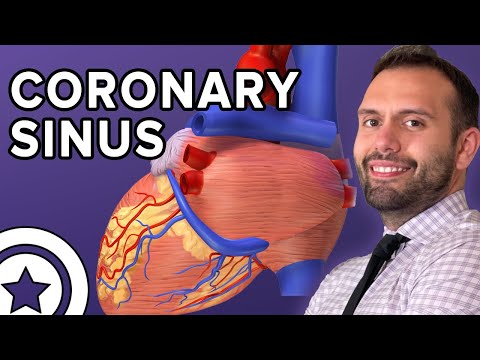
You know that feeling when your heart skips a beat? Well, turns out there’s a whole lot happening behind the scenes every time you feel that flutter. It’s not just love or nerves; it’s also about something called the coronary sinus.
Crazy, right? Most people don’t even know what that is, but it plays a pretty important role in keeping our hearts ticking like they should.
Imagine your heart as this busy city, racing to keep up with life. The coronary sinus is like the main avenue where all those tiny streets—like veins and arteries—meet up. And trust me, if no one knows how to navigate that avenue, things can get messy pretty fast!
So let’s unravel this coronary sinus thing together and see why it matters for our overall heart health. You ready?
Understanding the Role of Sinuses in Cardiac Function: Insights into Heart Health
The heart is such a fascinating organ. It’s like this tireless engine, pumping blood around your body day in and day out. But did you know there’s a little structure called the coronary sinus that plays a crucial role in its function? Yeah, seriously!
Let’s break it down. The coronary sinus is basically a large vein that collects deoxygenated blood from the heart muscle itself. You see, when your heart pumps blood to the rest of your body, it also needs its own supply of oxygen-rich blood to function well. Once the heart gets what it needs, it sends back the used-up blood through this coronary sinus.
So here’s how it works:
- Location: The coronary sinus is located on the back side of your heart, near the right atrium.
- Function: Its main job is to gather blood from the heart’s veins and send it to the right atrium.
- Importance: Without this vein doing its thing, you’d have blood pooling in your heart muscle! Not good.
Think about a time when you felt tired maybe after running or working out hard. Your muscles were likely low on oxygen and needed that fresh supply to recover, right? Well, that’s exactly what happens with the heart too! The coronary sinus helps ensure that as your heart works hard, it’s also getting rid of waste products and grabbing more oxygen.
Now here’s where things get interesting with cardiac health. If there’s a problem with this vein—like blockage or damage—it can lead to some serious issues such as arrhythmias or even coronary artery disease. Imagine if that little highway for used-up blood got blocked; many areas of your heart muscle wouldn’t get what they need!
Moreover, if doctors need to check on cardiac function or diagnose conditions like ischemic heart disease (that’s when not enough blood flows to the heart), they often look at how well this coronary sinus is doing its job.
To sum up:
- The coronary sinus is crucial for returning deoxygenated blood from the heart.
- If it’s not working properly, your whole cardiovascular system can suffer.
- You need healthy sinuses for a healthy heartbeat!
Just think about it; every beat of your heart depends on this little but mighty vein doing its job without fail. So next time you feel that heartbeat, give a quick shout-out to the unsung hero: your coronary sinus!
Understanding the Coronary Sinus: A Comprehensive Guide to Cardiac Anatomy and Function
Alright, let’s get into the world of the heart and focus on a part some people might not think about much: the coronary sinus. This little guy plays a huge role in keeping your heart healthy.
The coronary sinus is basically a large vein that collects blood from the heart muscle itself. You know how we have veins all over our body to bring blood back to the heart? Well, the coronary sinus is like a big highway just for blood coming from the heart. It’s located on the back side of your heart, sitting in this groove called the atrioventricular (AV) groove. It’s pretty well hidden but super important.
Now, let’s break it down a bit more. When your heart pumps, it uses oxygen-rich blood to do its job. But after delivering that oxygen, what happens next? The cells in your heart are using up that oxygen and need to get rid of carbon dioxide and other wastes. This is where our buddy, the coronary sinus, comes into play.
- Function: It collects deoxygenated blood from three main veins known as cardiac veins: great cardiac vein, middle cardiac vein, and small cardiac vein.
- Location: It sits in that AV groove between the left atrium and right atrium at the back of your heart.
- Atrium connection: The coronary sinus drains directly into the right atrium of your heart.
Imagine it like a recycling center for your heart. All these used-up materials come flowing in through different routes (the cardiac veins), and then they’re sent off to be re-oxygenated by passing through the lungs again.
If you’ve ever heard about cardiac health, you know how crucial this system is. If there’s something wrong with blood flow in these veins, or if they get blocked—let’s say due to plaque build-up—your heart can suffer because it’s not getting rid of waste properly. This could lead to conditions like heart disease, which nobody wants.
And speaking of health issues… sometimes doctors might use procedures like angioplasty to open up any blockages in these vessels for better function. Kind of like clearing out a clogged drain so everything flows smoothly again!
You might be thinking—how can I keep my coronary sinus happy? Well, taking care of your overall cardiovascular health helps! Regular exercise, a balanced diet rich in fruits and veggies, staying away from smoking—you know those usual suspects—help keep everything flowing nicely.
So yeah, understanding structures like the coronary sinus gives you insight into just how amazing our hearts really are! They’re working non-stop for us every day without us even realizing it most times! Isn’t it wild that this small structure has such an important role? Much love for our hearts!
Understanding the Role of the Coronary Sinus in Cardiac Blood Circulation
The coronary sinus is one of those unsung heroes in the world of the heart. Nestled right in the back of your heart, it’s a big vein that collects blood from the heart muscle itself. You know, kind of like how a sponge might soak up water, this sinus gathers up all that deoxygenated blood after it’s done delivering oxygen and nutrients to your heart cells.
Location and Structure: The coronary sinus sits on the posterior part of the heart, basically just behind the left atrium. It’s about 2-3 centimeters long and collects blood from several smaller veins. These smaller veins are like side roads that empty into this main highway of cardiac circulation. Think of it as a little collection point before we send all that blood back to the lungs for some fresh oxygen.
Function: So why is it important? Well, when your heart beats, it needs energy to pump effectively. That energy comes from oxygen-rich blood supplied by coronary arteries. But once those cells have used up that oxygen, they dump their waste products—carbon dioxide and other stuff—into these small veins. The coronary sinus swoops in and gathers everything up to return it to circulation.
Let’s break this down a bit more:
- 1. Blood Collection: It collects deoxygenated blood from various cardiac veins.
- 2. Drainage Pathway: It acts as a drainage pathway for blood returning from the heart muscle itself.
- 3. Proximity to Important Structures: Its position near major chambers allows efficient blood movement back into general circulation.
Now, here’s where things get real interesting! If there’s something wrong with this system—for instance, if there are blockages—you might run into problems like angina or even worse conditions like heart attacks. If your muscles aren’t getting enough oxygen due to restricted flow through these veins or arteries, well, then they can’t function properly.
I remember hearing a story about someone who was feeling chest pain after running but thought they just needed to get fit; turns out their coronary sinus wasn’t draining properly because of some blockage! A quick visit to the doctor helped clear things up—pun intended—and now they’re running marathons instead.
Clinical Significance: Medical professionals keep an eye on this area for several reasons:
- Coronary Angioplasty: Sometimes doctors need to clear blockages around these areas during procedures.
- Electrophysiology: It’s also studied when looking at heart rhythms since improper drainage can affect electrical signals.
So yeah, understanding how the coronary sinus works helps us appreciate not just our hearts but also why taking care of them is so crucial! Keep an eye on those warning signs—like unexplained pain or discomfort—and you could save yourself some serious trouble down the line!
You know, the heart is one of those organs that we often take for granted, right? We focus on its pumping action, but there’s a lot happening behind the scenes. One area that doesn’t get much spotlight is the coronary sinus. It sounds pretty technical, but it’s actually quite fascinating!
So, let’s talk anatomy for a sec. The coronary sinus is basically a big vein that collects all the blood from the heart muscle itself. Imagine it as a highway for deoxygenated blood leaving your heart after it has done its job of delivering oxygen to your body. It sits on the backside of your heart and drains into the right atrium, which is one of the upper chambers of the heart. Kind of like how we need a good drainage system in our homes to keep things flowing smoothly, our hearts require this structure too.
Now, why does this matter? Well, if there’s something wrong with your coronary sinus—like if it gets blocked or isn’t functioning properly—it can throw off cardiac health pretty quickly. You’ll find yourself dealing with issues like chest pain or even more severe conditions over time. I remember my grandma once telling me about her heart problems and how they pinpointed some blockages in her veins. She said how vital it was to pay attention to any changes in her chest area or energy levels because things like that can be sneaky!
The thing is, keeping an eye on such details can really make a difference. Doctors often use tests like echocardiograms or MRIs to see what’s going on with our hearts and to check out veins like the coronary sinus. You wouldn’t believe how much information they can get from these images!
But here’s where it gets real: raising awareness about such anatomical features helps us understand that your heart isn’t just a pump; it’s an intricate system working together in marvelous ways. So, next time you think about heart health—don’t forget those little veins and sinuses playing their roles behind the scenes! They’re just as important as everything else when it comes to keeping you healthy and happy!