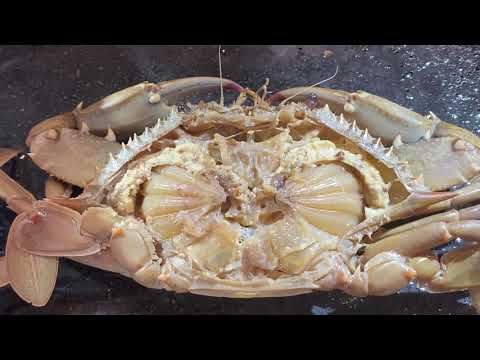
You know what’s hilarious? I used to think crabs were just those little critters you see scuttling around at the beach. Like, they’re just there, right? But then I found out that under their tough shells, these little guys have some seriously cool internal structures. It’s like a whole tiny world inside!
Imagine being a crab for a second. You’ve got to survive in the ocean, defend yourself from predators, and even find food. So, how do you think their insides help them tackle all that? Spoiler alert: it’s pretty wild!
Peeking into crab anatomy reveals more than just organs; it tells us a story of evolution and survival. Yeah! It’s all about how these creatures have adapted over millions of years to thrive in their environment.
So, let’s dive into this shell-covered adventure and explore what makes crabs not just cute but also fascinating from the inside out!
Exploring Crab Internal Anatomy: A Scientific Overview of Structure and Function – PDF Resource
Exploring crab internal anatomy is like peeking behind the curtain of these fascinating creatures. When you look closely, you see a whole world of systems and structures working together. They may seem simple, but crabs are complex little beings equipped for survival in their environments.
First off, let’s talk about the **exoskeleton**. Crabs have this hard outer shell made of chitin, which protects them from predators. It’s also tough enough to handle their aquatic lifestyle. But here’s a fun fact: they can’t grow bigger forever because of it! When they outgrow their shell, they molt, shedding the old one to grow a new larger one.
Now onto their **muscle system**, which is pretty remarkable. Crabs have two types of muscles: **striated** and **smooth** muscles. The striated ones help them move around quickly, while smooth muscles manage things like digestion and circulation. Ever seen a crab scuttle away from you? That’s those striated muscles in action!
Speaking of digestion, let’s dive into the **digestive system**. Crabs eat just about anything—plants, meat, you name it! Their mouth has small appendages called **mandibles**, kind of like jaws that help break down food before it goes into the stomach. From there, it moves to specialized areas for further breakdown and nutrient absorption.
Then there’s their **circulatory system**. Crabs have an open circulatory system, meaning their blood (or hemolymph) isn’t entirely contained within blood vessels as ours is. Instead, it bathes organs directly in a sort of mix that helps deliver nutrients and oxygen throughout the body.
Let’s not forget about breathing! Crabs use **gills**, located beneath their shells, to extract oxygen from water. Water flows over these gills thanks to some dedicated movements by their legs and other body parts.
And hey, what about reproduction? Crabs have both male and female characteristics sometimes; they’re quite versatile! Males compete for females during mating seasons using various behaviors—yeah, it’s not all just about looks!
In case you’re interested in more detailed diagrams or data points regarding these systems, there are handy resources out there that summarize crab anatomy beautifully—like PDFs or scientific articles that can give you more insights on structure and function.
So basically? Crabs are way cooler than they appear at first glance! Their internal anatomy reveals how brilliantly they’ve adapted to life under the sea. Every part plays an essential role in keeping them alive and thriving in often tough conditions we might not even think about! Isn’t that something?
Exploring Crab Internal Anatomy: A Scientific Analysis of Structure and Function
Crabs are pretty fascinating creatures, aren’t they? They come in all shapes and sizes, from the tiny pea crab to the massive Japanese spider crab. But have you ever thought about what’s going on inside their hard shells? Let’s explore crab internal anatomy and see how their body parts work together.
First off, crabs belong to a group called crustaceans. This means they have a tough exoskeleton, which is like a suit of armor. Underneath that shell lies their internal anatomy, which is quite complex. Here are some key components:
- Digestive System: Crabs have a unique way of processing food. Their mouth is equipped with strong mandibles that chew up food before it goes into the stomach. The stomach has two chambers; one grinds the food while the other digests it using enzymes.
- Circulatory System: Instead of blood flowing through veins like in humans, crabs have hemolymph – kind of a mix between blood and lymph fluid. This liquid circulates through their body cavity and helps distribute nutrients and oxygen.
- Nervous System: Crabs are equipped with a decentralized nervous system; they don’t have brains like we do. Instead, they have clusters of nerve cells called ganglia spread throughout their body. This setup allows them to react quickly to threats.
- Respiratory System: Crabs breathe through gills located under their carapace (the hard shell). Water flows over these gills as crabs swim or walk, allowing them to extract oxygen.
It’s kinda mind-blowing thinking about how these systems work together so efficiently! For example, when a crab eats something, it starts in the mouth but quickly moves through its digestive tract for processing. All this happens while the circulatory system rushes nutrients where they need to go.
I still remember the first time I saw a crab being dissected during class – it was amazing! You could see all those organs laid out clearly, working together seamlessly.
Also interesting is how crabs can regenerate certain body parts if they lose them! If they break off a claw or leg during a tussle with another crab (those fights can get pretty intense), they’ll eventually grow it back. This regeneration process involves many biological systems working in harmony — talk about resilience!
So yeah, studying crab internal anatomy provides insights not just into how crabs live but also into larger biological principles that apply across species. They’re more than just funky sea critters; they’re living examples of evolution’s creativity!
Exploring the Internal Anatomy of Blue Crabs: Insights into Marine Biology
The internal anatomy of blue crabs is like an amazing puzzle waiting to be explored. These creatures, with their hard shells and pincers, are more than just delicious seafood; they play a vital role in marine ecosystems.
To start, let’s talk about their **body structure**. Blue crabs have a hard exoskeleton made of chitin, which provides protection. But underneath that tough shell lies a fascinating array of organs and systems. Think of it like a small factory where all the magic happens!
One key component is the **digestive system**. Blue crabs have a mouth that’s equipped with specialized structures called mandibles—they’re like little jaws that help them chew food. Once they eat, the food travels through their **stomach**, which consists of two parts: the gastric mill grinds up the food just like a blender! After that, nutrients get absorbed in the intestines before waste is expelled.
Another interesting part of their anatomy is the **respiratory system**. Crabs breathe through gills located beneath their shells. These gills are feathery structures that extract oxygen from water as it flows over them. It’s kind of like fish gills but adapted for life in both saltwater and brackish environments.
Now let’s not forget about their **circulatory system**! Unlike us, blue crabs have an open circulatory system, meaning their blood (called hemolymph) isn’t confined to blood vessels all the time. Instead, it washes over their organs directly! This system helps distribute nutrients and oxygen throughout their body but can also make them more vulnerable to changes in water quality.
Moving on to reproduction—blue crabs have some serious biological prowess. The females are known for carrying fertilized eggs under their tails until they’re ready to hatch—talk about dedication! After hatching, larval blue crabs go through several stages before settling down into adulthood.
Lastly, let’s talk about how humans interact with these awesome creatures. Blue crabs support commercial and recreational fisheries along the U.S. East Coast, which means understanding their biology is super important for conservation efforts and sustainability.
So there you have it! The internal anatomy of blue crabs reveals how wonderfully adapted they are to life in marine environments. Isn’t it wild to think about all those tiny processes happening inside? Each crab is like a mini marvel in the ocean!
Oh man, crabs! They’re these little armored wonders of the sea, right? Whenever I think about them, I can’t help but remember that one summer at the beach when my cousin caught a crab and ran around with it like it was a trophy. I was freaking out because I thought it was gonna pinch me! Turns out, they’re much more complex than just those claws.
So, let’s get into their anatomy a bit. A crab’s body is divided into two main parts: the cephalothorax and the abdomen. The cephalothorax is kind of like the crab’s head and chest combined—like a turtle’s shell but for crabs. It houses important stuff like its eyes, mouth, and gills. You know how we breathe air? Well, crabs use gills to extract oxygen from water. Kinda amazing!
Now, speaking of gills, you might wonder how they manage to keep themselves hydrated while living on land sometimes. Funny enough, some can survive out of water for short periods by using a special membrane in their gills that helps them hold moisture! Pretty clever little creatures if you ask me.
And then there’s the abdomen. This part is usually tucked under their cephalothorax and contains organs for digestion and reproduction. It’s sort of like their little secret space where all the magic happens! Male crabs tend to have slimmer abdomens while females have fuller ones when they’re ready to lay eggs—nature’s way of saying “I’m ready!”
The whole structure is surrounded by that hard exoskeleton, which sounds tough but serves way more than just protection; it helps with movement too! Crabs go through this process called molting where they shed their old shell to grow bigger—a bit like popping out of your old skin!
What’s also neat is how their limbs are designed specifically for different tasks—like walking or grabbing food. Ever noticed how some can even seem to swim? They’ve adapted in such cool ways.
So yeah, crabs might look deceptively simple at first glance with their claws and shells, but underneath all that armor lies an intricate web of systems working together to keep them alive—just like us in many ways! It makes me appreciate those little guys even more whenever I spot one scuttling across the sand now. It’s kind of sweet when you realize there’s so much going on inside them after all!