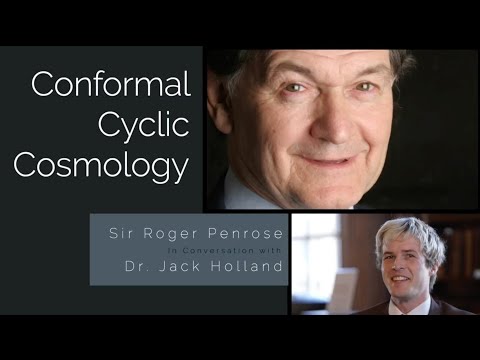
You ever think about time? Like, really think about it? It’s that slippery thing we all seem to chase, but can never quite catch. So, picture this: you’re sitting in your favorite chair, sipping your coffee. You glance at the clock and boom! It’s like three hours just vanished into thin air.
Now imagine if time wasn’t this one-way street we’ve all been conditioned to believe in. What if it was more like a funky rollercoaster, riding through loops and dips, endlessly cycling through the cosmos? Pretty wild thought, huh?
That’s where cyclic cosmology steps in. It throws a cool twist on how we view time and our universe itself. Instead of a big bang leading to a big chill, what if our universe is just part of an infinite loop? Seriously! Time stacking up on itself over and over again.
Hang tight; it’s going to be an amazing ride through some mind-bending ideas about how everything fits together!
Exploring the Cyclic Theory of Time: Insights from Science and Cosmology
So, let’s talk about something pretty mind-bending: the **cyclic theory of time**. This theory proposes that time isn’t just a straight line from past to future but instead loops back on itself. Pretty wild, right? It’s like imagining a roller coaster that goes up and down but never really gets off the track.
The idea originated from our quest to understand the universe’s beginnings and endings. In traditional cosmology, we often think of the Big Bang as a starting point, followed by an ever-expanding universe heading toward some kind of chilly fate called “heat death.” But cyclic cosmology suggests that after reaching its peak, the universe might contract back into a singularity and then explode again into another Big Bang! Imagine a giant cosmic bounce.
Now, here’s where it gets interesting. The cyclical nature of time means that everything we know has happened before and will happen again. Think about it: your life, emotions, events—they’re all part of a huge cycle. This can be a bit comforting too; if history repeats itself in some way, we might find ways to learn from it!
Some scientists who explore this idea are looking at what happens during each cycle. Could there be differences each time? Maybe each “big bang” leads to different physical laws or constants? It’s like if you made cookies and sometimes forgot an ingredient—each batch could turn out unique!
We also have theories like the **Ekpyrotic Universe**, which suggest our universe could result from the collision of two “branes” (think of them as multi-dimensional membranes) in a higher-dimensional space. When these branes bump into each other, they could create new universes in a cyclical manner! It’s all super theoretical for sure but opens fascinating doors.
And you know what else? Many ancient cultures had their own cyclic views of time! For instance, Indian philosophy talks about **Yugas**—vast cycles of ages repeating endlessly. It seems human beings have always had this instinctual connection to cycling rhythms!
Still, while this theory is captivating, it’s essential to remember that we’re peering into the cosmos with ideas shaped by our limited perspective on time and space. What we think happens in our little corner might not even scratch the surface.
But wait; there’s more! Cosmological observations—like those studying cosmic microwave background radiation—help scientists understand how our universe evolved after its initial expansion phases. These insights may lend credence to various cyclic theories or provide evidence against them.
So whether or not we live in a cyclical universe remains open for discussion. The debate continues among physicists and philosophers alike! But one thing is for sure: exploring cyclic theories shakes up how we perceive existence itself.
In summary:
- Time may not be linear: Cyclic theory suggests loops instead of straight lines.
- Cyclic end and beginnings: After expansion comes contraction—a cosmic loop!
- Unique outcomes: Each cycle could result in different physical laws.
- Cultural connections: Ancient philosophies reflect cyclical thoughts on existence.
- The science continues: Ongoing research uses cosmic data to challenge or support these ideas.
Pretty thrilling stuff when you think about how it alters our understanding of reality!
Exploring the Cyclic Theory of the Universe: A Scientific Perspective on Cosmic Rebirth and Evolution
So, let’s get into this whole Cyclic Theory of the Universe. Picture it: instead of a one-way ticket from the Big Bang to some cold, empty end, what if the universe is more like a yo-yo? It goes up, and then it comes back down—again and again. Pretty neat, right?
The Cyclic Cosmology idea suggests that our universe experiences endless cycles of expansion and contraction. You start with a Big Bang, everything expands as galaxies move away from each other, then you hit a point where it all reverses. Seriously, it’s like the universe is breathing in and out—big inhale, big exhale.
Now, why do scientists think this could be true? Well, one reason lies in how we perceive time. You see, most of us think about time as a straight line—like your life story unfolding page by page. But cyclic theory flips that notion on its head. Instead of just moving forward towards an inevitable end, time might loop back on itself like a cosmic roller coaster.
- The Big Bang: It’s not just where everything began; for cyclic cosmology advocates, it’s also where everything starts again!
- The Bounce: Before collapsing into nothingness due to gravity pulling everything back together (yup, it’s real!), some theorists say we may experience what they call “the bounce.” This is when the universe hits a maximum density before expanding again.
- Pulsating Universes: Some models propose that this cycle has been going on forever or at least for an incredibly long time! So when we look up at the stars now… it’s just one moment in this endless dance.
A while back, I read about a scientist who was fascinated by black holes and their role in cyclic models. He thought about how they could potentially create seeds for new universes after our own collapses. Imagine what kind of stars might be born from that cosmic recycling! That’s kinda beautiful if you think about it—life continuing in some form even after everything seems lost.
Of course, there are challenges to this theory too. For instance: how can we measure or detect these cycles? And if they really exist; wouldn’t every cycle look different because of things like dark energy? It brings up so many questions about the nature of time and existence itself!
The cool thing is that as scientists dig deeper into these concepts—using supercomputers and figuring out quantum physics—they’re kind of unraveling mysteries about both our universe and our place within it. That’s exciting stuff! Who wouldn’t find meaning in exploring how many variations of beginnings and endings we might experience?
So next time you gaze at the night sky or ponder life over coffee with friends, remember—you might just be sitting on top of a cosmic yo-yo whirling through an endless cycle. How poetic is that?
Exploring Neil Turok’s Theory: Insights into Cosmology and the Nature of the Universe
Neil Turok’s theory on cosmology is super intriguing. It’s all about **cyclic cosmology**, which suggests that the universe goes through endless cycles of expansion and contraction. Instead of a single Big Bang, picture this: the universe expands, then eventually collapses back into a singularity, and boom—another Big Bang! It’s like a cosmic yo-yo.
Your mind might be racing at this point. How does that even work? Well, Turok proposes that during each cycle, different physical laws could emerge. Imagine each cycle having its own twist on the rules—a sort of cosmic reset button—but still connected to what came before.
Now let’s talk about time. In our everyday lives, we think of time as linear—like an arrow flying from past to future. But Turok flips this idea around. He suggests that time isn’t just about moving forward; it could loop back after each cycle’s end, leading to **a more complex understanding of time** itself.
Here are some key points of Turok’s theory:
- Endless Cycles: The universe expands and contracts indefinitely.
- Varied Physical Laws: Each cycle can have different constants or laws than previous ones.
- The Nature of Time: Time might not be as straightforward as we think; it could actually loop.
Now picture this for a second: every time the universe resets, new stars arise, galaxies form, and life has the opportunity to emerge anew! It’s like a grand cosmic story that never really ends but rather keeps evolving.
There was an experiment—a bit emotional because it reminds us how much we’re connected to everything—that observed fluctuations in the Cosmic Microwave Background (CMB) radiation. This is basically leftover heat from the Big Bang. Some see patterns here that hint at cyclic behavior in the universe. If true, it’s almost poetic how life continues across these cosmic cycles.
Of course, scientists are still debating these ideas. Some folks are skeptical; they want more evidence before completely jumping on board with cyclic cosmology. After all, our understanding of **the universe’s origins** is ever-evolving.
So next time you look up at the night sky, think about how massive and intricate it all is—how the stars you see today could be part of a story much bigger than we can comprehend! It reminds us how curious we should be about our existence and what lies beyond our current understanding.
You know, when you think about the universe, it’s kind of mind-blowing. I mean, we’re talking about billions of galaxies and all sorts of weird stuff. But what really gets me thinking is this idea of cyclic cosmology. Imagine the universe as this giant breathing entity, where it expands and contracts over and over again. It’s like a cosmic heartbeat or something!
So, let’s break it down a bit. Cyclic cosmology suggests that instead of a one-time Big Bang followed by an endless expansion, our universe goes through cycles of bang and crunch. Picture it: the universe expands to its limits, then starts collapsing back in on itself until it reaches a singularity—kind of like when you blow up a balloon too much and then have to let some air out. It all starts over again! Wild, right?
I remember one time during a late-night chat with my buddy who studies physics—thankfully not an astrophysicist! He was talking about how time might not be linear like we think it is. We see time as straight—a neat timeline from past to present to future. But what if we’re totally missing something? What if time is more like waves lapping at the shore? With cyclic cosmology in the mix, every cycle could be seen as another wave washing in.
But here’s where it gets deeper: if our universe has always been cycling through this rhythm, what does that mean for us? For our lives? It’s both comforting and kind of daunting to think that everything we do could just… repeat someday! On one hand, the thought gives meaning; like each moment matters so much because they might resurface again somehow. On the other hand, there’s this nagging feeling—are we just actors in an eternal play that’s destined to repeat?
Then you toss in this whole notion that maybe everything we’ve experienced before—everything we’ve learned—could happen again in some form! It’s almost poetic when you think about how love stories or friendships might echo throughout each cycle.
Time becomes this intricate dance instead of just ticking clocks or calendars marking days off. The cycles could change how we see ourselves and our place in the cosmos; suddenly, every joy and every heartache feels part of a grander design.
Anyway, there’s so much more to explore here—the science can get pretty deep with theories about entropy and quantum physics—but at its core, cyclic cosmology challenges us to rethink our relationship with time itself. You’re left wondering whether your own life could flow into eternity alongside the stars—it’s wild food for thought!