So, picture this: You’re at a barbecue, and someone says, “Hey, have you ever thought about how a soda can is like, a perfect cylinder?” I mean, who even thinks about that, right? But there’s actually more to it than just being good for holding your drink.
Cylinders pop up all over the place in science—like in rockets or even skyscrapers. It’s wild! These shapes aren’t just good for storing stuff. They help us understand the universe in ways we often don’t realize.
You see, cylinders are not just for keeping your fizzy drinks safe; they play a huge role in everything from engineering to biology. So let’s take a little trip and check out some of these cool applications. Trust me—you’ll look at that soda can differently next time!
Exploring the Role of Geometry in Scientific Disciplines: Applications Across Physics, Biology, and Engineering
Geometry is everywhere in science, and if you stop and think about it, we interact with it in ways that go beyond just shapes on paper. It’s like the underlying framework that supports a ton of different scientific fields. Seriously, whether you’re into physics, biology, or engineering, geometry shows up to play a vital role. Let’s break it down a bit.
In physics, geometry helps us understand the universe. Think about how we describe gravity or motion. The paths that objects take aren’t random; they follow curves dictated by geometric principles. For example, the same equations that describe the orbit of planets also explain how balls roll down hills! And then there’s relativity—Einstein’s theories use curved spacetime to make sense of gravity. It’s wild how something as simple as shapes can help explain complex phenomena!
Moving on to biology, geometry plays a major part in how living organisms are designed and function. Take trees for instance; their branching patterns often resemble fractals—a fancy word for shapes that repeat at different scales. This isn’t just pretty to look at; it’s efficient! Trees maximize sunlight exposure while minimizing material used for branches, showing an amazing application of geometric principles in nature.
Then there’s engineering, where geometry is practically the backbone of design and construction. Cylinders are one standout shape here! They’re used in everything from bridges to pressure vessels because they distribute forces evenly along their surfaces. You know those big gas tanks you see? Yup, they’re usually cylindrical for a reason—strength and efficiency combined!
Let’s not forget about how geometry fosters innovation too! Think about advancements in technology like 3D printing. Engineers use geometric models to produce complex structures layer by layer, allowing for all sorts of nifty applications—from prosthetics to architectural designs.
So yeah, without getting too deep into the math (because let’s be honest—not everyone loves numbers), it becomes clear that geometry isn’t just some abstract concept stuck in textbooks; it’s actively shaping our understanding across disciplines.
In short:
- Physics: Geometry explains orbital paths and gravitational effects.
- Biology: Organisms like trees optimize shapes for survival through fractal designs.
- Engineering: Cylinders enhance structural integrity and efficiency.
- Innovation: Geometry underpins groundbreaking technologies like 3D printing.
This interplay between shape and function makes science not only comprehensible but also a whole lot more exciting! So next time you see a circle or cylinder around you, take a moment to appreciate all the heavy lifting it’s doing behind the scenes—it might just blow your mind!
Exploring Real-Life Applications of the Cylindrical Coordinate System in Science
So, let’s talk about the cylindrical coordinate system. You know, that three-dimensional way of plotting points that you probably encountered in math class? It’s actually pretty cool once you see how it pops up in real life, especially in science!
Basically, the cylindrical coordinate system combines polar coordinates and height measures. You have a radius (r), an angle (θ), and a height (z). Think of it like setting up a party where you need to decide how far from the center table you’ll sit, what direction you’re facing, and how high your chair is. It sounds simple, but this setup is super handy in various scientific fields.
Take physics, for instance. When studying things like fluid dynamics or electromagnetism, cylindrical coordinates shine! Imagine water flowing through a pipe. The flow can easily be described using r and θ for the circular part of the pipe while z deals with how far it travels along the length of that pipe. Cool, right?
In engineering, especially in mechanical design, cylinders are everywhere! From engines to pipelines—those shapes need specific measurements to function well. Engineers use cylindrical coordinates to ensure everything fits together perfectly when designing complex machinery. If they were still using just Cartesian coordinates—like X and Y—they’d end up having a harder time with those swirling shapes.
And then there’s computer graphics. Ever played a video game where you zoom into an object? Yep! Developers often rely on cylindrical coordinates to render 3D objects smoothly. Instead of figuring out every little X and Y position on their own, they can use r and θ to make complex movements easier and faster.
Even in astronomy, these coordinates come into play when looking at stars or planets that don’t sit neatly on our flat Earth model. When mapping out orbits or star clusters—which sometimes resemble cylinders—it just makes life simpler.
So there you have it! The next time you think about cylinders—or even just get lost in geometry class—remember this nifty coordinate system’s role in our world! Whether it’s helping engineers design better machines or assisting astronomers map the cosmos, those three little variables do so much more than meet the eye!
Exploring the Significance of Circles in Scientific Principles and Theories
Circles are everywhere, and honestly, they’re kind of amazing. They show up in nature, technology, and even in the theoretical frameworks we use to understand the universe. You know how when you take a peek at a bicycle wheel or think about planets circling around a star? Well, circles help us make sense of these things.
Circles and Geometry
At its core, a circle is just a bunch of points that are all the same distance from a center point. That’s pretty straightforward, right? This distance is called the radius. And what’s super cool is that this simple shape leads to lots of complex ideas in science. For instance, it’s crucial in fields like physics for understanding motion and forces.
When we talk about cylinder geometry specifically, things get even more interesting. A cylinder is like an extended circle—think of it as taking a circle and stretching it up into three dimensions. Why does this matter? Well, because cylinders have applications that affect our everyday lives.
Practical Applications
So let’s break it down:
Imagine being at your friend’s birthday party when they crack open one of those piñatas shaped like a cylinder. As everyone takes turns swinging at it until some candy spills out, you see how the shape allows for consistent structure while holding goodies inside!
Theoretical Significance
Now let’s zoom out and think bigger—literally! Circles also pop up in theoretical physics when discussing orbits or wave behavior. The concept of “angular momentum,” for example, revolves around circular motion (see what I did there?). It helps explain how planets rotate around stars or how electrons move around an atom.
You might be surprised that mathematical concepts tied up with circles help unlock mysteries about black holes too! Yep, the idea stretches into some pretty wild theories regarding gravity and curvature of space-time.
Circular Economy
On another note but still related: circles play into our discussion on sustainability through what’s known as the “circular economy.” It’s about designing products with their life cycle in mind—almost like thinking in circles instead of lines! This shift encourages reuse and recycling which is definitely something we need more of nowadays.
So basically, circles aren’t just nice shapes; they’re part of fundamental principles guiding everything from engineering innovations to cosmic wonders! They remind us how interconnected our world can be—and hey—next time you see something round, just take a moment to appreciate all the science behind it!
You know, when we think about shapes, cylinders might not be the first thing that pops into our minds. I mean, we’ve got all those flashy, cool shapes like spheres and pyramids. But cylinders? They’re like the underdogs of geometry. I remember once trying to make a simple paper rocket for my little brother. It was a cylinder, really. We painted it bright orange and attached some fins at the bottom. When we launched it, it soared like an eagle! It made me think about how this simple shape has so much potential.
So here’s the thing—cylinder geometry is super versatile in science! Just take a moment to consider all those practical uses. In engineering, for instance, cylinders are pivotal in creating pipes that transport water or gas. Their design allows for pressure distribution that minimizes breakage—a big deal when you want to avoid leaks!
And then there are those cylindrical tanks for storing liquids and gases. They help maintain structural integrity thanks to their curved surfaces which distribute stress evenly. It’s like they wear their own armor! Kind of like how that paper rocket held strong while soaring through the air.
In medicine too, imagine devices like syringes. Yup, they’re basically cylindrical! Their shape allows them to hold liquid and provide precise dosing—seriously life-saving stuff here! And don’t even get me started on research involving cylindrical probes used in soil analysis or measuring biological samples.
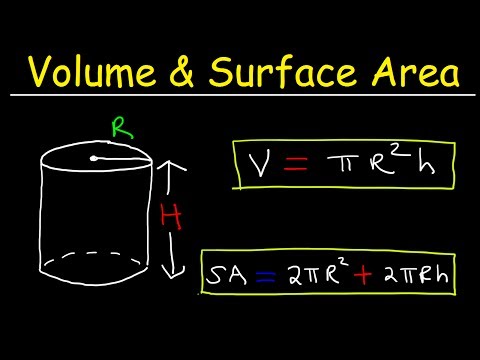
Also, have you seen how cylinders play a role in mathematics? They help us understand volume and surface area better than any other shape could—like when you try to figure out how much paint you’ll need for your next DIY project by finding the surface area of a cylinder-shaped can.
But there’s also this artistic element to cylinder geometry that’s been creeping into contemporary showcases too. Artists use them as bases for sculptures or installations that twist and turn into fascinating forms. It’s kind of poetic if you think about how something so simple can inspire creativity.
So yeah, whether it’s something as basic as your favorite soda can or cutting-edge technology in engineering or medicine, cylinders are everywhere—and they’ve got some serious impact on our world! They may not always steal the spotlight but trust me; without them, a lot of things would just topple down like my brother’s makeshift rocket after landing way too hard on our driveway!