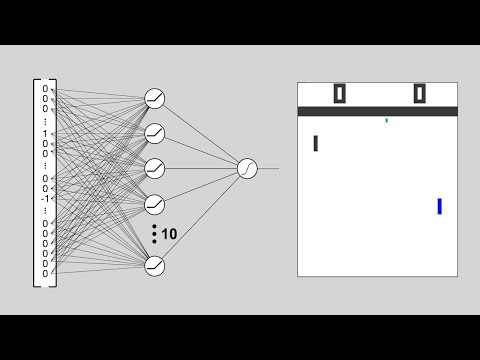
So, picture this: you’re playing a video game where your character has to learn how to dodge fireballs while collecting coins. At first, they’re totally clueless and get hit like, a billion times. But then, after some trial and error, boom! They figure it out and start leveling up like a boss. That’s kind of what deep reinforcement learning is all about.
It’s like teaching an AI to navigate through life— or at least through some tricky problems. It learns from its mistakes and gets better over time, just like you did when you first tried riding a bike— remember those wobbly moments?
Now, imagine applying that idea in real-world science. Yeah! We can use these cool techniques to solve complex issues in areas like healthcare or climate change. Wild thoughts enter my mind about robots saving the world—or at least helping scientists make some breakthrough discoveries.
So grab your favorite snack and let’s dig into how hands-on deep reinforcement learning can transform scientific applications. You might just find yourself inspired (or at least entertained) by what’s possible!
Deep Reinforcement Learning Techniques for Advancing Scientific Research: A Comprehensive PDF Guide
Deep reinforcement learning (DRL) is like giving computers a playful mindset to learn by trying things out and seeing what works, a bit like how we learn to ride a bike or play a video game. You try, you fail, you get back up, and eventually, you master it. So, when we talk about DRL in scientific research, well, it’s super exciting because it can help solve complex problems that traditional methods might struggle with.
What Makes Deep Reinforcement Learning Special? The heart of DRL combines two big ideas: deep learning and reinforcement learning. Deep learning is all about using artificial neural networks to process vast amounts of data and recognize patterns. Take image recognition as an example; neural networks can help identify objects in photos by analyzing pixel patterns—cool stuff! With reinforcement learning, we give the computer a goal and let it figure out how to achieve that through trial and error. So when you put these together, you get something powerful.
How is DRL Used in Science? Imagine you’re working on developing new drugs or optimizing an experiment. Researchers have turned to DRL to navigate the huge maze of possibilities in drug design. By trying different combinations of molecules and predicting their effects based on past information, researchers can zero in on the most promising candidates faster than ever before.
- Robotics: In fields like robotics; researchers use DRL for training bots to perform intricate tasks, like assembling parts or even surgery!
- Astronomy: In astronomy; scientists apply DRL techniques to sift through heaps of data from telescopes—helping them spot new celestial bodies.
- Material Science: And let’s not forget material science—DRL helps in discovering new materials with desired properties for things like batteries or solar cells.
But there’s more! Think about climate modeling. With so many factors influencing climate change, simulating these scenarios requires heavy computational power. DRL can help optimize these models by finding efficient strategies for managing resources or reducing emissions.
Now here’s something that might grab your attention: imagine teaching a computer program how to *play* with data! It starts off clueless but gradually develops skills just like us humans do—pretty neat! This not only saves time but also opens doors to innovative solutions.
The Future Looks Bright As researchers continue unpacking the potential of deep reinforcement learning in scientific applications, we’re likely going to see some groundbreaking discoveries emerge. Whether it’s speeding up research processes or uncovering new insights into materials or health-related data, the possibilities are simply mind-blowing!
So there you go! Deep reinforcement learning isn’t just a fancy term tossed around in tech circles; it’s actively reshaping how scientists tackle some of humanity’s biggest challenges today—all while having fun “playing” with data along the way! Pretty exciting stuff if you’re into science and technology!
Free Download: Hands-On Deep Reinforcement Learning for Scientific Applications – PDF Resource
Alright, so deep reinforcement learning (RL), huh? It’s a super cool area of artificial intelligence that’s been making waves, especially in scientific applications. Basically, it’s all about teaching machines to make decisions by learning from trial and error. Imagine you’re playing a video game. At first, you might struggle to get past the first level. But with practice and feedback, you start to get better and better. That’s kind of how deep RL works!
One interesting aspect of deep RL is how it combines neural networks with reinforcement learning principles. Neural networks are like a brain for the computer, helping it recognize patterns or learn from data. Meanwhile, reinforcement learning gives feedback based on actions taken—think rewards and penalties—so the machine can learn what works and what doesn’t.
In scientific contexts, this approach can be applied to various fields:
- Robotics: Robots can learn how to perform complex tasks autonomously by training in simulated environments before hitting the real world.
- Healthcare: Deep RL can optimize treatment plans for patients by analyzing vast amounts of clinical data.
- Chemistry: It’s even being used to discover new materials by predicting chemical reactions.
Now, let me tell you a little story here. There was this researcher who wanted to find out which drug combinations worked best for treating certain diseases. Instead of just relying on traditional methods—which can take forever—you know?—they implemented deep RL algorithms that could sift through thousands of possibilities quickly. The result? They found combinations that were effective way faster than usual! It was like having a smart assistant that never got tired.
But it’s not all sunshine and rainbows. There are challenges too! For one, training these models requires huge amounts of data and computational power. Plus, interpreting their decisions can be tricky—like trying to understand why someone made a weird move in chess.
Talking about resources like “Hands-On Deep Reinforcement Learning for Scientific Applications,” people often look for ways to get their hands dirty practically with this tech. A PDF resource coming your way would typically contain guides on setting up environments where you can practice your coding skills and apply deep RL methods.
So whether you’re looking into building your own projects or just curious about what’s happening in science-tech crossovers these days, diving into those hands-on materials is a great step forward! Just think about the possibilities—the next big breakthrough might be right at your fingertips!
Download Free PDF: Hands-On Deep Reinforcement Learning Applications in Scientific Research
Deep Reinforcement Learning (DRL) has become a game-changer in many fields, and it’s seriously cool how it’s being applied in scientific research. So, what is it exactly? Well, think of it like teaching a dog new tricks but with algorithms. You reward the computer for making the right choices, and over time, it learns to maximize its score – or in this case, complete tasks more efficiently.
Now, you might be curious about those “hands-on applications.” Basically, these are practical ways scientists use DRL to solve real-world problems. Let’s break that down a bit.
1. Drug Discovery
In pharmaceutical research, DRL can help identify potential drug candidates by predicting how different molecules will behave in various conditions. Imagine sifting through thousands of compounds! With DRL, researchers can optimize their search effectively.
2. Robotics
Robots are becoming smarter thanks to DRL. They’re used for tasks like assembling components in factories or navigating environments autonomously. By training robots through simulated environments using DRL techniques, they learn from their mistakes and get better at their jobs.
3. Climate Modeling
Have you ever thought about how we predict climate changes? Scientists employ DRL to improve models that foresee weather patterns or even optimize energy consumption in smart grids. So instead of just looking at past data, they’re using intelligent algorithms that adjust based on new findings.
4. Astrophysics
Here’s where things get cosmic! In astrophysics, researchers utilize DRL algorithms to analyze massive datasets from telescopes and satellite missions efficiently. It helps them spot celestial events or anomalies faster than traditional methods would allow.
You know what’s fascinating? A lot of this research is shared openly as PDFs or similar formats online! Researchers often release detailed studies along with supplementary materials so others can replicate results or build on them. This means you could find free resources on platforms like arXiv.org or other academic repositories where these PDFs are readily available for download.
So if you’re diving into hands-on applications of deep reinforcement learning in scientific research, just keep your eyes peeled for those downloadable resources! They often include tutorials or code snippets that could give you a clearer understanding of how these technologies work together with practical science problems.
In summary, deep reinforcement learning isn’t just theoretical fluff—it’s actively reshaping how scientists tackle issues across various domains just think about the potential! Whether you’re tracking molecules in drug discovery or exploring distant galaxies through data analysis—DRL is here to stay and expand its influence further into scientific realms.
You know, deep reinforcement learning has been buzzing in the tech circles lately, right? It’s like the hot flavor of ice cream everyone wants to taste. But it goes beyond just gaming or AI; it’s making waves in science too! Like, picture a lab full of researchers trying to crack complex problems, you know? That’s where this cool blend of deep learning and reinforcement learning comes into play.
I was chatting with a friend who works at a research lab. He told me this story about how they used deep reinforcement learning to optimize drug discovery. Seriously! Instead of spending ages sifting through data like looking for a needle in a haystack, they trained an AI to identify potential compounds that might work as new medications. Imagine the thrill when they found results that were actually promising—like finding hidden treasure!
So here’s the thing: at its core, deep reinforcement learning is about teaching algorithms how to make decisions based on feedback from their actions. It’s like training a puppy—you give it treats when it sits and scold it when it chews your favorite shoe. In the case of science applications, these programs learn from successes and mistakes over time, getting better at finding solutions.
But here’s where it gets really interesting. Think about all the variables involved in scientific research—there are tons! With traditional methods, navigating all that complexity can feel like trying to solve a Rubik’s Cube blindfolded. Algorithms can process vast amounts of data way faster than us humans and can adapt as more information comes in.
However, it’s not all smooth sailing. There are still challenges like ensuring ethical use and interpreting what these models are showing us. Ain’t no one want to get thrown off by something that sounds good but doesn’t make sense in practice! Plus, while it’s exciting to have AI assist us, there’s that age-old question: what happens when we let machines take over too much?
Still, seeing how deep reinforcement learning is shaping scientific endeavors feels like watching history unfold in real-time—turning what used to be slow processes into lightning-fast discoveries! It often boils down to this balance between human insight and machine power; we need both working together if we wanna tackle those big challenges ahead.
So yeah, the blend of hands-on deep reinforcement learning with scientific applications is not just another trend; it’s part of this fascinating journey toward uncovering new knowledge and understanding our world better! And honestly? I’m really excited to see where this all leads next!