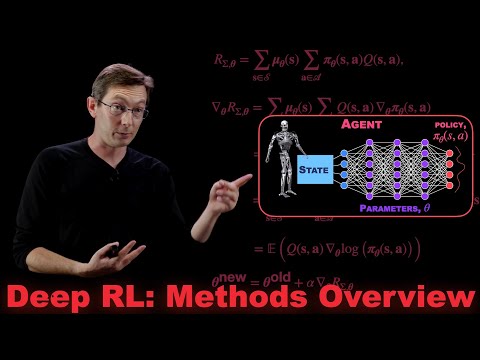
You know what’s wild? Picture a kid playing video games, only this time, the kid’s got two buddies in their head. One’s like, “Dude, jump now!” and the other’s saying, “No, wait! Think it through.” That’s kinda what actor-critic reinforcement learning is all about!
Alright, so here’s the scoop. Reinforcement learning is like teaching a dog new tricks. You reward it when it does good stuff and maybe ignore it when it doesn’t. But with actor-critic methods, you’ve got two sides working together—like peanut butter and jelly.
The cool thing? This combo really ups the game. It makes machines learn faster and smarter. Imagine robots mastering tasks just by figuring stuff out on their own!
But hey, how did we even get here? Well, that’s where the journey gets super interesting! Let’s take a closer look at what’s shaking things up in this brainy world of AI.
Exploring Actor-Critic Methods in Reinforcement Learning: Key Concepts and Applications in Scientific Research
Reinforcement learning (RL) is a field in artificial intelligence that focuses on teaching agents how to make decisions through trial and error. One of the most exciting things in this area is Actor-Critic methods. So, what exactly does that mean?
Picture a kid learning to ride a bike. The actor is like the kid, trying different moves to stay balanced and pedaling forward. The critic, on the other hand, gives feedback, saying “Hey, lean left a bit” or “Paddle faster!” This buddy system helps improve learning efficiency.
In technical terms, the actor makes decisions based on a policy while the critic evaluates those decisions using a value function. The artist injects creativity into navigating choices. Meanwhile, the critic evaluates performance and adjusts future actions accordingly.
Now let’s break down some key concepts:
- Policy: This defines how an agent decides what action to take in any given situation.
- Value Function: It’s like a report card for actions taken by the agent, measuring potential future rewards.
- Advantage Function: It helps improve decision-making by comparing how good an action is compared to others.
These elements are crucial because they work together to help agents learn efficiently. But what’s really cool is how these methods are being applied in various scientific fields.
Think about robotics—imagine teaching a robot arm to pick up objects. Using Actor-Critic methods allows it to learn quickly from its mistakes and successes without needing tons of pre-coded rules. Hey, it’s like when you tried catching a ball as a kid—you learned best when you missed!
Also, there’s fascinating research happening in healthcare where RL helps optimize treatment plans for patients with chronic diseases. By simulating different treatment options over time, actors can suggest personalized plans and critics can evaluate their effectiveness based on patient responses.
Another example? In gaming! Developers are using these techniques to create advanced AI that adapts and learns from players’ strategies in real-time—like having an opponent who constantly ups their game!
Ultimately, Actor-Critic methods represent just one of many innovative techniques driving progress in reinforcement learning. They’re not perfect yet; researchers are always tweaking models and algorithms for better performance. Just think about it: every new tweak brings us closer to smarter AI systems that can learn as dynamically as we do.
So yeah, whether you’re into robotics or healthcare or gaming—Actor-Critic methods are shaping the future and making waves across various scientific domains!
Reinforcement Learning Breakthroughs: Transformative Innovations in Scientific Research
Reinforcement Learning (RL) is quite the hot topic these days. It’s a type of machine learning where an agent learns how to make decisions by interacting with an environment. Think of it like training a pet. You give them treats when they do something right, and they learn, right? Well, that’s pretty much how RL works. You reward the agent for good actions and discourage the bad ones.
Now, let’s talk about Actor-Critic methods. These are cool because they combine two different approaches: the Actor and the Critic. The Actor suggests actions based on the current state, while the Critic evaluates how good those actions are. It’s like having a coach (the Critic) giving feedback to an athlete (the Actor). This duo makes learning more efficient and helps tackle complex problems.
One major breakthrough in this space is Generalized Advantage Estimation (GAE). With GAE, agents can estimate future rewards better by balancing bias and variance. Imagine you’re trying to predict how much candy you’ll get at Halloween based on your earlier experiences. GAE helps you fine-tune that estimate so you’re not too far off!
Another exciting innovation is Trust Region Policy Optimization (TRPO). This method ensures that updates to policy don’t change it too drastically in one go—kind of like easing into a new workout routine instead of diving into intense workouts all at once! By keeping changes small yet effective, TRPO makes learning stable and faster.
And then there’s Proximal Policy Optimization (PPO). This technique takes inspiration from TRPO but simplifies things a bit, making it easier to implement while still being super effective. Think of it as taking a well-traveled path rather than forging your own through dense woods—way less hassle! PPO has become one of the go-to methods for many researchers because it’s reliable and versatile.
These advancements have made waves in various fields. For example, in robotics, RL techniques allow robots to learn tasks like grasping objects or navigating environments without explicit programming for every little thing. They can adapt on-the-fly! In gaming, RL has helped create non-player characters that learn from players’ strategies, making games way more engaging and challenging.
So yeah, reinforcement learning breakthroughs, especially with Actor-Critic techniques, are reshaping how machines learn and interact with their environments. Every day seems to bring new surprises in this area as researchers continue pushing boundaries! Exciting times ahead for science and technology!
Exploring the Four Key Elements of Reinforcement Learning in Scientific Research
Reinforcement learning (RL) is this really cool area of artificial intelligence where agents learn how to make decisions by interacting with their environment. There are a few crucial elements that come together to make that work, especially in scientific research. So let’s break down the four key elements of reinforcement learning and how they fit into what’s new in actor-critic techniques.
1. The Agent
First off, we have the **agent**. Think of the agent as the brain behind the operation. It learns from experiences, making choices based on past actions and their outcomes. In scientific research, you can picture it like a student experimenting in a lab. They try different methods to get results and adjust their approach based on what works and what doesn’t. The agent is constantly learning from its environment.
2. The Environment
Next, there’s the **environment**—everything that surrounds the agent and affects its decisions. It’s like your room while you’re working on a project; everything from your desk setup to your cat walking across the keyboard influences what you do next! In RL, the environment provides feedback based on the agent’s actions: rewards or penalties that guide it toward better decisions.
3. Actions
Then come **actions**, which are basically all the choices available to the agent at any moment. Let’s say our agent is a robot trying to navigate through a maze; it can either go left, right, or straight ahead at each intersection. Every action taken brings back some form of feedback from the environment, helping refine future choices. In scientific fields like robotics or game playing, these actions are key for training systems intelligently.
4. Rewards
Finally, we have **rewards**—the little motivators that help shape behavior over time! Think about it: when you finish a tough task and treat yourself to ice cream, that sweet reward reinforces your effort! In RL, rewards inform agents about how well they did after taking certain actions within an environment: high rewards signal success while low or negative rewards indicate something went wrong.
Now let’s tie this back to some shiny innovations like actor-critic techniques in reinforcement learning! These techniques combine two important approaches: being an actor who decides what action to take and a critic who evaluates how good those actions were based on rewards received.
The beauty is in how they work together—it’s kinda like having both a coach and player on a team! The actor proposes moves while the critic provides valuable feedback after each play—essentially helping refine strategies for better performance over time.
In summary? Reinforcement learning hinges on these four elements: agents making decisions, environments providing feedback, action options guiding behavior, and rewards shaping future choices—all vital for pushing boundaries in research fields today! If you ever find yourself pondering how machines learn from experience just like us humans do—remember those four pillars pulling all that knowledge together!
Actor-Critic Reinforcement Learning is like that cool new kid in school who’s super smart and has caught everyone’s attention, you know? It combines two approaches—an actor, which decides what action to take, and a critic, which evaluates that action. It’s kind of like having a coach who tells you if your moves on the field are working or if you need to switch things up.
When I first stumbled upon this concept, I remembered watching my younger cousin play video games. She was always strategizing her next move, adjusting based on how well her character was doing. That moment hit me. The way she combined her instinct with feedback from the game mirrors what actor-critic methods do! It’s about learning from past experiences and improving over time.
Now, there have been some pretty exciting innovations in this area recently. Researchers are constantly tweaking these techniques to make them smarter and faster—like when your friend upgrades their gaming gear to keep up with the latest titles. These innovations can help machines learn complex tasks more efficiently; it’s all about finding that sweet spot between exploration (trying new actions) and exploitation (using what already works).
One example is the use of deep learning within actor-critic frameworks. Deep learning adds layers of complexity and nuance to how agents perceive their environment and make decisions—or more like how your brain picks up on patterns after you’ve seen something a few times.
But here’s the thing: while all these advancements sound incredible—almost futuristic—they also come with challenges. Like any new technology, there are risks of overfitting, where the model learns too well from its training data but struggles with real-world situations, kind of like memorizing textbook answers but freezing during an actual exam.
And as someone who loves seeing technology evolve, it’s easy to get caught up in all the cool stuff it can do! Just think about robots making decisions or AI managing complex systems better than humans ever could! But we also need to stay grounded; ethical considerations are super important here. What happens if these systems go awry or are used irresponsibly? That’s one big question hanging in the air.
So yeah, actor-critic reinforcement learning is definitely shaking things up in AI research—fusing intuition with rigorous analysis has so much potential! Just like that determined cousin at her game console, there’s always room for improvement and growth in this space; let’s see where it takes us next!