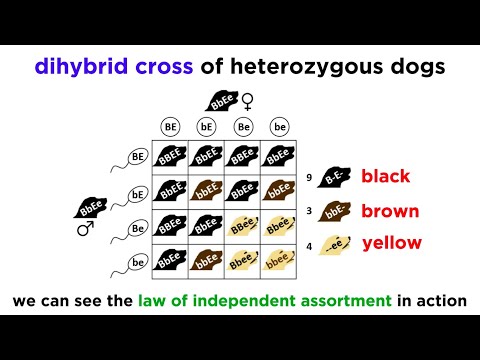
You know what’s funny? Sometimes, in the middle of an intense board game, I catch myself thinking about genetics. Like, why does my friend have a crazy curly hair while I’m rocking straight locks? And then it hits me—dihybrid inheritance is like the ultimate game of genetic chance!
So, what’s that all about? Basically, it’s this wild way of mixing traits. Think of it as shuffling cards in a deck; each card represents a different gene. The patterns that pop out can be pretty surprising.
Ever seen two parents who look completely different end up with kids that somehow blend their traits together? It’s like nature’s little magic trick! Those combinations can teach us a lot about how genes work.
Let’s peel back the layers and dive into this colorful world of traits and patterns in genetics. Who knows? You might find yourself looking at your family tree with a whole new perspective!
Understanding Inheritance Patterns in Dihybrid Crosses: A Comprehensive Guide for Genetics Studies
Understanding inheritance patterns can sometimes feel like trying to solve a mystery, right? Let’s take a closer look at **dihybrid crosses**. Here we’re talking about when you cross two different traits at once, say, pea plant color and shape. This is all part of **Mendelian genetics**.
So, what’s a dihybrid cross? Basically, it involves observing how two traits are passed down through generations. It all starts with our buddy Gregor Mendel. He played around with pea plants and noticed something amazing – he figured out how traits are inherited.
To understand this better, think about a simple example: let’s say one trait is flower color, where purple (P) is dominant over white (p). The second trait could be seed shape, where round (R) is dominant over wrinkled (r). When you cross two plants that are heterozygous for both traits (PpRr), you set the stage for a dihybrid cross.
When doing these crosses, you can create a **Punnett square**, which is super helpful! You make a grid that shows all possible combinations of alleles from each parent:
- From one parent: PR, Pr, pR, pr.
- From another: PR, Pr, pR, pr.
After filling it in—boom! You get a 16-box grid showing the potential offspring combinations. **In this case**, you’d get ratios like 9:3:3:1 for the phenotypes in the offspring:
- 9 purple round
- 3 purple wrinkled
- 3 white round
- 1 white wrinkled
Isn’t it wild how predictable traits can be? But wait – there’s more!
Now let’s look at some important concepts:
Independent Assortment: This principle states that alleles for different traits segregate independently during gamete formation. So the inheritance of one trait doesn’t affect the other.
Dominance: Not all alleles are created equal! Some are dominant and will mask others when they’re present. That’s why purple flowers show up even if there’s one allele for white.
These principles help us understand why certain traits appear more frequently in offspring. Think of it like mixing colors; every time you mix your paints (or alleles), the outcome can be surprising!
And hey, genetics isn’t just about plants! It applies to animals and humans too. For instance, if your friend has curly hair (C) which is dominant over straight hair (c), and she mates with someone who also has curly hair but is heterozygous (Cc), their baby might have any combination of those curly or straight hair genes!
In summary,
– Dihybrid crosses give us insight into how two traits interact.
– Using Punnett squares makes predicting outcomes way easier.
– Remember those key genetic principles—independent assortment and dominance—as they play huge roles in shaping what we see.
So next time you’re thinking about how traits get passed on through generations—whether it’s your favorite pet or garden peas—you’ll have a better idea of what’s going on under the hood! Genetics can be so cool once you break it down into bite-sized pieces like this!
Understanding Dihybrid Traits: A Comprehensive Guide to Genetics and Heredity
Alright, let’s break down this whole **dihybrid inheritance** thing. It might sound a bit complex at first, but just hang tight, and I’ll explain it in a fun way.
So, what are dihybrid traits? Well, they’re all about how two different traits are passed down from parents to offspring. Think about it like mixing paints. If you have one color representing one trait and another color for the second trait, you can mix them up in different ways to get new colors.
Now let’s get into some of the basics. When we talk about genetics, we often mention genes and alleles. Genes are segments of DNA that determine characteristics, like flower color or seed shape in plants. Each gene can have different versions called **alleles**.
Here’s where dihybrid comes into play. Imagine you’re looking at pea plants (thanks to good ol’ Gregor Mendel for giving us a lot of fun examples). Let’s say one trait is flower color (purple vs. white) and the other is seed shape (round vs. wrinkled). You could represent these traits with letters:
- P for purple flowers (dominant) and p for white flowers (recessive)
- R for round seeds (dominant) and r for wrinkled seeds (recessive)
If you cross two plants that are both heterozygous for these traits (PpRr), you start to see some interesting outcomes.
When these plants reproduce, their offspring can inherit various combinations of these alleles. That leads us to the famous **Punnett square**, which is like a genetic calculator that helps visualize all possible combinations of traits from two parents.
Just imagine filling out this grid—like playing tic-tac-toe but with genes! Each square will show potential allele combinations of flower color and seed shape based on what each parent contributes.
In this example, when you do the math correctly, you’ll find there are four possible combinations:
– PR (purple flowers & round seeds)
– Pr (purple flowers & wrinkled seeds)
– pR (white flowers & round seeds)
– pr (white flowers & wrinkled seeds)
Fun fact: the ratio of phenotypes you’d typically see among the offspring from such a cross would be 9:3:3:1! That means nine would have purple round seeds, three would have purple wrinkled seeds, three would be white round seeds, and just one would be white wrinkled—pretty neat!
Now here’s something important to consider—this doesn’t just apply to pea plants! Dihybrid inheritance is found throughout nature in many species. Whether it’s dogs with their coat colors or even humans with eye colors and other traits—different combinations mix together all the time.
So when you’re thinking about these dihybrid traits—remember it’s like blending flavors in cooking or colors in art! And yeah, understanding how they work gives insight into heredity—the beauty of life passing on its quirks from one generation to another.
To wrap things up here: genetics isn’t just science; it’s a fascinating journey that helps explain what makes us unique while linking us back through generations—you feel me?
Exploring Inheritance Patterns of Traits: A Comprehensive Guide to Genetic Transmission in Science
Exploring inheritance patterns in genetics can feel like diving into a giant puzzle. You know, every piece of that puzzle represents a trait passed down from parents to offspring. It’s pretty amazing stuff! Today, let’s chat about dihybrid inheritance—a fancy term for looking at two traits at the same time.
So, what’s the big deal with dihybrid inheritance? The essence of it is in how certain traits combine when organisms reproduce. Think back to old-school Mendel and his pea plants. He found out that you could cross plants with two different traits and see how those were passed along.
When you cross two pea plants, say one with yellow peas (dominant) and another with green peas (recessive), it’s more than just color that can come into play! You can also throw shape in there—round versus wrinkled, for instance. Now you got yourself two traits: color and shape.
When you’re working with dihybrid crosses, there are some key principles to keep in mind:
- Independent assortment: This means that the way one trait gets inherited doesn’t affect how another trait gets inherited. Imagine throwing dice; the outcome of one roll doesn’t limit the other!
- Dominance: Sometimes, one allele (that’s just a fancy word for gene variant) can dominate over another. In our example, yellow peas dominate over green ones.
- Phenotypes: These are the visible traits you see—like colors or shapes of the peas we mentioned before.
- Genotypes: This refers to the genetic makeup behind those traits. It determines whether an organism will show a dominant or recessive trait.
Let’s throw down an example to make this clearer! Suppose we cross two plants:
– One that is heterozygous for both traits (YyRr) – meaning it has one dominant allele and one recessive for each trait.
– The other plant is homozygous recessive (yyrr).
The types of offspring we could expect here would be based on a punnett square—or a handy tool used to visualize genetic crosses. When you fill out this square, it helps predict the phenotype ratios.
In this case, crossing YyRr x yyrr might yield something like:
- 1 Yellow Round Pea (Y_R_)
- 1 Yellow Wrinkled Pea (Y_rr)
- 1 Green Round Pea (yyR_)
- 1 Green Wrinkled Pea (yyrr)
From this little mix-up of genetics, you’d see how traits segregate in specific ratios—9:3:3:1 if all combinations were possible! That shows both dominant and recessive phenotypes interacting.
It’s kind of wild when you think about it; every single organism inherits its traits through such intricate patterns! Just imagine watching those tiny seeds sprout into plants, each carrying their own unique mix of genetic information passed down through generations.
In short, dihybrid inheritance is like looking at life through a kaleidoscope—the colors change based on which genes are active or inactive—but the beauty lies in their combinations and variations over time. Genetics isn’t just about understanding who’s related to whom; it’s really about appreciating how diverse life on Earth truly is!
So, let’s talk about dihybrid inheritance. I mean, it sounds all fancy and science-y, but it’s really just a way to understand how two traits are passed down from parents to their kiddos. It kinda gives you that behind-the-scenes peek at genetics.
Picture this: two plants, one has purple flowers and the other has white flowers. Now, suppose they also have a trait for height—one is tall and the other is short. When you cross these plants, you get a mix of flower colors and heights in the next generation. How cool is that? It’s like nature’s own little experiment happening right in your garden!
Mendel—yeah, that guy with the pea plants—was the first to look into this stuff. He discovered that traits don’t just blend together; they sort of assort independently during reproduction. This means that flower color doesn’t affect height directly. So, if you have a tall plant with purple flowers, it doesn’t mean its offspring will also have to be tall and purple.
Okay, here’s where it gets interesting. You could end up with some plants that are tall with purple flowers, some that are short with white flowers—basically a whole mix! It’s like genetic lottery or something! You follow me?
The patterns we see when we cross these traits can be mapped out using something called a Punnett square. Think of it as a grid where you write down possible combinations of traits from each parent. It helps predict what the offspring might look like based on probabilities. Isn’t it wild to think about?
I remember back in school when we did our own little experiments with plants in biology class. I was completely hooked! Watching those seedlings sprout felt like witnessing tiny miracles every day. As we recorded their growth and colors, I couldn’t help but feel connected to this age-old science—it was as if I was part of something bigger than myself.
Dihybrid inheritance isn’t just limited to plants; it plays out in animals too. Imagine dogs—you can breed them for different coat colors and sizes! The genetics behind all of this can sometimes feel complex, but at its core? It’s nature mixing up traits in ways that can surprise us.
At the end of the day, dihybrid inheritance shows us how diverse life can be because of simple genetic rules governing our biology. It’s not just about what we see on the surface; it’s about understanding how those traits come together through generations—a little tapestry woven by nature itself! And honestly? That thought alone is pretty inspiring!