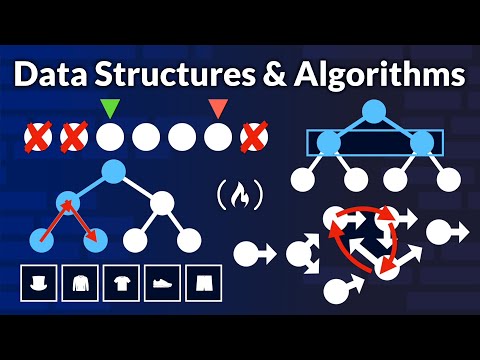
You know that feeling when you’re trying to find your favorite shirt in a messy room? Like, you’re digging through piles of clothes, and it feels like an endless treasure hunt? Well, that’s kind of what working with data can feel like without the right tools.
Imagine being a scientist, swimming in mountains of data. It’s exciting but overwhelming. Data structures and algorithms are your best friends here! They help you organize, search, and analyze all that info without losing your mind.
If Python is your coding sidekick (and trust me, it’s pretty popular), you’re in for a treat! You get to mix those super handy coding skills with the power of science. Talk about an epic duo!
So grab a snack and settle in. We’re going on a journey to make sense of how data structures and algorithms can transform your scientific research game. It’s gonna be fun—you’ll see!
Free Guide to Data Structures and Algorithms in Python for Scientific Research
Data structures and algorithms—you might have heard these terms buzzing around the tech world, but they’re super important for anyone diving into programming with Python, especially if you’re gearing up for some serious scientific research. You know, it’s like having the right tools in your toolbox when you’re about to build something cool. So let’s break this down.
When you think about it, data structures are like different ways to organize information. Imagine having a big pile of LEGO bricks. If you just leave them in a heap, good luck finding that one piece you need! But if you organize them by color or shape, finding that specific brick becomes way easier. In programming, common data structures include:
- Lists: Great for storing ordered collections of items.
- Dictionaries: Perfect for key-value pairs where you can look things up quickly.
- Sets: Useful when you want to keep track of unique items without duplicates.
- Trees: Great for hierarchical data like family trees or organizational structures.
- Graphs: Ideal for representing networks, like social media connections or pathways in a city.
Now let’s chat about algorithms. Think of algorithms as the recipes guiding us on how to manipulate and retrieve data from those structures. They tell us how to sort a list of names alphabetically or find the shortest path between two points on a map. Some familiar ones include:
- Sorting algorithms: Like Bubble Sort and Quick Sort, which help arrange items in order.
- Searcing algorithms: Such as Binary Search, which efficiently finds items in sorted lists.
- Dijkstra’s Algorithm: A classic one used to find the shortest paths in graphs.
Okay, so now why does all this matter for scientific research? Well, let’s take an example: say you’re working on a project studying climate change using large datasets from weather stations around the globe. You need to process that data efficiently—store it neatly and quickly analyze trends over time. Here’s where Python shines because it offers libraries like Pandas and NumPy that utilize these **data structures** and **algorithms** under the hood.
Imagine trying to visualize trends over decades without an efficient algorithm—you’d be stuck watching your computer crawl at snail speed! That’s frustrating.
In case you’re curious about implementation—like how do you actually code this stuff? Python makes it pretty straightforward! For instance:
“`python
# Example of using a dictionary
weather_data = {
“2021”: {“temp”: 20, “humidity”: 30},
“2022”: {“temp”: 22, “humidity”: 35}
}
# Accessing temperature data
print(weather_data[“2021”][“temp”]) # Output: 20
“`
This snippet shows how easy it is to access nested data using dictionaries.
So if you’re diving into scientific coding with Python, embracing these concepts will not only streamline your workflow but also empower your research efforts. You’ll be able to handle everything from small experiments at your kitchen table to large-scale projects that could potentially influence policy decisions!
It can feel overwhelming at first—all those new ideas swimming around—but don’t sweat it too much! Just keep practicing and exploring as much as you can; you’ll get there before ya know it!
Optimizing Scientific Research: Utilizing Data Structures and Algorithms in Python
When it comes to scientific research, using the right tools can make a world of difference. One area that’s super crucial is **optimizing how you process and manage data**. You might wonder why this is such a big deal, right? It’s simple: good data management can save you time, reduce errors, and help you find patterns that are otherwise hidden. That’s where **data structures and algorithms** come into play—especially if you’re using Python.
Data Structures
Data structures are basically ways of organizing your data so that it’s easier to work with. Think about it like arranging your bookshelf. If books are haphazardly thrown everywhere, good luck finding your favorite one! In Python, there are several built-in data structures that can help keep things neat:
- Lists: Perfect for ordered collections. You might use a list to store results from experiments in a sequence.
- Dictionaries: These let you store key-value pairs—think of them like a phone book where each name (key) has a number (value). Great for fast look-ups!
- Sets: Useful for holding unique items without duplicates. This is handy when dealing with data where repetition isn’t wanted.
You get the idea—choosing the right structure keeps your program efficient and clean.
Algorithms
Now onto algorithms! They’re like step-by-step recipes for solving problems or performing tasks with data. Imagine trying to organize a party; there’s a sequence of steps involved, right? In coding terms, these steps translate into algorithms.
- Sorting Algorithms: If you’ve got tons of experimental data but need them sorted (like ascending from the smallest to largest), sorting algorithms come in clutch. For instance, Python has built-in functions like
sorted(), which can do this efficiently. - Search Algorithms:Your variables might be scattered across large datasets. Search algorithms help find specific items quickly—like locating your lost sock in an immense drawer!
- Graph Algorithms:If you’re studying networks (social connections or biological pathways), graph algorithms help understand relationships better.
A concrete example could be when you run simulations involving lots of variables—the way you structure your data can directly affect how quickly those simulations run and how easy they are to analyze later on.
Pythons Efficiency
Using Python enhances this entire process since it has libraries tailored specifically for scientific tasks! Libraries like NumPy and pandas provide powerful data manipulation capabilities while keeping computations efficient under the hood. If you’re working with large datasets or heavy computations, you’ll notice how these libraries streamline everything.
So picture yourself sifting through mountains of research data—it can get overwhelming! If you’ve set up solid data structures and chosen appropriate algorithms, suddenly finding patterns or trends becomes much less stressful. You’re not just throwing darts in the dark; you’re making informed decisions based on well-organized information!
In short, getting savvy with **data structures** and **algorithms** is vital for optimizing your scientific research using Python. It’ll change how efficiently you work while also improving accuracy—leaving more room for innovation instead of sorting through chaos! And remember that even small changes in how we use these tools can lead to big discoveries down the line!
Comprehensive Guide to Data Structures and Algorithms in Python: Essential PDF Resource for Scientific Computing
Well, let’s chat about data structures and algorithms in Python, especially if you’re into scientific computing. The whole concept might sound a bit overwhelming at first, but hang with me. It’s actually pretty cool and incredibly useful for research!
Data Structures are basically how we organize and store our data. Think of them like different types of containers we use for various purposes. You wouldn’t keep your groceries in a suitcase, right? Same idea here. Here are some key types you’ll want to know:
- Lists: These are like arrays but far more flexible in Python! You can add, remove, or change items easily.
- Dictionaries: Imagine having a contact list where each person’s name (key) points to their phone number (value). Super handy for quick lookups!
- Sets: They’re all about uniqueness! If you don’t want duplicates, sets are your go-to.
- Tuples: Think of these as immovable lists. Once created, you can’t change them—great for fixed data!
Now let’s shift gears to Algorithms. These are step-by-step procedures or formulas for solving problems. In simple words, they’re like recipes! When you’re in the kitchen and following a recipe to make cookies—it’s structured and leads to a yummy outcome.
Here are some essential algorithms that come up often:
- Sorting Algorithms: Like when you need your data sorted from smallest to largest—think bubble sort, merge sort… you get the idea!
- Searching Algorithms: Ever needed to find a book in your huge library? Searching algorithms help locate specific data quickly.
- Dijkstra’s Algorithm: This one’s great for finding the shortest path between points. Perfect for routing stuff!
Now why is all this important in scientific computing? Well, it lets you handle large datasets efficiently. Say you’re analyzing climate data or genetic sequences; using the right data structures will make your code faster and cleaner—less stress on your brain!
When it comes to Python specifically, there’s an awesome ecosystem with libraries that handle all this heavy lifting for you. Libraries like NumPy or Pandas come packed with built-in structures that streamline your workflow—you barely have to think about them!
And just as an aside: I remember pulling my hair out trying to sort through thousands of lines of genetic data without understanding these concepts well enough. Once I got a grasp on using dictionaries and sorting algorithms effectively, it was like turning on the lights in a dark room! Everything just clicked.
So yeah, if you’re gearing up for scientific research with Python, focusing on mastering these fundamentals of data structures and algorithms will serve you immensely well. It opens doors to better performance and more straightforward coding solutions!
You know, when you think about scientific research, the first thing that pops into your mind isn’t usually data structures or algorithms, right? But seriously, they’re like the secret sauce behind turning raw data into something meaningful.
So, let me tell you a little story. A while back, I was helping a friend who was knee-deep in data for her biology project. She had all these numbers and measurements but felt totally lost trying to make sense of them. I mean, we’ve all been there! It’s kind of like having a jigsaw puzzle with no picture on the box. Then, we started playing around with Python and realized how powerful it could be for organizing and processing that data.
Data structures? Think of them as different ways to organize your data—like lists or dictionaries in Python. They help you store information efficiently so that when you’re looking for something specific, it’s right there at your fingertips instead of buried under a mountain of numbers. Like using a bookshelf with labeled sections; it just makes life easier!
Now algorithms are where it gets really interesting. Basically, they’re step-by-step instructions for solving problems—sort of like following a recipe to bake your favorite cake. In research, this could mean figuring out how to analyze vast amounts of data quickly or simulating complex systems without losing your mind (or your computer’s processing power).
For example, if we wanted to study the impact of climate change on polar bears’ habitats using Python, we’d need the right algorithms to analyze temperature changes over time and how they affect sea ice levels. If our code’s organized well with the right structures in place? Boom! Insights will start popping up like popcorn!
But here’s the kicker: it can feel overwhelming sometimes. You start grappling with these concepts and after a while; your brain feels like it’s doing gymnastics! But once you get comfortable with them? That’s when the magic begins! Suddenly you’ve become this wizard who can sift through mountains of data, unearth trends hidden in plain sight, and help tackle real-world problems.
So yeah, while discussing data structures and algorithms might sound pretty dry at first glance—even boring—I really think they embody the heart of scientific research today. And who knows? That next breakthrough could just be one well-structured piece of code away!