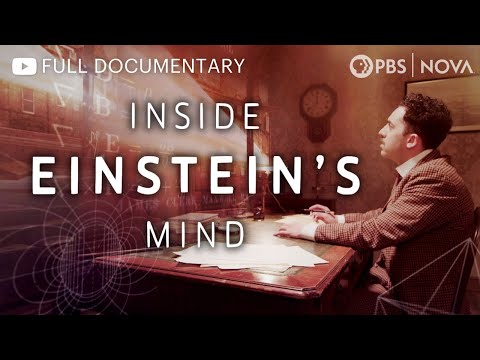
You know, it’s kind of funny how Albert Einstein, the genius we all think of when we hear “theory of relativity,” wasn’t always on board with quantum physics. Seriously! This dude who unlocked so many secrets of the universe had major beef with some ideas floating around in the quantum world.
Imagine him, sitting in a café in Berlin, probably sipping a coffee and shaking his head at the bizarre stuff his peers were coming up with. “God doesn’t play dice with the universe!” he famously said. Sounds like something out of a sci-fi movie, right?
And yet, this tension between Einstein and quantum physics is like a riveting drama filled with breakthroughs and brawls of thought. It’s not just about atoms and particles; it’s about the very nature of reality itself!
So, buckle up! We’re about to take a laid-back stroll through Einstein’s journey into this mind-bending realm. Trust me; you don’t want to miss it!
Stephen Hawking’s Insights on Quantum Physics: Unraveling the Mysteries of the Universe
Alright, so let’s chat about a legend in the world of science: Stephen Hawking. Seriously, the guy was nothing short of amazing. He took Einstein’s ideas and added his unique twist, particularly when it comes to quantum physics. So, what exactly did he bring to the table?
First off, quantum physics is a wild ride. Imagine tiny particles zipping around, acting in ways that totally defy our everyday logic. Like, they can be in two places at once or vanish and reappear like some magic trick. This weirdness is where Hawking made significant contributions.
One of the coolest things he did was connect black holes and quantum mechanics. You know black holes, right? Those massive objects in space with gravity so strong that not even light can escape? Well, Hawking suggested that black holes aren’t just these unyielding vacuum cleaners of space but could actually emit radiation now known as “Hawking radiation.” It’s like they’re trying to let some of their energy slip away into the universe, which is nuts when you think about it.
But here’s where it gets even cooler: Hawking challenged the idea of information loss. Traditionally, scientists believed that if something fell into a black hole, all the information about that object was lost forever. But Hawking argued that maybe this wasn’t entirely true. He thought information could somehow be preserved even if it vanished behind a black hole’s event horizon. Imagine tossing your old toy into a black hole only to find it later at another cosmic yard sale!
You see, his ideas sparked huge debates in physics circles—kind of like when you and your friends argue over who really won that last game. It highlighted the need for a unified theory that could tie together general relativity (Einstein’s baby) and quantum mechanics.
Another fascinating aspect of Hawking’s work involves something called “virtual particles.” These are sneaky little guys popping in and out of existence all around us. They’re constantly forming and disappearing everywhere! Hawking speculated these virtual particles might play a role in creating Hawking radiation around black holes.
To put it simply:
And here’s an emotional touch I can’t resist sharing: Once during an interview, he mentioned how he was always driven by curiosity despite his physical challenges. That right there shows how powerful wonder is as a force for exploration!
In summary, Stephen Hawking took us on an incredible journey through quantum physics by altering our understanding of black holes and challenging age-old theories about information loss. He reveled in life’s mysteries while arguing for deeper connections between forces we thought were separate—much like how Einstein initially looked at nature from different angles way back when.
So next time someone brings up black holes or throws out terms like Hawking radiation or virtual particles at parties (you know it happens), you’ll have some interesting tidbits to share!
Exploring Albert Einstein’s Impact on Quantum Physics and the Evolution of Modern Science
Einstein, you know, is one of those names that just pops up when talking about science. Everyone’s heard of him. But did you know that his journey into quantum physics is pretty mind-blowing?
Let’s break it down a bit. When most people think of Einstein, they picture him with his wild hair, famous for the theory of relativity. But he wasn’t just about that space-time thing; he had some wild ideas about **quantum physics** too!
To start things off, let’s talk about the **photoelectric effect**. This was a big deal back in the day. Basically, Einstein proposed that light can behave like a particle as well as a wave—kinda like how people can be chill one minute and totally hyped the next! He suggested that light consists of little packets of energy called **photons**. This idea helped explain why some metals emit electrons when shone with light.
Moving on, let’s not forget about his **disagreement** with other physicists. So there was this notion brewing around quantum mechanics that things could be totally random at small scales—like flipping a coin and not knowing whether it’ll land on heads or tails until you look. But Einstein wasn’t buying it! He famously said, “God doesn’t play dice with the universe.” It’s like he was saying that beneath all that randomness, there had to be some underlying order.
His work laid the groundwork for future scientists to challenge and refine these concepts. I mean, think about it: without Einstein pushing those boundaries, would we even have advances like quantum computing or modern cryptography? It gets pretty cool when you see how interconnected everything is.
Then there’s his role in shaping modern physics itself. By blending ideas from relativity and quantum theories, he opened doors to new ways of thinking about everything from black holes to how our everyday tech works. And let me tell ya, this is more than just theoretical stuff; it has real-world applications!
Finally, let’s wrap up by looking at how Einstein’s impact continues today. His theories still spark discussions among scientists every day—debating what’s really happening at the tiniest scales or exploring the cosmos itself.
In short:
- Photoelectric Effect: Light acts as both particles (photons) and waves.
- Disagreements: Einstein argued against quantum randomness.
- Influence: Laid groundwork for advancements in tech.
- Ongoing Impact: Continues to inspire modern scientific debates.
So yeah! Albert Einstein wasn’t just a guy with crazy hair; he was a pioneering thinker who pushed us into new realms of understanding in quantum physics and beyond! Cool stuff, right?
Unraveling Earth’s History: The Quest for the Oldest DNA in Scientific Research
When it comes to understanding our planet’s past, scientists are on a fascinating journey. They’re digging deep—sometimes literally—to find the oldest DNA. Seriously, can you imagine holding a piece of history in your hands that goes back thousands or even millions of years? That’s what researchers are after.
One of the amazing things about DNA is that it’s not just found in living organisms. When creatures die, their biological remains can leave behind traces of their genetic material. Over time, these fragments can get preserved in ice, sediment, or even permafrost. So, they might stick around for us to discover much later.
The quest for ancient DNA isn’t easy though. It requires specialized techniques and tools because the older the DNA is, the more degraded it typically becomes. For example, scientists have successfully extracted DNA from mammoths that roamed during the last Ice Age—talk about a time travel experience! These findings help us piece together how ecosystems functioned back then and how species interacted with each other.
Researchers also explore samples from places like Greenland or Siberia where conditions are super cold, helping to keep DNA intact for longer periods. Scientists can even use powerful techniques like next-generation sequencing, which allows them to read the genetic code of these ancient remnants!
But why would anyone want to study old DNA? Well, there’s a lot we can learn about evolution and climate change by looking back in time. For example, if we find out what plants or animals thrived during warmer periods millions of years ago, we can begin to understand how current climate shifts could affect today’s ecosystems.
Now, let’s talk about contamination—it’s a big deal here! When researchers extract ancient DNA from samples, there’s a risk of mixing it up with tiny bits of modern DNA accidentally caught in there. This makes analyzing results tricky and often requires countless controls and precautions to ensure accuracy.
And if you think it’s just about dinosaurs or woolly mammoths—think again! Scientists have also been able to extract ancient microbial DNA from lake sediments which opens up conversations on early life forms on our planet. It provides context for how life evolved in various environments over time.
In short, the quest for the oldest DNA is an incredible fusion of science and adventure! Each fragment tells a piece of Earth’s story—and it bridges us with creatures who walked the planet long before us. The more we uncover through this research, the more chapters we add to our understanding of nature itself… pretty humbling when you think about it!
You know, thinking about Einstein and his journey into quantum physics really gets me. I mean, here’s this guy who’s already a genius with relativity under his belt, and then he takes a swing at something so utterly different. Imagine him sitting in a café in Bern or maybe just walking around with that wild hair of his, contemplating the nature of reality. It’s kind of poetic, right?
So, Einstein was initially super skeptical about quantum mechanics. He believed that underlying reality was deterministic—that everything had a set path like a train on tracks. But then, there came along this whole new theory that said particles could be in multiple states at once and things could be downright random! Like, what? That must have felt like stepping into another universe for him.
The famous quote “God doesn’t play dice” really sums up his discomfort with the randomness he saw in quantum theories. He wanted to find deeper connections and truths beneath the surface chaos. One time, he even described the idea of “spooky action at a distance” when it came to entangled particles; it totally baffled him! You can almost picture him throwing up his hands and saying, “Come on!”
But here’s where it gets interesting—despite his doubts, he still contributed immensely to quantum theory! His work on the photoelectric effect was crucial and earned him the Nobel Prize in 1921. The thing is, even if he didn’t fully embrace the quantum world as we know it today, you can see how much passion he had for understanding it.
I guess what really strikes me is how open-ended science is—how one brilliant mind can challenge another’s beliefs while still pushing the envelope forward. It’s like we’re all part of this gigantic puzzle that no one person can solve alone but will keep evolving through these debates and discoveries.
So yeah, thinking about Einstein’s mixed feelings toward quantum physics—it reminds us that sometimes questioning things can lead to some pretty amazing breakthroughs…even if you don’t believe in all of them yourself!