So, picture this: you’re at a party, and someone brings up how everything in the universe is made of tiny, invisible particles. Like, seriously?! You’re probably wondering if they’ve had one too many drinks or if they’ve just read a science book cover to cover.
But here’s the thing—elementary particles are kind of a big deal. These minuscule building blocks are what make up everything around us. From the chair you’re sitting on to the stars in the sky, it’s all tied together by these little guys.
Now, I know it sounds super complicated. But it’s actually pretty mind-blowing once you get into it! There’s so much mystery and wonder tucked away in particle physics that even pros scratch their heads sometimes. So come on; let’s unravel some of these cosmic secrets together!
Exploring the 7 Biggest Unanswered Questions in Physics: Key Mysteries that Challenge Our Understanding of the Universe
Sure thing! Let’s jump right into some of the coolest mysteries in physics. The universe is full of questions that keep scientists up at night, and it’s wild to think about how much we still don’t know. Here are seven big ones that really challenge what we understand about everything around us.
1. Dark Matter: This stuff makes up about 27% of the universe, yet we can’t see it or touch it. It’s like an invisible friend hanging out in space but having a huge impact on how galaxies act. Scientists have noticed that galaxies spin in ways they shouldn’t if only normal matter was involved; dark matter seems to be holding them together, but its nature is still a mystery.
2. Dark Energy: Even more mysterious than dark matter, dark energy is believed to be responsible for the universe’s accelerated expansion. It’s like the universe has a turbo button! We can see its effects, but what it really is? That’s anyone’s guess right now.
3. Matter-Antimatter Asymmetry: When the Big Bang happened, it seems equal amounts of matter and antimatter should’ve been produced. But here’s the kicker: we see way more matter than antimatter around us today! That raises a lot of eyebrows because if antimatter meets matter, they annihilate each other; where did all the antimatter go?
4. The Nature of Gravity: Gravity is everywhere, pulling things toward each other, but we don’t entirely know how it works at quantum levels. It doesn’t play well with quantum mechanics and general relativity — you’ve got one side pulling hard with little particles and another saying “hey, big objects bend space and time.” Merging these ideas into a single theory? Now that would be something!
5. Quantum Mechanics vs General Relativity: They’re both fantastic theories but operate like oil and water when they meet. Quantum mechanics can predict things with freaky accuracy at tiny scales while general relativity explains gravity on large scales perfectly. But merging them into one coherent framework? Still works in progress!
6. The Origin of Mass: We owe our mass to particles called Higgs bosons; without these guys, everything would just zip around at light speed! Yet there are questions about why they exist and how they became such heavyweights in the universe’s game. It feels like there’s more to this story waiting to be discovered.
7. The Big Bang Before the Big Bang?: Early models suggest the universe started from a singularity—a point where physics breaks down—but what came before that? Did time even exist? Or was there something else before everything we know began? It’s chilling to think about nothingness or perhaps another universe existing out there.
So yeah, these questions highlight just how much we don’t understand yet—it’s exciting and daunting at once! Each mystery leads scientists down different rabbit holes filled with research and exploration. Who knows what answers might come next? Exploring these unknowns keeps pushing boundaries in physics while reminding us how thrilling science can truly be!
Understanding the Higgs Boson: The Particle Often Referred to as God’s Particle in Modern Physics
The Higgs boson is a really cool particle that’s created a lot of buzz in the world of physics. You might have heard it called the “God particle,” which sounds dramatic, doesn’t it? But this nickname actually comes from a book title and not because it has any divine qualities! Basically, people refer to it this way because it plays a crucial role in our understanding of how particles get mass.
So, here’s the deal: every particle you can think of, from electrons to protons, has mass. But what gives them that mass? That’s where the Higgs boson steps in. It’s part of something called the Higgs field, which is all around us—even when we can’t see it. Imagine walking through water; you feel resistance and that’s kinda like how particles interact with the Higgs field.
When particles move through this field, they get “dragged” by it. The more they interact with this field, the heavier they become—that’s mass for you! *Without* the Higgs field and boson, particles would zip around at light speed without any weight. And if that were true? Well, we wouldn’t have atoms let alone stars or planets. Crazy thought, huh?
Here’s something intriguing: scientists first confirmed the existence of the Higgs boson in 2012 at CERN using their Large Hadron Collider (LHC). It was a huge moment for physicists everywhere; after decades of searching for this elusive particle! Finding it felt like solving a giant cosmic puzzle piece.
You might be wondering why it’s considered so groundbreaking. Well, the discovery pretty much completed what physicists call the Standard Model—our best theory describing how all fundamental particles interact with one another. This model helps us understand everything from atomic structure to how stars form!
But don’t think we’re done here. The Higgs boson still hides some mysteries. For instance, it’s not just about confirming its existence; scientists are also studying its properties and interactions to see if there are any surprises lurking around. Do you remember when everyone thought Pluto was a planet? Science constantly evolves and who knows what new information will come out about this particle or others?
In short the Higgs boson is essential not just as a component of mass but as a piece of our universe’s grand puzzle. It connects to lots of other phenomena and fuels ongoing research—enriching our understanding as scientists keep digging deeper into these mysteries! So yeah, while you might not hear about high-energy physics every day at parties (seriously?), it’s nice to know there’s so much fascinating stuff happening out there in the world of tiny particles!
Exploring the Possibility of Undiscovered Elementary Particles in Modern Physics
So, let’s chat about elementary particles. You might be thinking, what are they even? Well, elementary particles are basically the tiny building blocks of everything in the universe. They’re like the little Lego pieces that make up atoms, which then come together to form all sorts of stuff. Think of protons, neutrons, and electrons as the main characters here.
Now, we’ve done a pretty good job at identifying many of these particles. But here’s where it gets interesting: there’s a chance there are still undiscovered elementary particles hanging out in the cosmos! It’s like having an unfinished puzzle where some pieces are still missing.
So, why do scientists think there could be more of these elusive particles? Well, for starters:
So basically, there’s this big ol’ mystery going on. When scientists gather data from particle colliders like the Large Hadron Collider (LHC), they’re not just trying to confirm what we already know; they’re also on the lookout for signs of new particles or interactions that don’t fit into our current theories.
Here’s a relatable anecdote: one time I went to a museum exhibit about subatomic particles with my friend who was just getting into physics. She looked at me wide-eyed when she learned about how large colliders smash particles together at nearly the speed of light! I mean… that sounds like something straight outta sci-fi! But it underlines how intense and crazy this exploration is—like hunting for treasure in a world we barely understand.
And then there is String Theory floating around too! No pun intended. This theory suggests that instead of tiny point-like dots (like how we usually think about particles), maybe everything is made up of tiny vibrating strings! If true, this could open doors to dimensions beyond our perception—and potentially new undiscovered particles!
It’s exciting to think about what we might discover next. Each time scientists find something new—even if it’s just a small tweak to what we thought was true—it’s like opening another door in an infinite hallway full of surprises.
In conclusion (I know I said “in conclusion,” but bear with me), exploring these mysteries isn’t just important for physicists; it affects our understanding of existence itself! So next time you look up at the stars or ponder what’s out there—you’ll know there could be whole worlds within those tiny elementary particles waiting to be found!
Elementary particle physics, huh? It’s like the ultimate treasure hunt, only instead of gold coins or jewels, we’re after the tiniest building blocks of everything around us. I mean, think about it! Every chair you sit on, every sip of water you take, even you—made up of these elusive particles. It sounds kinda mind-boggling when you really get into it.
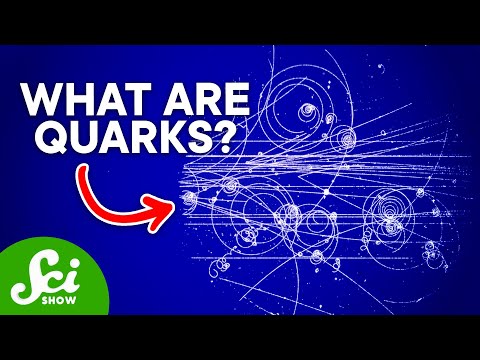
There was this moment for me when I first learned about quarks—those funky little things that combine to make protons and neutrons. It blew my mind! I remember sitting in a cafe with a friend, trying to wrap my head around the fact that everything is held together by something so ridiculously small that we can’t even see it with our bare eyes. Quarks are like tiny puzzle pieces dancing around in their own weird way. Seriously, have you ever tried imagining what it would be like to be at that scale? Floating around inside an atom? Wild!
But here’s the kicker: even with all the fancy particle accelerators and clever experiments we’ve got—where scientists shove particles together at crazy speeds—we still don’t really know EVERYTHING about these little guys. Dark matter and dark energy are still these giant question marks hovering over us. They make up a huge part of the universe, yet it’s like they’re hiding from us! It’s both super exciting and frustrating at the same time.
And let’s not forget about neutrinos! These sneaky particles zoom through everything without even stopping for a chat. Imagine having such a chill vibe that you can pass through mountains without breaking a sweat. That’s neutrinos for you! Sometimes I think they’re just playing hide-and-seek with scientists who are desperate to learn more about them.
The more I dive into this stuff, the more I realize how much we don’t understand—even though we’ve made amazing strides since those old days of just thinking atoms were the tiniest things out there. The universe is like this enormous jigsaw puzzle where some pieces are missing. Each discovery feels like we’re one step closer to completing it!
You know what? There’s something comforting in knowing we have so many mysteries left to solve in elementary particle physics. It reminds me that there’s always more to explore and learn—like an endless adventure waiting right under our noses! So whether you’re a science geek or just someone who likes pondering life’s big questions over coffee, there’s always a bit of magic happening down at those tiny scales if you choose to look for it.