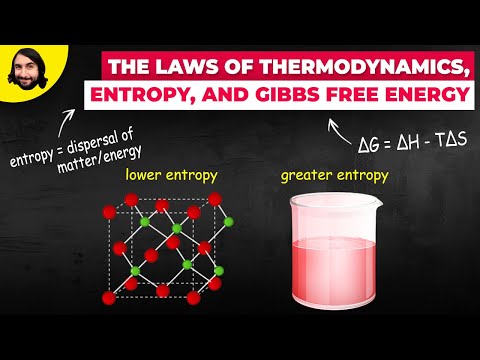
You know that feeling when you walk into a messy room, and it’s like chaos everywhere? Clothes on the floor, books piled up, snacks mysteriously disappearing under the couch? It’s a little slice of entropy right in your own home!
So here’s a wild thought: entropy isn’t just about messy rooms. It’s a fundamental concept in physics and nature. Seriously, it has this sneaky way of creeping into everything around us.
Imagine this: every time you spill your coffee or the ice cream melts on a hot day, entropy is working behind the scenes. It’s like nature’s way of saying, “Hey, things just wanna chill out and spread out!”
This whole idea isn’t just about messiness though; it’s crucial to understanding how our universe operates. So grab a snack — let’s break down what entropy means and why it matters in natural processes. You’re going to want to stick around for this one!
Exploring the Role of Entropy in Natural Systems: Implications for Scientific Understanding
Entropy is one of those concepts that sometimes feels like it belongs in a sci-fi movie, but it’s actually super relevant in our everyday lives. So, what’s the deal with entropy? Basically, entropy is a measure of disorder or randomness in a system. It helps us understand how energy spreads out and changes over time.
In nature, entropy plays a vital role. Take a moment to think about your room after you’ve had friends over. It starts neat and tidy, but as the evening goes on, things get messy—clothes on the floor, cups everywhere. That messiness? That’s entropy at work! In thermodynamics, which is the study of heat and energy transfer, this idea is super important.
When you heat up water, for example, the heat energy increases the movement of water molecules. They start dancing around more chaotically than when they were calm and sitting still. This increase in molecular movement signifies an increase in entropy. And guess what? When you cool that water down again and it turns back into ice, the molecules slow down and become more ordered—so now entropy decreases.
So where do we see this in larger natural systems? One clear example is in ecosystems. Just think about a forest after a fire; initially, everything looks chaotic and burnt up. But over time—thanks to nature’s resilience—the area starts to regenerate: plants grow back, wildlife returns—the system trends toward greater order despite having gone through all that destruction.
Another classic illustration is the mixing of gases or fluids. Picture putting food coloring into water; at first it’s all contained but then spreads out uniformly throughout the liquid over time. This mixing process increases entropy as the system moves towards uniformity—a state that has higher disorder compared to separate layers.
Now let’s talk about entropy and life itself. You might wonder how living beings can maintain order (like our bodies) while everything else tends toward chaos in the universe. The key here is that life constantly uses energy from its surroundings—food for animals or sunlight for plants—to create structures and maintain low-entropy states within themselves! But remember: this local decrease comes with an overall increase in total entropy somewhere else—like when organisms release heat into their environment.
It’s also worth noting that the second law of thermodynamics states that total entropy can never decrease over time for isolated systems, which means things will naturally progress towards disorder without some external input of energy or intelligence (like those cute little ants tidying up your picnic leftovers!).
In summary: Entropy isn’t just an abstract idea; it has real implications for how systems interact with each other in nature. Whether it’s understanding why things get messy or how ecosystems recover after upheaval, grasping this concept enriches our scientific comprehension of natural processes as they unfold around us every day! Pretty cool stuff when you think about it!
Exploring Entropy: The Role of Natural Processes in Thermodynamic Change
Alright, let’s chat about entropy and its role in nature. Entropy is a pretty cool concept—kind of like the universe’s way of keeping things interesting. So, what is it exactly? Well, think of it as a measure of disorder or randomness in a system. When we say something has high entropy, it means there’s a lot of chaos and unpredictability.
Now, you might be wondering why this matters. Here’s the thing: entropy is all about energy distribution. Imagine you have a box filled with marbles: half red and half blue. If you shake that box up, the colors start to mix. The mixed-up state has higher entropy than when all the reds are on one side and all the blues are on the other. That’s because there are way more ways for those marbles to be mixed than to be neatly ordered.
Natural processes around us exhibit similar behavior. For example:
So why should we care about this? Because understanding entropy helps explain how energy flows through our world. Take, for instance, how heat moves from hot objects to cold ones until they reach equilibrium—the ultimate state where everything is equally warm and thus maximally entropic. It’s like when two friends are having a heart-to-heart talk after years apart; they’re both sharing their stories (energy) until they find common ground.
The beauty of thermodynamics lies in its laws—especially the second law that says the total entropy of an isolated system can never decrease. It always tends to increase over time! You can think about it like cleaning your room: if you just leave it alone for ages, it’s going to get messier without any effort from you.
Entropy also plays a big role in how life functions! Living organisms maintain low entropy internally by utilizing energy from their environment—like food and sunlight—in order to thrive while still contributing to a greater entropy overall in their surroundings.
Take this scenario: Imagine you’re baking cookies. You mix together flour, sugar, eggs; chaos reigns! Once they bake into delicious cookies though? You’ve created order out of chaos temporarily; but then they get eaten or stale over time—increasing entropy again!
In short, exploring entropy gives us insight into everything from baking cookies to understanding cosmic events! It reminds us that change is constant and things tend toward disorder without effort—like leaves falling off trees in autumn or your old toys collecting dust when not played with.
So next time you’re puzzled by something messy or chaotic around you? Just remember that it’s all part of life’s beautiful—they’re just following that natural course towards increasing disorder!
Exploring Entropy: Four Real-Life Examples in Science
Entropy is one of those cool concepts in science that, like, really helps us understand how the universe works. It’s all about disorder and randomness, which might sound a bit boring at first, but trust me, it’s super relevant to everyday life! So let’s take a look at four real-life examples where entropy plays a big role.
1. Melting Ice:
Ever left an ice cube out on the counter? Pretty soon, it turns into water! What you’re seeing is entropy in action. The orderly structure of ice (with its neat little molecules lined up) starts to break apart as it melts. The water molecules become more chaotic as they gain energy from the room temperature. Basically, nature prefers a mess over neatness.
2. Mixing Cream in Coffee:
If you pour cream into your coffee and just let it sit there for a moment, you’ll notice that it doesn’t stay all layered and pretty for long. The cream quickly mixes in with the coffee until everything looks uniform. This is another example of increasing entropy—the cream moves from a more ordered state (all separate) to a disordered state (full blend). It’s kind of like when friends mix up at a party—at first they’re divided into groups, and then everyone mingles!
3. A Rusting Nail:
You know that old nail you left out in the rain? Over time, it rusts and becomes fragile instead of strong. This process also involves entropy! When iron reacts with oxygen and water, it creates rust (iron oxide), which is less ordered than the original iron atoms all packed tightly together. The nail goes from being useful to something crumbly and messy—definitely an increase in entropy!
4. The Spread of Perfume:
When you spray your favorite fragrance around the room, it doesn’t just hang out in one spot; it spreads everywhere! Initially concentrated near where you sprayed it, eventually those perfume molecules disperse throughout the air. This spreading increases disorder in that space—it’s another classic case of entropy taking center stage!
The thing is, entropy isn’t just about creating chaos. It helps drive natural processes and shows us how energy flows through systems while driving change over time. From melting ice to rusting nails or even mixing drinks—entropy is subtly involved in so many mundane moments of our lives!
If we think about these examples carefully, we realize that understanding entropy can help us grasp larger concepts in physics and chemistry too—like why certain reactions happen or how energy transformations occur.
You know, entropy is one of those concepts that can sound super complicated at first. But once you start to break it down, it’s actually pretty fascinating and relevant in so many ways. To put it simply, entropy is all about disorder and randomness in systems. Kind of like your room when you haven’t cleaned up in a while—everything’s scattered everywhere, right? The more disordered things are, the higher the entropy.
Think about it this way: when you pour cream into coffee, it swirls around and eventually blends together into a nice uniform color. At first, the cream’s all separate and neat, then bam! You’ve got a mess of swirling chaos! That’s entropy at work—it’s nature’s way of tending towards disorder over time.
Now let me share a little story from my childhood. I remember visiting my grandmother’s house after she baked cookies. She had this beautiful display of freshly baked goodies on the table, all perfectly arranged. But I couldn’t resist sneaking a cookie—just one! And before I knew it, I was munching on another one and another until there was a big ol’ mess of cookie crumbs everywhere! That moment kind of embodies how systems tend to move from order to disorder… like how life just gets busier as we pile on responsibilities.
Entropy isn’t just about cookies or rooms getting messy; it plays a huge role in natural processes too. Like how energy flows through ecosystems or how stars form and die in space. When energy gets dispersed over time—as light moves through the universe or heat spreads out—it leads to increased entropy. So every time you see something change or transform in nature, remember that there’s some level of entropy involved.
Interestingly enough, while we often think of increasing disorder as bad (like an untidy closet), it’s essential for processes like evolution or even life itself! Life thrives in what scientists call “open systems,” where energy flows continually into the system and allows for new structures to emerge amidst chaos.
So yeah, when you look around—whether it’s nature changing with the seasons or people dealing with their clutter—you’ll notice that entropy is always quietly working behind the scenes. It’s this balancing act between order and chaos that keeps our world dynamic and vibrant! What do you think? Cool stuff to ponder about while sipping your coffee (with no cream needed this time!).