You know, I once overheard a kid at the zoo say, “Why don’t we see dinosaurs anymore?” It cracked me up! But it also got me thinking about evolution.
Like, here’s this concept that explains how everything around us has changed over millions of years. Seriously, even your pet goldfish has a whole story behind it!
Evolution is all about survival and adaptation. It’s how living things become better suited to their environments—kind of like when you learn to wear a hoodie in winter, right?
But what does all this really mean for us? How does understanding evolution help us out in the day-to-day? Let’s dig into that a bit!
Unpacking Karl Popper’s Perspective on Evolution: Insights and Implications for Science
Karl Popper, a philosopher of science, had some interesting and, to some extent, controversial ideas about evolution. He’s best known for his view on the nature of scientific theories, especially how they can be tested or falsified. So let’s break it down a bit.
Basically, Popper argued that for something to be considered scientific, it must be testable. In his eyes, **evolution by natural selection**, while widely accepted in the biological community, didn’t quite fit that bill as neatly as some might think. Instead of seeing evolution as a straightforward scientific theory that could be proved right or wrong, he felt it was more of a **metaphysical framework**—something broader and less concrete.
Now, this doesn’t mean he completely dismissed evolution. Far from it! Popper actually acknowledged its significance in the biological sciences. He saw it as a valuable explanation for the diversity of life on Earth. But he pushed for a clearer distinction between science and non-science. After all, how can you really measure something like “survival of the fittest” in a strict experimental sense?
Here’s where things get more intriguing. Popper later changed his stance somewhat after reflecting on genetics and population biology. He came to realize that some aspects of evolutionary theory can indeed be subject to testing through observations and experiments—in other words, they could potentially be falsified!
This shift is important because it implies that evolution is not just a vague idea; there’s real science behind it when you consider things like **mutations**, genetic drift, and environmental pressures influencing species over time.
In terms of implications for science overall:
- Evolving Theories: Science is all about evolving ideas based on new evidence.
- Testing Ideas: A robust scientific approach requires testing those ideas against data.
- Broader Understanding: Recognizing evolution’s complexity encourages scientists to incorporate findings from various disciplines.
So what does all this really mean? Well, understanding Popper’s take helps frame how we think about scientific theories in general—and specifically how we approach biology and evolution.
It also highlights the importance of open-mindedness in science. For example, if someone discovers new evidence contradicting current evolutionary theories (like unexpected fossil finds), that’s not just an inconvenience; it’s an exciting opportunity to refine our understanding!
Overall, unpacking Popper’s perspective reminds us just how dynamic science is—and why it’s okay to question everything while also being open to learning more every day!
Understanding Evolution in Biological Contexts: Significance and Implications for Science
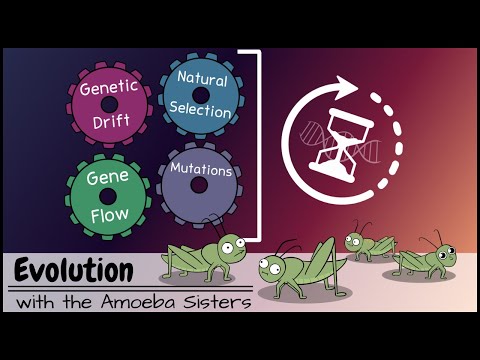
Evolution is like the ultimate story of life on Earth. It tells us how all living things, from tiny bacteria to massive whales, have changed over millions of years. This process is driven by natural selection, mutation, genetic drift, and gene flow. So, let’s break it down!
What is Evolution?
In simple terms, evolution refers to the gradual change in the traits of living organisms over generations. Imagine if every baby animal was a little different from its parents: some might run faster or have better camouflage. Those that are better suited for their environment are more likely to survive and reproduce. Over time, these traits become more common.
The Biological Significance
You might be asking, “Why should I care about evolution?” Well, understanding evolution helps us grasp how complex life is and why it matters. Here are some key points:
- Diversity of Life: Evolution explains why there are so many different species on Earth! Every living thing has a unique evolutionary history.
- Adaptation: Species adapt to their environments through evolution. Think about how polar bears have thick fur for cold climates—this change happened over countless generations.
- Common Ancestry: All living things share a common ancestor if you go back far enough in time. This means humans and dolphins have something in common at a genetic level!
- The Role of Mutation: Mutations are random changes in DNA that contribute to evolution. Some mutations can be beneficial while others might not do much at all or even be harmful.
The Implications for Science
This whole evolutionary framework influences many areas of science:
- Medicine: Understanding how bacteria evolve helps us combat antibiotic resistance. If we know they can adapt quickly, we can develop better treatments.
- Ecosystems: Ecology and conservation biology rely on evolutionary principles to maintain biodiversity and protect endangered species.
- Agriculture: Farmers use knowledge of plant evolution to breed crops that can resist pests or grow better under specific conditions.
I remember the first time I learned about evolution; it felt like someone switched on a light bulb in my brain! Suddenly, everything made sense—the way species interacted with each other and their environments opened up a whole new understanding of nature.
A Final Thought
The significance of understanding evolution can’t be overstated. It’s not just some complex concept locked away in textbooks; it’s the foundation for so many scientific advancements and helps us tackle real-world problems every day.
If you’ve got questions or feel curious about this amazing topic, don’t hesitate to dig deeper—there’s always more to learn!
Understanding Evolution in Biology: Key Concepts and Insights into the Science of Life
Evolution, in simple terms, is like the ultimate story of life on our planet. It explains how living things change over time, adapting to their environments and sometimes evolving into entirely new species. This process is kind of like a long, winding road of trial and error. You see, it all boils down to tiny changes in our DNA—like mixing different colors in a painting—that eventually lead to big differences.
Natural selection is one of the key players in this drama. It’s like nature’s way of picking winners and losers based on who can survive better. Imagine two rabbits: one has thick fur and the other has thin fur. If it gets cold, which rabbit do you think will survive longer? Yep, the fluffy one! Over generations, you’ll find more fuzzy rabbits around because they were better suited for that environment.
Another important concept is mutation. These are random changes in an organism’s genetic material that can lead to new traits. Most mutations are harmless or even harmful, but some can be beneficial. Take giraffes, for example; back when they were a little shorter with more regular necks, those that happened to have slightly longer necks could reach higher leaves during food shortages. Over time, these gentle giants evolved into what we see today.
Now let’s talk about common descent. This idea means that all living things share a common ancestor at some point in history. Picture a big family tree where branches represent different species. So whether you’re looking at an elephant or a tiny mouse, they all trace back to ancient ancestors hundreds of millions of years ago! Isn’t that mind-blowing?
Oh! And there’s also speciation, which is basically how new species come into being. This usually happens when groups from the same species get separated—maybe by mountains or rivers—and start adapting to their new environments over time until they become so different that they can’t mate anymore.
You know what’s cool? Evolution doesn’t have a finish line—it’s always happening! Species are continuously adapting because their environments change too. Think climate change or new predators showing up on the scene; life has to keep up!
In summary:
- Natural selection: Survival of those best suited for their environment.
- Mutation: Random changes in DNA leading to traits.
- Common descent: All living organisms are related through ancestry.
- Speciation: The process through which new species develop.
So there you have it! Evolution isn’t just about dinosaurs and ancient creatures; it’s happening all around us right now! Every little change contributes to the rich tapestry of life we see today. Isn’t it amazing how everything connects?
So, evolution… it’s one of those concepts that can sound super complex, right? But at its core, it’s all about change over time. Imagine sitting on a park bench watching trees grow. In a couple of years, they’ll look different. Some branches may get bigger, while others might snap off. That change is kind of like evolution—just on a way cooler level!
In the biological sense, evolution refers to how living organisms develop and adapt over generations. Think about it: the giraffes we know today didn’t just pop out looking like that. They’ve evolved from ancestors with shorter necks who had to compete for food in lower bushes. Those longer-necked giraffes got the tasty leaves up high. Over time, it’s like nature was playing favorites based on who could survive better.
The significance of understanding evolution is enormous! It helps us grasp why certain species exist today and how they’re connected to each other—like all these branches on a massive family tree. You see how humans share DNA with chimps or even banana plants?! It’s wild stuff.
I remember one summer during a biology class field trip—we visited this museum where they had fossils on display. And I was just standing there, totally blown away seeing dinosaur bones next to tiny fossils of sea creatures. It hit me that each of these life forms has a story, rooted in millions of years of evolution! It gave me shivers, realizing how interconnected everything is.
In modern times, understanding evolution also plays a crucial role in fields like medicine and conservation. Like when doctors study antibiotic resistance—they have to consider how bacteria evolve to survive treatments over time, adapting so quickly that what worked yesterday might not work today.
So yeah, when you dig into the whole idea of evolution in biological contexts, you start to see this intricate web of life unravel before your eyes—the good old “circle of life” thing makes way more sense! The stories tied up in our shared ancestry are profound and remind us we’re part of something much larger than ourselves—you feel me?