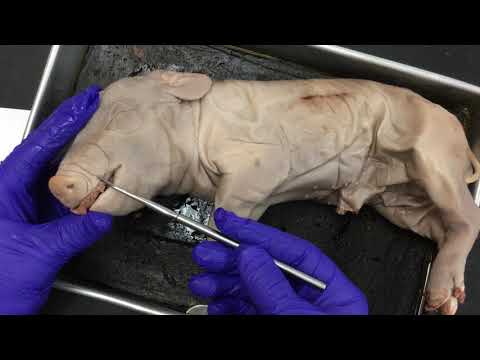
Did you know that pigs can actually play video games? It’s true! Scientists taught them to nudge a joystick to get treats. Pretty impressive, right?
So, let’s chat about swine. They’re not just cute and sassy little creatures; they play a pretty big role in research—like, seriously! Think about it: their anatomy is surprisingly similar to ours.
You might be thinking, “Why should I care about pig anatomy?” Well, these animals help us understand everything from diseases to organ transplants. It’s wild how much we can learn from them!
Grab a snack—maybe some bacon (just kidding)! Get ready to explore the fascinating world of pig anatomy and see why these animals are more than just farmyard buddies.
Exploring the Major External Anatomy of Pigs: Key Features and Functions in Zoology
Sure thing! Let’s get into the fascinating world of pig anatomy. You might be thinking, “Why pigs?” Well, they are super important in scientific research and help us learn a lot about biology and veterinary medicine. It’s all about the details of their external anatomy—so here we go!
Skin
Pigs have a thick layer of skin that’s often covered with hair or bristles. This skin acts as a protective barrier against injury and helps regulate their body temperature. You’ll often see them in mud, right? That’s not just for fun; it helps keep them cool and protects their skin from sunburn.
Ears
Their ears are pretty fascinating! Pigs can move them independently to catch sounds from different directions. Their hearing is excellent, better than ours actually! They’ve got this cool ability to hear high-frequency sounds that we can’t even pick up.
Nose
Now let’s talk about the nose—it’s one of the most important features. A pig’s snout is called a rostrum, and it’s packed with nerve endings. This means they have an incredible sense of smell—way better than our own! They use this keen sense to find food underground, like truffles. Seriously, some people actually train pigs to sniff these mushrooms out!
Mouth
Their mouths are built for grinding food because they’re omnivores, munching on everything from plants to insects. The teeth play a big role here too—just like us, pigs have different types of teeth for cutting and grinding.
Eyes
Pigs have decent vision but limited color perception—mainly seeing shades of blue and green. Interestingly, their eyes are positioned more on the sides of their heads which helps them spot predators more easily.
- Trotters: Their feet end in trotters which provide stability while walking on various terrains.
- Tail: Those curly tails serve as signals too! Happy pigs wag ’em around while stressed ones may tuck them down.
- Belly: Pigs are quite robust with large bellies that allow room for digestion—a key part since they eat a lot!
- Dorsal region: The back area is often where you see deposits of fat or muscle mass; this is important for meat quality in agricultural settings.
Each feature plays an essential role not just in their survival but also opens doors for research in various fields like zoology and veterinary science. Their unique adaptations make them ideal models for studies related to human health issues too!
So next time you think about pigs, remember there’s so much going on beneath that cute exterior! They’re not just farm animals; they’re marvels of evolution with a lot to teach us.
Enhancing Animal Production: The Role of External Anatomy Knowledge in Animal Science
Animal production isn’t just about farming techniques or feed. A solid grasp of an animal’s external anatomy can make a huge difference. It’s like knowing the specs of a car before you drive it. For swine, understanding their body structure isn’t just academic; it plays a pivotal role in improving health, breeding, and overall productivity.
When you look at a pig, you might see just a cute little snout and some floppy ears, but there’s so much more going on underneath the surface. The external anatomy includes features like body shape, skin texture, and even the position of their eyes and ears. Each detail matters! These traits often reflect genetic health or potential issues that could affect production.
For instance, a pig with strong legs and solid feet is generally healthier and can move around better in the pen. This is crucial for their well-being and efficiency in converting feed into meat. Whether it’s for research or outreach purposes, being able to recognize these physical traits means better breeding decisions.
Another key area is identifying diseases. Many ailments show visible signs on an animal’s exterior before they become severe. By knowing what to look for—like changes in skin color or posture—you can catch problems early on. This proactive approach not only helps the animals but also boosts production efficiency because sick pigs rarely perform at their best.
Then there’s behavior! Believe it or not, physical traits often influence how animals behave. A pig with good hearing might respond better to commands from handlers. So if farmers understand how external features correlate with behavior, they can improve handling techniques and even enhance welfare standards.
In research settings, accurate data collection often starts with external anatomy assessments. For example:
These details all contribute to comprehensive studies that aim to enhance animal care practices.
As we look towards the future of animal science, integrating our knowledge of external anatomy seems more vital than ever. Scientists are starting to use technology like 3D imaging to map out anatomical features in fine detail! This isn’t just making things easier; it’s paving the way for breakthroughs that could revolutionize swine production.
In short, knowing your way around swine anatomy gives you valuable tools for improvement across various aspects—from breeding to disease prevention and everything in between. So next time you see a pig trotting by happily in the field, think about all those fascinating details just waiting to be discovered!
Exploring the Connection: How Pig Anatomy Enhances Insights into Human Anatomy and Medical Science
You know, pigs are like the unsung heroes of scientific research. They might not get the same spotlight as other animals, but their anatomy really gives scientists a whole lot of insight, especially when it comes to human anatomy. So, let’s break down how pig anatomy can enhance what we understand about ourselves and medical science.
Similarities in Anatomy: First off, the external anatomy of swine is surprisingly similar to human anatomy. For example, both species share a similar skin structure and organ arrangement. This means that researchers can study pig organs to gain insights into how our own organs function.
Pigs have a highly developed gastrointestinal tract, which is pretty close to ours. Their digestive system allows scientists to explore everything from nutrition to diseases like obesity and diabetes. It’s amazing how much we can learn just by looking at their tummies!
Skin Studies: Here’s where things get really cool: pig skin is very much like human skin. It has similar layers and functions. Researchers often use pigs for testing everything from new skincare products to understanding skin diseases. By examining pig skin samples, scientists can see how wounds heal or how different medications might affect us.
- Transplants and Organ Health: Pigs are also crucial when it comes to organ transplantation studies. Their hearts and kidneys are pretty comparable in size and function to ours, making them ideal candidates for experiments aimed at understanding organ failure or transplantation procedures.
- Surgical Techniques: Surgeons sometimes practice on pigs before operating on humans. It allows them to perfect their skills without any risk! You might see videos of this online; it’s fascinating yet kind of funny how surgery practice often involves little piglets!
Disease Research: And let’s not forget about disease research! Pigs can develop conditions that mirror human diseases remarkably well—like cardiovascular issues or diabetes—which makes them important models for studying treatment options. Researchers have even created genetically modified pigs that mimic certain human ailments perfectly! Talk about collaboration across species.
A personal anecdote comes to mind here: I once visited a lab where they were studying heart disease in pigs, and honestly, seeing those little guys made me feel kind of sentimental about them being so helpful for our health!
The connection between pig anatomy and medical science isn’t just academic; it’s real-world application too! It helps take steps toward groundbreaking surgeries or innovative treatments that could save countless lives.
In summary, swine offer invaluable insights into human biology. From organ studies to surgical practices, they play a key role in improving medical knowledge and treatment options for humans. Who knew those cute little snouts could change the world?
Swine, or pigs, are pretty fascinating creatures, don’t you think? I mean, when you look at them, they don’t just have that cute little snout and curly tail; they actually play a big role in scientific research and outreach. It’s kind of intriguing how these animals can teach us so much about ourselves.
When we talk about the external anatomy of swine, we’re getting into some cool stuff. Take their skin, for example. It’s really unique! Unlike ours, pig skin is thicker and has a special layer called the dermis that helps keep them warm. This aspect is super useful for scientists who study everything from genetics to medicine because it helps us understand things like wound healing or skin diseases. You know? It’s like nature gave us a peek into how our own skin might behave under certain conditions.
And then there’s their digestive system. Pigs have a simple stomach just like humans do! Thinking back to my childhood on my uncle’s farm, I remember watching those curious little guys munching on everything in sight—vegetables scraps, leftover grains… you name it. That diversity in diet shows how adaptable they are and gives scientists clues about nutrition and metabolism which can be applied to human health research too.
But wait—there’s more. Their respiratory system is also something worth mentioning. Pigs breathe in much the same way we do but are more sensitive to air quality due to their larger lung surface area. When I visited a veterinary clinic once, they explained how that sensitivity helps researchers understand conditions like asthma or other respiratory diseases in humans.
The thing is, swine aren’t just test subjects; they’re also messengers of important knowledge that spread beyond laboratories and into real-world applications. That connection brings me back to outreach efforts where farmers and educators come together to share what we’ve learned with a broader audience. Teaching people about swine’s anatomy can inspire new generations of scientists while emphasizing the significance of sustainable farming practices.
So yeah, while pigs might roll around in mud or be seen as just cute barn animals, there is so much more going on beneath the surface! They carry lessons that echo across various fields of research and encourage discussions around agriculture and animal welfare. In a way, these creatures help bridge gaps between science and society—making us all feel just a little bit closer to understanding our world better!