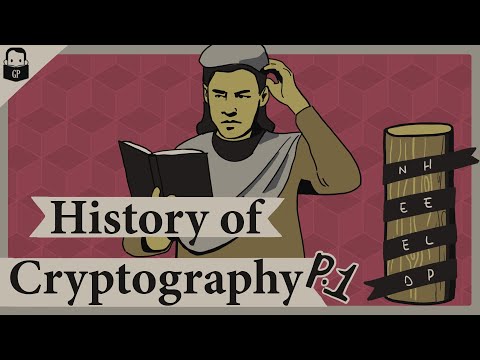
You know what’s wild? Back in the day, if you wanted to send a secret message, you couldn’t just hit send on your phone. Nope! You had to get crafty with ciphers. Imagine having to write in code just to say, “Hey, want to grab coffee later?”
Seriously though, ciphers have been around forever. Remember that time your friend tried to create a secret language just for fun? Well, some pretty smart folks took it way further than that. These codes didn’t just spice up conversations; they actually changed the game in science and communication.
Think about it—without ciphers, who knows how many discoveries would’ve slipped through the cracks? So let’s dive into some famous ciphers that not only protected secrets but also shaped how we shared ideas and knowledge. Buckle up!
Exploring the Most Famous Cipher: A Scientific Perspective on Cryptography’s Impact
Cryptography has been around for ages, right? You see, it’s all about encoding messages, making sure that only the intended receiver can understand them. One of the most famous ciphers that pops into people’s minds is the **Caesar Cipher**. Imagine Julius Caesar sending secret messages to his generals by shifting letters a certain number of places down the alphabet. So, A becomes D if you shift it by three letters—pretty clever for his time!
But let’s not just stop there. Ciphers have shaped not just communication but also science. **Take the Enigma Machine**, for instance! During World War II, this device was used by the Germans to encrypt messages. It was super complex and made decoding messages quite a challenge. But experts like Alan Turing cracked it! This wasn’t just some spy game; it actually saved countless lives and changed the course of history.
Now, think about how cryptography impacts scientific communication today. When researchers publish papers or share data, they want to protect their work from being misused or misrepresented. **Encryption ensures confidentiality** in many fields—everything from healthcare to national security relies on it!
Here are a few key points about how ciphers and cryptography shape scientific communication:
- Data Integrity: With proper encryption, scientists can be sure that their research data remains unchanged and intact.
- Privacy Protection: Patient information in medical studies is kept safe through encryption methods, ensuring that personal details don’t get leaked.
- Collaboration Security: When researchers collaborate across borders (think international projects), secure communication channels are essential for sharing sensitive findings.
Think back to when I mentioned those wartime ciphers—imagine if they hadn’t been cracked! The implications would’ve been huge for everything from military tactics to even advancements in computer science. Turing’s work led to modern computing as we know it.
What happens in the future? Well, quantum computing is on the horizon and could transform cryptography once more! It opens up new ways to encode information that might be unbreakable with today’s technology.
So yeah, ciphers aren’t just some old-fashioned mystery—they’re deeply woven into our scientific fabric! They protect ideas that can innovate life as we know it while keeping communications safe and secure. Ain’t that something?
Decoding History: The Science Behind the Caesar Cipher in Secure Communication
When you hear the term Caesar Cipher, it might sound like something from a movie about ancient Rome, and you wouldn’t be far off! This cipher is actually named after Julius Caesar, who used this simple little trick to protect his messages. So, what’s the deal with it?
Basically, the Caesar Cipher is a type of substitution cipher. It works by shifting each letter in the alphabet by a fixed number. Let’s say we shift by three. If you have the letter A, it becomes D; B becomes E, and so on. Makes communication feel like some secret club, right?
Imagine Caesar writing letters to his generals. He couldn’t just text them—this was back in 58 BC! So he employed this method to keep things under wraps from enemies. If someone intercepted his message, they’d see a bunch of shifted letters instead of important battle plans!
- Simple Usage: To encode “HELLO” with a shift of 3, you get “KHOOR.” Pretty neat! But decoding it? Super easy if you know the shift.
- Coding and Decoding: You just reverse the process! To decode KHOOR back to HELLO, you shift back by 3.
- Limitations: This cipher is good for secrecy but not super secure. If someone knows how shifts work, they can crack it easily.
You know what’s kind of wild? Even with basic ciphers like this one, they laid down some serious groundwork for modern cryptography. Think about all that digital communication today—encryption methods are way more complex but often build on these old-school techniques.
The beauty of ciphers is their connection to human creativity and intelligence. They show how people have always tried to communicate securely throughout history. The simplicity of the Caesar Cipher charms us even now—it’s like time traveling through basic math and language!
In our digital age filled with hackers and identity thieves wanting your secrets (ugh!), understanding this historical cipher reminds us how communication has evolved but still faces challenges in keeping information safe.
The takeaway? The Caesar Cipher might seem trivial today but it represents a fascinating leap into secure communication that paved the way for so much more than just secret messages between generals in ancient times.
Unveiling the Secrets: Notable Cryptic Messages in the History of Science
So, you know how in movies there’s always some ancient scroll or mysterious code that leads to hidden treasures? Well, science has its own version of that with cryptic messages and ciphers. These puzzles have played a huge role in history, shaping how scientists communicate and share their groundbreaking ideas.
First up, we can’t skip over Leonardo da Vinci. This dude was not just about painting pretty pictures. He wrote his notebooks in mirrored writing! Like, if you held it up to a mirror, the letters would make sense. Why? Well, he probably wanted to keep his thoughts private. Imagine him jotting down plans for flying machines while keeping his genius under wraps from prying eyes.
Then there’s Robert Hooke, a key figure in the 17th century. He helped lay the foundations of cell theory. But guess what? He had this strange habit of encoding his notes with special symbols and shorthand. That’s right! If you didn’t know his trickery, you’d be scratching your head over what he was trying to say about cells.
Now let’s talk about Mary Shelley. You might think of her as a novelist but check this out: she used cryptic notes when she was writing “Frankenstein.” The way she encoded her thoughts reminded her of alchemical texts and those whacky theories floating around at the time about life and death—perfect for her sci-fi vibes!
And how can we forget about Charles Babbage? This guy is often called the father of the computer. He had ciphers for communicating details about his inventions like the Analytical Engine. His codes kept competitors at bay as he developed concepts that would eventually lead to modern computers… wild, huh?
Then there’s still another layer to all this—the world wars! Scientists used coded messages to share vital information without enemy interception. For example, during World War II, innovative folks like Alan Turing worked on breaking codes like Enigma. Imagine them surrounded by papers filled with numbers and symbols—serious brain work going on there!
Finally, in today’s digital age, encryption is everywhere. It’s how we keep our personal info safe online! That ancient urge to protect knowledge continues through complex algorithms that give us security.
So yeah, these notable cryptic messages not only shaped scientific communication but also pushed boundaries in technology and thought! They remind us that science isn’t just about data; it thrives on creativity and ingenuity too—a good mix of logic sprinkled with a bit of mystery!
When you think of ciphers, you might picture spies sending secret messages during the Cold War or maybe even treasure maps with hidden clues. But, let me tell you, ciphers have played a huge role in shaping scientific communication too! Crazy, huh?
There was this moment when I was a kid—tinkering with my dad’s old typewriter and trying to make my own secret code. I felt like a little genius! And it got me thinking about how important codes have been in history. They’ve powered not just personal secrets but also the sharing of monumental scientific ideas.
Take the famous Voynich Manuscript, for instance. It’s like the holy grail for cryptographers and historians alike. This book is filled with strange illustrations and an unknown script that has baffled brilliant minds for centuries. Imagine how cool (and frustrating!) it must be to stare at a text that seems to hold all these secrets but just won’t give them up. The very act of trying to decode it symbolizes our innate drive to understand and communicate knowledge.
Then there’s the work of Alan Turing during World War II, right? He cracked the Enigma code—an encrypted system used by the Nazis—and helped change the fate of nations. But his contributions didn’t stop there! Turing’s ideas about computation laid foundational stones for modern computer science and information theory. It’s mind-blowing to think that cracking codes not only altered history but also birthed new realms of technological innovation.
And let’s not forget about mathematical ciphers used in cryptography today! They secure our online communications, keeping everything from emails to bank transactions safe from prying eyes. All those fancy algorithms are just sophisticated ways to encode information so only those who know how can read it.
So basically, every time you send a message online or even try to keep something private, you’re tapping into this rich history of ciphering that has shaped how scientists—and people in general—communicate complex ideas across time and space. Ciphers aren’t just random letters jumbled together; they represent our quest for knowledge and connection through secrecy and security.
In reflecting on all this, I can’t help but feel connected to generations past who’ve sought out ways to share their discoveries despite obstacles. Isn’t that what science is all about? A continuous conversation across ages—even if some parts remain encrypted for now!