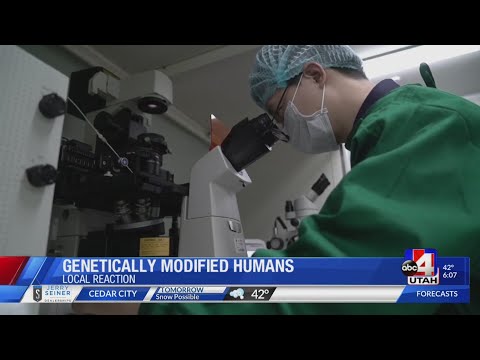
So, like, did you hear about that scientist who thought of adding jellyfish genes to humans? Yeah, it sounds totally nuts at first. But honestly, it’s kinda cool when you think about it.
Imagine glowing in the dark! I mean, who wouldn’t want to light up a party just by showing up? Seriously though, we’re living in a time where genetic modifications aren’t just for plants and animals anymore. They’re starting to make waves with us humans—and it’s opening up Pandora’s box of possibilities.
From fixing genetic diseases to maybe even enhancing our abilities, the road ahead is wild. So, let’s chat about some innovative examples of genetically modified humans in science that could change everything as we know it! You ready?
Exploring Real-Life Applications of Genetic Modification in Modern Science
Sure! Let’s talk about genetic modification. You know, the science where you can literally edit the DNA of living beings? It sounds a bit like sci-fi, but it’s happening now, and it’s pretty cool.
First off, genetic modification has some real-life applications that are changing how we tackle certain health issues. One prominent example goes back to those clever scientists who made headlines with **CRISPR technology**. CRISPR allows researchers to cut and paste genes, like editing a Word document. This is wild because it means we can potentially fix or replace faulty genes that cause diseases.
In 2018, this became super relevant when a scientist named He Jiankui announced he had created genetically modified babies to be resistant to HIV. It stirred up quite a debate, though. Think about it—a person could be born with immunity to certain diseases just because of something done in a lab. But at the same time, this raises ethical questions about how far we should go in modifying human DNA. Do you feel me?
Another fascinating area is genetic modifications in agriculture. Genetically modified organisms (GMOs) are being used to create crops that can withstand pests and extreme weather conditions better than regular ones. Imagine tomatoes that don’t rot as quickly or corn that’s resistant to drought! This isn’t just about convenience—it’s also crucial for food security as climate change messes with traditional farming methods.
Now let’s consider gene therapy for humans. This involves inserting genes into patients’ cells instead of using drugs or surgery. One of the most significant breakthroughs was with **Luxturna**, a treatment for a rare form of blindness caused by specific mutations in genes. Imagine someone regaining their sight just because their faulty gene was fixed! It’s like turning on a light switch after years of darkness.
Then there’s the field of synthetic biology, where scientists are designing new biological parts from scratch—not just tweaking existing ones but creating things like bacteria that can produce useful substances or even clean up oil spills! It’s like giving nature an upgrade, right?
But not everything is sunshine and rainbows when it comes to these innovations. People have concerns about safety and long-term effects—both for genetically modified humans and GMOs in our food chain. Are we ready for this? I mean, if you were eating corn that’s been edited at a molecular level, wouldn’t you want to know how it might affect your health?
If we take all this into account, you’ll see that exploring real-life applications of genetic modification isn’t just fascinating; it’s crucial for understanding our future relationship with science and technology.
So here’s the scoop:
- CRISPR technology allows us to edit genes which could lead to curing genetic diseases.
- Gene therapy is changing lives by fixing faulty genes directly.
- GMOs help us grow food more efficiently in challenging environmental conditions.
- Synthetic biology offers exciting possibilities but comes with its own set of ethical questions.
In short, while there’s so much potential here—like improving human health and ensuring our food supply—it’s essential to approach these advancements thoughtfully and responsibly. I mean, after all, what we do today shapes tomorrow’s world!
Exploring Examples of Genetically Modified Humans: Advances and Implications in Genetic Science
So, let’s chat about genetically modified humans. It sounds like something out of a sci-fi movie, right? But the reality is that genetic science has come a long way. Scientists are now exploring ways to modify human genes to improve health and prevent diseases. Here’s a little peek into this fascinating world.
What’s the deal with genetic modification? Well, at its core, genetic modification involves altering the DNA of an organism—in this case, humans—to achieve desired traits. It’s like editing a recipe to make your favorite dish taste better. The goal is often to fix genetic problems or enhance certain features.
A big topic here is CRISPR technology. This powerful tool allows scientists to cut and edit DNA with remarkable precision. Seriously, it’s revolutionary! Picture it as using scissors on specific parts of a strand of DNA and then gluing them back together differently. This has led to exciting advancements in treating genetic diseases.
One example you might’ve heard about is the use of CRISPR for sickle cell disease treatment. Scientists have been experimenting with modifying blood cells from patients to help them produce healthy hemoglobin instead of the faulty version that causes all sorts of health issues. That’s like turning a rusty old car into a brand new ride!
But hold up! With these advances come some serious questions and implications. For starters, there’s the ethical side of things. If we can change genes, should we? What if someone decides they want their baby to be taller or smarter? There are fears about creating social divides between those who can afford gene modifications and those who can’t.
Also, there’s always the risk of unintended consequences when messing with our DNA—think about how delicate these systems are! Sometimes changes can lead to unexpected problems down the line, which is super scary if you think about it.
In terms of real-world applications, take gene therapy, for instance. This method aims at treating or preventing diseases by inserting genes into patients’ cells instead of using drugs or surgery. Some people have already benefitted from treatments for conditions like inherited blindness thanks to this approach!
Another intriguing development involves designer babies. While still mostly theoretical at this point, scientists are pondering the possibility of selecting specific traits before birth through genetic editing techniques. Can you imagine picking your future child’s eye color? While it sounds fun on one hand, there’re also tons of ethical debates swirling around this idea.
To sum it up: Genetic modification in humans opens doors for incredible potential but comes with a hefty dose of responsibility and caution needed as we tread these waters carefully. Balancing innovation with ethical considerations will be key as science continues this journey into uncharted territories.
So yeah, while genetically modified humans sound high-tech and futuristic today—it’s also a reminder that science isn’t just about what we can do but also what we should do.
Exploring Groundbreaking Advances: Innovative Examples of Genetically Modified Humans in Science (2021)
So, let’s chat about something that’s been buzzing around for a while now: genetically modified humans. You might think that sounds like a scene straight out of a sci-fi flick, but it’s happening. Well, sort of!
CRISPR is one of the coolest tools we have in genetic editing today. It’s basically like a pair of molecular scissors that let scientists cut out faulty genes and replace them with healthier ones. This has led to some pretty exciting possibilities in treating genetic diseases. Imagine being able to fix things like cystic fibrosis or sickle cell disease at their source! That’s not just science fiction anymore.
In 2021, there were some groundbreaking examples where researchers made strides in genetically modifying human cells to combat diseases. For instance, scientists worked on “editing” immune cells to better recognize and attack cancer cells. By tweaking these cells with CRISPR technology, they boosted their ability to fight certain types of cancers. Isn’t that something? A kind of superhero makeover for our own defenses!
Gene therapy also came into the conversation more vividly during this time. It’s when doctors deliver new or modified genes into a patient’s cells to treat or prevent disease. One example is the development of treatments for rare genetic disorders that were once deemed untreatable.
But wait! With all this exciting progress, you might be thinking about the ethical side too, right? There are some serious debates going on here about what it means to edit human genes — especially when we start talking about editing embryos or altering traits like intelligence or appearance. It raises a lot of questions about consent, equity, and what humanity should even look like down the road.
And here’s something emotional: Think back for a second—a friend of mine had a child diagnosed with muscular dystrophy. The struggle was real; watching them cope with this condition was gut-wrenching. Now imagine if gene editing could offer hope for families like theirs—making life just a bit easier and healthier.
So anyway, while we’re seeing advances in modifying human biology through science now, we need to tread carefully. There’s so much potential for good here but also room for serious ethical quandaries as we shape our future together—no pressure! Just think how amazing it would be if science could really help us overcome our greatest challenges!
So, genetically modified humans, huh? It’s a pretty intriguing topic that catches the imagination. I mean, we’re talking about altering the very blueprint of life! It brings to mind those late-night chats where you and your friends might ponder whether we’ll one day have super humans, or if we’ll just mess things up.
I remember this one conversation with my buddy Mark back in college. He was totally into genetics and would talk about how scientists were experimenting with CRISPR technology to edit genes—like cutting and pasting bits of DNA as easily as editing a document! We laughed about what it would be like if everyone had “designer” traits instead of being born into whatever bundle of quirks they got from their parents. Can you imagine? One person’s eye color or athletic prowess being a product of some lab work rather than pure chance?
Well, when it comes to innovative examples in science, there are a few noteworthy cases. Take the story of those two twin girls in China who were reportedly born with edited genes to make them resistant to HIV. The scientist behind it claimed he was trying to give them immunity from the virus. On one hand, you can’t help but admire the ambition—seriously transformative stuff! On the other hand, it raised so many questions about ethics and potential long-term effects.
It makes me think about how science is often a double-edged sword; you can achieve some incredible breakthroughs but at what cost? For every potential benefit, there seems to be an equal amount of concern over unintended consequences down the line. Just think: modifying a gene could lead to changes that ripple through generations. Talk about serious responsibility!
And while these examples are groundbreaking, they still feel lightyears away from everyday life for most people—not just because they’re complex but also because they challenge our ideas about what it means to be human. Should we play around with our DNA? Shouldn’t people just embrace their natural imperfections instead? It’s such a gray area!
In summary, genetic modification in humans opens up this Pandora’s box of possibilities and dilemmas that’s hard not to get swept away by! Like my friend Mark would say after all his passionate rants: “We’re writing the next chapter in human evolution.” And honestly? That thought both thrills me and gives me goosebumps!