So, picture this: You’re at an amusement park, right? You hop on the funhouse ride, and suddenly you’re staring at a bunch of crazy mirrors. Some make you look like a giant, while others turn you into a tiny version of yourself. You laugh and pull your friend over to see how ridiculous they look.
Well, that’s kind of like geometric optics! It’s all about how light bends and reflects, making our world look wild and different. Seriously, this stuff is everywhere—from the lenses in your glasses to the design of fancy telescopes peering into space.
And here’s the kicker: understanding geometric optics can totally change the way we see things! So grab a snack, get comfy, and let’s explore how light plays tricks on us in this super cool realm of science.
Exploring the Four Fundamental Laws of Geometric Optics in Science
Geometric optics is like the magic world of light! If you’ve ever played with a magnifying glass or seen a rainbow after the rain, you’ve dipped your toes into this fascinating field. So, what are the four fundamental laws of geometric optics? Let’s break them down!
1. Light travels in straight lines. This is the most basic law. Imagine you’re at the beach, and you see a straight beam of sunlight coming through a gap in the clouds. Well, that’s light traveling directly to your eyes. It doesn’t bend or twist; it goes from point A to point B like an arrow. This principle helps us understand shadows and how objects block light.
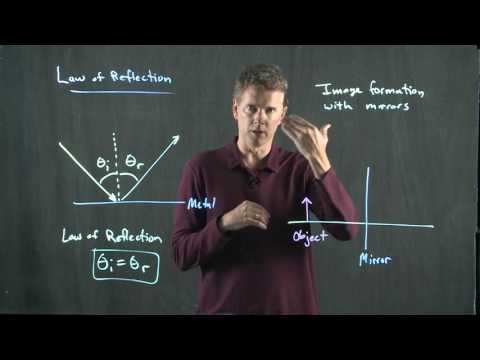
2. Reflection occurs when light bounces off surfaces. Think about when you look into a mirror: that’s reflection in action! The law states that the angle at which light hits a surface (the angle of incidence) equals the angle at which it bounces off (the angle of reflection). If you’ve ever tried to shine a flashlight on an uneven wall, you can see this firsthand—some areas are bright while others stay dark.
3. Refraction is what happens when light enters a new medium. Picture yourself at the pool as you watch your legs appear bent underwater. That’s refraction! When light moves from air to water, it changes speed and direction, making things look different than they really are. This principle is crucial for lenses in glasses or cameras; they change how we perceive images by bending light.
4. The formation of images depends on lens type. Lenses can be convex (bulging out) or concave (curving in). They work based on where they focus incoming light rays. For instance, when using a convex lens like a magnifying glass, parallel rays of light converge at one point to create larger images—great for reading tiny print! On the flip side, concave lenses spread out rays and can make things look smaller.
These laws help us understand various phenomena around us—from rainbows to how we see shapes and colors every day! So next time you catch some sunlight or look into your phone’s camera lens, just remember—you’re witnessing geometric optics in action! Cool, right?
Understanding the Theory of Geometric Optics: Principles and Applications in Physics
Geometric optics is one of those cool areas in physics that deals with how light travels. You know, it’s all about understanding the path that light beams take as they move through different materials. It’s not just theoretical; it has real-world applications, like in glasses, cameras, and even telescopes.
So, let’s break things down a bit. One of the main principles of geometric optics is that light travels in straight lines. But here’s the catch: when light hits something different, like water or glass, it can bend. That bending is called refraction. Kind of neat, right? Think of it like a swimmer diving into a pool. When they go from air to water, their path gets altered.
Another big idea here is reflection. This happens when light bounces off surfaces. You’ve probably seen this with mirrors where the angle at which the light hits the surface (called the incident angle) equals the angle it bounces off (the reflected angle). So if you look into a mirror and tilt your head a bit, you’ll see your reflection move similarly! Pretty wild!
Now, let’s talk about lenses—those curved pieces of glass or plastic you see in eyeglasses or camera lenses. They work by bending light rays to focus them at a point. There are two types mainly: concave (caves inward) and convex (bulges outward). A concave lens can spread out light rays while a convex lens brings them together to form images. If you’ve ever used a magnifying glass to burn leaves on a sunny day, guess what? You’re using convex lenses!
In geometric optics, we also consider something called optical instruments. These include everything from simple magnifying glasses to complex microscopes and cameras. They all rely on lenses and mirrors working together to manipulate light for various purposes—be it seeing tiny organisms or capturing stunning photos.
But wait—it’s not just about practical stuff! Understanding these principles can get quite deep into science too! For example, there’s Snell’s law which describes how light refracts precisely depending on the angles involved—and it’s used in fiber optics too! This means sending data through cables via light signals.
And oh man—if we didn’t have an understanding of geometric optics, imagine life without simple things like reading glasses or even telescopes that help us gaze deep into space!
To sum up:
- Straight-line travel: Light moves in straight lines unless interrupted.
- Refraction: Light bends when passing through different materials.
- Reflection: Light bounces off surfaces at equal angles.
- Lenses: Used to focus or spread out light rays.
- Optical instruments: Combine reflection and refraction for practical use.
So yeah, geometric optics isn’t just some textbook theory; it’s around us all day long. Next time you put on those sunglasses or snap a picture with your phone camera, remember—there’s some really fascinating science making those moments possible!
Understanding Geometrical Optics: Key Concepts and Terminology in Theoretical Physics
Alright, let’s chat about geometrical optics. It’s this intriguing branch of physics that deals with how light behaves when it hits surfaces or passes through materials. So, buckle up a bit!
First things first, when we talk about geometrical optics, we’re diving into the world of rays. Light travels in straight lines under normal conditions. You can think of it like cars on a straight highway—moving smoothly without any sudden turns.
Now, there are some key concepts to wrap your head around:
- Refraction: This is when light bends as it moves from one medium to another, like from air into water. Imagine you’re standing at the edge of a pool and you see a straw looking broken or bent; that’s refraction at play!
- Reflection: This is simply when light bounces off a surface. Like when you look into a mirror and see your reflection staring back at you—it’s just light bouncing off that shiny surface.
- Lenses: These are curved pieces of glass or plastic that help focus or disperse light. Think about how magnifying glasses work; they can make things look bigger because they focus the light differently.
- Mirrors: These are reflective surfaces that redirect light. A flat mirror gives you a true image, while curved mirrors can distort images depending on their shape.
- Images: When light rays converge after reflecting or refracting, they form images. Sometimes they’re right-side up; other times they’re upside down! Like in those classic projectors we used in class.
You know what’s super cool? The idea of spherical mirrors. They’re like the funhouse mirrors at carnivals—some make you look tall and skinny, while others make you short and stout! Spherical mirrors either concave (curved inwards) or convex (curved outwards) change how we see objects because they bend the light differently.
And speaking of bending light, let’s not forget about The Law of Reflection. It states that the angle of incidence (the angle between the incoming ray and the normal line to the surface) is equal to the angle of reflection (the angle between the reflected ray and that same normal). It’s like playing catch; if you throw it at an angle, it’ll bounce back at an equal angle!
Here is where it gets more intricate: Snell’s Law, which comes into play during refraction. This law relates the angles of incidence and refraction to the refractive indices (a measure of how much a substance can bend light) of both mediums involved. Basically, if you’re trying to predict how much light bends as it goes from air into water—Snell’s Law has got your back!
What I really find captivating about geometrical optics is its practical applications. Think about glasses… They’re all based on these principles! Whether it’s helping someone see better or creating stunning effects in photography—geometrical optics makes all this possible.
So next time you’re outside on a sunny day with shades on or using your phone’s camera to snap pictures of friends, think about all those little rays doing their thing behind the scenes! That’s geometrical optics weaving its magic in our everyday lives—but in such an ordinary yet extraordinary way!
So, let’s chat about geometric optics. I mean, it’s one of those topics that people often don’t think twice about, but it’s all around us. You know how when you look through a pair of sunglasses or, like, see a rainbow after it rains? That’s geometric optics in action! It’s really all about how light behaves when it hits surfaces and changes direction.
I remember this one time I was at the beach, and my friend handed me a piece of glass to look through. Everything looked warped! The way the light bent made the ocean look kind of surreal, like something out of a dream. That moment really stuck with me because it showed just how playful light can be. So basically, geometric optics helps us understand all those magical visuals by using some simple rules.
The whole idea revolves around rays and angles—like when you shine a flashlight in different directions to see where the beam ends up. A ray is just a straight line that represents the path light takes. And then there are these rules, such as reflection and refraction. Reflection is when light bounces off surfaces—think of your reflection in a mirror—and refraction is when light bends as it passes through different materials.
One thing that’s super cool is how geometric optics plays into things we use every day. Ever heard of lenses? They’re not just for glasses! Cameras use them to capture stunning photos, and microscopes rely on lenses to let us peek into the microscopic world. It feels like magic that helps scientists explore things we wouldn’t normally see with our naked eyes.
And if you’re ever in doubt about how your eye works—well, geometric optics got your back there too! When light enters your eye through the lens, it gets focused onto your retina so you can see clearly. Just think about all those moments you’ve experienced beauty: colorful sunsets or sparkling stars—the way we perceive everything relies on these neat principles!
So yeah, even though geometric optics might seem like a dry topic at first glance, it’s packed with wonders that can leave anyone feeling amazed if they take a moment to appreciate it. Light isn’t just something we see; it’s an entire world full of interactions waiting to be explored!