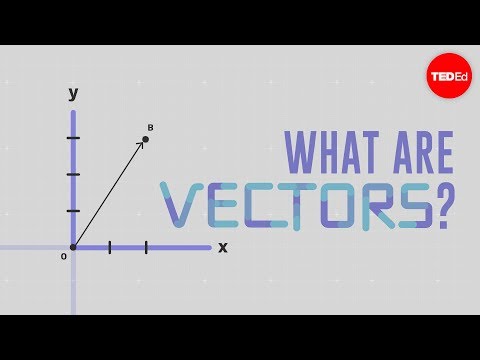
You know, I once tried to explain geometric vectors to my cousin at a family BBQ. Picture this: me, arms flailing like a windmill, trying to draw arrows in the air while he stared at me like I was speaking Martian.
But seriously, vectors are kinda everywhere! They pop up in all sorts of clever ways. From figuring out where that basketball is gonna land after a perfect shot, to navigating your GPS around traffic jams—yep, those tiny arrows are doing some heavy lifting!
So what’s the deal with geometric vectors? Well, they’re basically these things that have both direction and magnitude. Think about it: you can’t just say “go over there” without knowing how far and in which way! That’s where vectors come in.
Stick with me as we take a stroll through how these little guys work their magic in science and other cool areas. Trust me; it’s more exciting than it sounds!
Exploring the Applications of Vector Geometry in Scientific Research and Innovation
So, let’s chat about vector geometry and how it plays a role in scientific research and innovation. Seriously, it’s pretty cool stuff! Vectors, you see, are like arrows that show direction and magnitude. They’re not just pointy things; they’re vital in various fields.
When you’re talking about applications in science, think of vectors as the backbone for understanding motion. Like when you throw a ball. The path it takes? That’s all about vectors. You can break down how fast and in which direction it travels using these handy guys.
1. Physics: In physics, vectors help explain everything from how cars speed up to the orbits of planets. Want to know how forces work? Picture this: if you’re pushing a box across the room, you apply force at a certain angle. The force vector shows both how hard you’re pushing and where it’s going.
2. Engineering: Engineers use vector geometry when designing structures or machines. Imagine trying to build a bridge that can withstand wind and traffic loads; they need to calculate angles and forces precisely. A miscalculation could lead to disaster—yikes!
3. Computer Graphics: Ever wondered how video games look so realistic? Vector math is crucial here too! When creating graphics, developers use vectors to determine shapes, movements, and even lighting effects in 3D environments.
4. Navigation Systems: GPS technology relies on vector calculations to guide you wherever you want to go! It determines your position relative to satellites by calculating distance (magnitude) and direction—basically using vector geometry on a grand scale.
To put things into perspective, think back to when your friend got lost while hiking because their phone’s GPS sent them the wrong way—they didn’t factor in terrain changes or certain angles correctly! Just like that, precise vector calculations are key for accurate navigation.
In biology too, scientists use vectors for numerous applications like modeling animal movement patterns or understanding ecological systems! For instance, tracking animal migrations involves analyzing movement vectors over time and adapting conservation efforts accordingly.
So yeah, whether it’s drawing lines on paper or building complex structures out there in the real world, vector geometry is an unsung hero. It’s all around us! And honestly? It’s wild to think about how something so simple can be used across so many different scientific fields—like connecting dots in a beautiful puzzle called innovation!
Exploring Real-World Applications of Vectors in Scientific Analysis
So, let’s chat about vectors. They’re like the little superheroes of science, you know? Vectors help us understand direction and magnitude in a bunch of different fields. When people hear “vectors,” they often think about arrows on a graph, but they’re way more versatile than that.
Vectors in Physics: One of the most common spots where you’ll find vectors is in physics. Imagine you’re throwing a football. The vector can tell you not just how fast it’s going (that’s the magnitude), but also where it’s headed (that’s the direction). This helps scientists model everything from satellite trajectories to vehicle motion. It’s all about understanding how things move through space.
Vectors in Biology: Now, let’s switch gears to biology. Here, vectors pop up in population dynamics and diffusion studies. For example, imagine tracking animal migration patterns. Scientists might use vectors to map out the paths that animals take while searching for food or mates. It gives them insights into behavior and ecology!
Vectors from Technology: And then there are those times when technology and vectors dance together—like in computer graphics! When creating animations or 3D models, developers use vectors to represent shapes and movements. Think about video games: every time characters jump or spin, vectors are used to calculate their paths smoothly.
Engineering Applications: Engineering is another big player here! Take civil engineering—when designing structures like bridges or buildings, engineers use vectors to ensure stability and safety under various forces like wind or earthquakes. It helps them visualise stresses at different points of the structure.
Anecdote Time: I remember visiting a science fair once where a kid showcased a model bridge made with spaghetti noodles! He explained how he used vectors to calculate how much weight it could handle without collapsing—it was simple yet brilliant! That moment really highlighted how practical these concepts can be!
Environmental Science: Vectors also play a role in environmental research. Consider ocean currents: scientists utilize vector analysis to track water movement and pollution spread. This info is crucial for conservation efforts and understanding climate change impacts.
A Final Note: In short, whether we’re talking physics, biology, tech design, engineering or environmental science—vectors are everywhere! They help scientists create models that make sense of our world while solving real problems that matter to us all!
Exploring the Role of Vectors in Data Science: Applications and Significance in Scientific Research
You know, when we talk about vectors in data science, it’s like talking about the superheroes of the math world. They might seem a bit abstract at first, but they play a huge role in making sense of data. So, let’s break it down!
What are Vectors?
In simple terms, a vector is like an arrow pointing from one place to another. It has both a direction and a magnitude—or how long that arrow is. In everyday language, think about pointing from your house to your favorite café. The direction you point and the distance you cover? That’s pretty much what vectors are all about.
The Role of Vectors in Data Representation
Vectors help us represent information in a way that machines can understand. For example:
- Positioning Data: Each point in space can be represented as a vector from the origin (like where you start measuring). If you’re mapping out some data points—say locations of trees on a map—a vector helps define their position.
- Features of Data: When you analyze things like customer preferences or characteristics in a dataset, each feature can be expressed as dimensions in space–basically turning traits into vectors.
Applications in Scientific Research
Now, let’s get into why this matters for researchers. Using vectors makes complex data more manageable and intuitive:
- Molecular Biology: Think about how molecules interact. Scientists use vectors to represent chemical bonds and interactions. By visualizing these bonds as vectors, they can predict how substances will react together.
- Astronomy: In space research, we calculate trajectories for spacecraft using vectors. They help scientists figure out how to get from Earth to Mars or beyond by showing them the best paths to take!
The Power of Machine Learning!
In the world of machine learning—which is all the buzz right now—vectors form the backbone of algorithms! Imagine training an AI model; each piece of input data can be turned into a vector representation.
- Email Filtering: Spam filters rely on vector spaces to identify whether emails are spam or not based on characteristics within those messages.
- Image Recognition: When computers learn to recognize images (like cats vs dogs), they analyze pixel data as vectors! Basically, every image converts into lots of numerical values—a big collection of vectors learning through practice.
Thinking back on my own experience, I remember once trying to get my head around image recognition using machine learning. It was mind-blowing seeing how many small details—like edges and colors—could translate into numerical values through vectors.
A Constantly Evolving Field
The role of vectors doesn’t stop here; it’s evolving! New ways to visualize and manipulate them are popping up all the time in fields like social network analysis or even health sciences.
So next time you hear “vector” tossed around casually at some techy dinner party or casual chat with friends over coffee, just remember—you’re dealing with some serious mathematical muscle that helps us understand our universe better!
You know, when you think about math, it can feel a bit dry or intimidating, right? But let me tell you, geometric vectors are actually like the cool kids in the math world—super useful and totally necessary for all sorts of scientific research and applications.
Picture this: you’re out hiking in the woods, feeling all zen with nature. Suddenly, you spot a deer. It’s moving quickly to the left, away from you. That deer’s movement can be represented as a vector—it has direction (left) and magnitude (how fast it’s running). This idea of direction and distance is at the heart of geometric vectors.
In scientific research, vectors are everywhere! They help scientists understand forces in physics—like how gravity pulls things down or how wind moves across the landscape. Wanna know something cool? Engineers use vectors to design everything from bridges to roller coasters. Basically, without these little mathematical wonders, many of our favorite structures might just fall apart… literally!
I remember once watching a documentary about ocean currents while I was munching on some popcorn. They mentioned how researchers use vector fields to map out ocean movements. It blew my mind! Those scientists are essentially drawing vectors on giant maps to predict where fish will go or how climate change affects water temperature. I mean, that’s pretty awesome when you think about it.
And then there’s computer graphics! Whenever you see those stunning animations or video games—yup, they’re using vectors too! Every character movement and every little detail is based on geometry that helps create that lifelike feel.
So next time you’re doing something where precision matters—like coding a game or analyzing data for your thesis—just remember that geometric vectors are working behind the scenes making everything come together smoothly. They’re like silent heroes in the realm of science and technology! Who would’ve thought math could be so interconnected with life?