You know that feeling when you’re flipping through a magazine and see a stunning photograph of the universe? Stars twinkling against a backdrop of deep blackness. It’s mesmerizing, right? But, here’s the kicker: behind that beauty lies some seriously mind-bending geometry and topology.
I was chatting with a friend the other day who admitted they thought geometry was just about squares and triangles. Like, hello? It’s way more than that! Seriously, it’s the language of the universe. And then there’s topology, which sounds all fancy but is really just about how spaces can twist and turn without tearing apart.
And physics? Oh man, it’s like the ultimate detective story trying to figure out how everything in this vast universe works together. These three realms—geometry, topology, and physics—are more connected than you might think.
So buckle up! We’re gonna explore how these topics unite in wild ways, shaping our understanding of reality itself. Sounds cool, right?
Exploring the Connection Between Topology and Physics in Modern Science
Alright, let’s chat about something really cool: the connection between topology and physics. I mean, these two fields might seem worlds apart at first glance, but they’re actually joined at the hip in many fascinating ways. So, what’s it all about?
Topology is basically a branch of mathematics focused on the properties of space that are preserved under continuous transformations. Imagine you have a donut and a coffee cup; in topology, they’re considered the same thing because you can stretch and twist one into another without tearing or gluing anything. This concept may sound simple but its implications are profound when it comes to understanding the universe.
Now, onto physics. This is where things get really trippy! Physicists use topology to better understand the fundamental forces of nature, like gravity and electromagnetism. The idea is that certain topological structures can describe the behavior of particles and their interactions. Sounds sort of mind-bending, right?
Let’s look at some key connections:
- Quantum Mechanics: Here, topology plays a huge role in classifying different states of matter. Take topological insulators for example. These materials conduct electricity on their surface but act as insulators inside. That’s due to their unique topological properties!
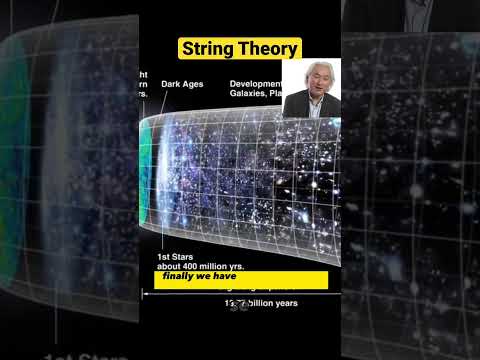
- String Theory: In this theoretical framework, tiny vibrating strings make up everything in our universe. The shape and configuration of these strings are described by topological spaces too!
- Gravity: General relativity describes gravity not as a force but as curvature in spacetime caused by mass. You can describe these curves using concepts from topology—like knots or surfaces!
You know what’s fascinating? There’s this whole realm called “topological phases,” which refers to different states matter can exist in based on its topological properties rather than just how its atoms are arranged. It’s like how water can exist as ice or steam depending on temperature—just with particles being moved around differently.
When you break it down like this, you start to see how intertwined we really are with these abstract mathematical ideas! For instance, imagine having a rubber band that represents an electron’s state; if you twist it around your fingers (which represents changing conditions), you create different configurations—each with unique properties.
I remember reading about physicists who were totally flabbergasted when they found out certain materials behaved differently based on their topological characteristics even though they looked exactly alike! It was like finding out twins could have completely different personalities based solely on where they stood in a room.
So yeah! Topology is more than just some abstract math; it’s like a secret code that helps physicists unlock mysteries of our universe! It connects dots between seemingly unrelated ideas and gives us deeper insights into how everything works together.
In summary, the dance between topology and physics opens up new doors for understanding reality itself—reminding us there’s always more beneath the surface than what meets the eye!
Exploring the Intersection of Geometry and Science: Uncovering Mathematical Foundations in Scientific Disciplines
Sure! Let’s talk about how geometry, which is basically the study of shapes and spaces, connects to science in some pretty cool ways. You might be surprised to find out that these two fields aren’t just separate things—rather, they mix together like peanut butter and jelly.
First up, geometry isn’t just about pretty shapes. It’s a way to describe the universe around us. Think about how planets move. The paths they take are not just random; they’re based on geometric principles! When you look at orbitals in physics, you’re basically seeing shapes in action.
Geometry helps scientists understand the structure of things. Take DNA for instance. It spirals into a double helix shape, and this twist is crucial for its function. If DNA were flat or shaped differently, it might not work at all! The beauty of its geometry is what allows it to carry genetic information efficiently.
Then there’s topology, which is a branch of geometry that gets even more funky! It studies properties that stay the same even when things get stretched or twisted but not torn. Imagine a coffee mug transforming into a donut—that’s topology for you! This kind of thinking is really helpful in fields like cosmology, where scientists try to figure out the shape of the universe itself!
Let’s also consider physics. Here’s an interesting nugget: Einstein’s theory of general relativity describes gravity by using geometric concepts. He proposed that massive objects like planets curve spacetime around them. So when you think you’re just falling due to gravity? Nope! You’re actually moving along these curved paths in spacetime!
- Geometry gives us tools to model physical phenomena.
- Topology helps explore properties and relationships between different spaces.
- Physics uses geometry as a language to describe forces and motions.
And don’t forget about engineering! Yeah, this is another place where all this math plays out in real life. Architectural designs rely heavily on geometric principles; certain angles and shapes can make buildings stronger or more visually appealing. Ever seen a bridge? The arch shape isn’t just for looks—it distributes weight effectively!
So, going back to how these disciplines unite: Basically, geometry offers frameworks, topology uncovers hidden connections, and physics applies these ideas to explain how everything moves and works together. It’s all intertwined—just like threads in a tapestry.
To wrap it up, understanding the connection between geometry and science opens up new ways of thinking about everyday stuff. From figuring out how galaxies swirl in space to designing the next coolest building on your block—geometry might just be the unsung hero behind it all! Isn’t that something?
Exploring Topology: Is It the Most Challenging Branch of Mathematics?
Exploring topology is kind of like going on an adventure through a different dimension. It’s a branch of mathematics that, at first glance, can look totally bonkers! So, the question is: is it really the most challenging branch of mathematics? Well, let’s unravel that.
First off, **topology** focuses on the properties of space that are preserved under continuous transformations. You know, like how you can stretch or twist a donut without tearing it apart. In this realm, a coffee cup and a donut are basically twins—they have the same topological features. Wild, right?
One reason many consider topology super challenging is its abstract nature. Think about geometry: it’s about shapes we can visualize easily—squares, circles, triangles. Now flip that on its head with topology! You’re dealing with concepts that can escape our everyday intuition. It’s like jumping from 2D to 4D without any glasses!
Now let’s talk about some key aspects that contribute to its difficulty:
- Abstract Thinking: In topology, you often need to think several steps ahead—like playing chess in your mind while someone’s still figuring out checkers.
- Complex Definitions: Terms like “homeomorphism” and “manifold” might sound cool but get ready for some serious brainwork to wrap your head around them!
- Connections with Other Fields: Topology isn’t an island; it links up with areas like physics! For instance, in string theory, the shapes that strings take are influenced by topological spaces.
Remember how I mentioned intuition? A lot of people struggle because they can’t rely on what they see or touch. Imagine trying to understand something completely foreign without visual aids—that’s how many approach topology.
A personal anecdote comes to mind; I once attended a seminar where the speaker used vibrant rubber bands to explain knots in topology. Watching those bands twist and turn was mesmerizing! It was one of those lightbulb moments when suddenly all the abstractness transformed into something tangible.
It’s worth noting that even though topology is tough, it has beauty in its complexity. Like music that challenges you at first listen but then becomes part of your soul with repeated enjoyment!
So should we crown topology as the toughest branch? It’s subjective! Some might find calculus harder while others may sweat over statistics. What makes it really fascinating is how it intertwines with geometry and physics—creating an elaborate dance of ideas across disciplines.
In essence, yes—topology poses unique challenges due to its abstract nature and deep connections with other fields. But let’s not forget: every branch of mathematics offers its quirks and complexities! So whether you’re tangled in knots or grappling with equations—embrace the struggle because that’s where breakthroughs often happen!
Geometry, topology, and physics—sounds pretty intense, huh? But really, when you start to think about it, these fields are like a trio of friends that hang out together, influencing and shaping each other’s vibes. It’s kind of heartwarming when you think about how they all come together to help us understand the universe.
You know, I remember sitting in a math class back in high school, feeling all confused while my teacher explained shapes and angles. It was like trying to decipher a foreign language. But later on, I discovered that geometry is way more than just triangles and squares; it’s the backbone of physics! Imagine picking up a map of the universe where each line and curve tells a story about how particles move and interact. Cool, right?
Now let’s sprinkle in some topology here. At first glance, it seems like a more abstract cousin to geometry. It deals with properties that stay the same even if you stretch or bend objects—like how a coffee cup with one handle can transform into a donut shape without losing its essence. This flexibility has some mind-bending implications in physics! So when scientists study things like black holes or the fabric of spacetime itself, they’re often dipping their toes into this topological pool.
Physics is really where it all goes down. You can have all the geometric shapes and topological twists in your toolkit but without understanding how they interact through physical laws? You’d be lost. Think of gravity—it’s something we experience every day, but at its core lies intricate geometric relationships in space-time that tell us how things should behave.
Reflecting on this unique blend makes me feel kind of nostalgic about those awkward math classes because it shows just how beautifully interconnected our understanding can be! Like when puzzles finally fit together after hours spent fiddling with pieces—geometry provides structure while topology whispers secrets about continuity and change. And then physics runs wild with those ideas, painting pictures of our cosmos that are rich with meaning.
So yeah… it’s fascinating to see how these three realms unite as partners in exploring reality’s mysteries! They remind me that science isn’t this isolated realm; it’s an intricate dance where every step has its purpose and rhythm—a reminder that we’re all connected in ways we might not fully grasp yet. And isn’t that just poetic?