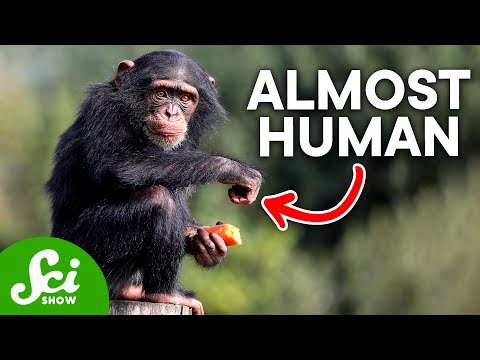
Did you know that humans share about 98% of their DNA with gorillas? Seriously, it’s wild! Like, imagine sitting across from a gorilla and realizing that you’ve got more in common than just being primates.
I mean, think about all the differences: we walk on two legs, they might throw a mean punch if they’re feeling feisty. But when it comes down to the tiny building blocks of life—our DNA—we are practically cousins.
So, what’s up with this genetic connection? It’s like nature decided to play a fun game of “Guess Who?” with our ancestry. And trust me, unpicking that family tree is way more exciting than it sounds. You ready for it? Let’s jump into this fascinating kinship between us and our big, hairy relatives!
Exploring the Genetic Compatibility: Can Gorillas and Humans Produce Offspring?
So, you might be wondering about the connection between humans and gorillas. It’s a pretty captivating subject, really! When we talk about genetics, we’re diving into that wild web of DNA that makes us who we are. And guess what? Humans and gorillas share about 98% of their DNA. Crazy, huh? This similarity is why scientists get so intrigued by these magnificent creatures.
Now, let’s address the big question: can gorillas and humans produce offspring? The short answer is no. Even though we share a lot of genetic material, there are some significant hurdles that prevent us from going down that path.
First off, it’s all about what we call species barriers. Each species has its own set of chromosomes—like little packages of genetic information. Gorillas have 48 chromosomes while humans have 46. That difference is key! During reproduction, the chromosomes need to match up correctly for an embryo to form properly. So when a human and gorilla try to mix their genetic material, things just don’t line up right.
Another thing to consider is reproductive isolation. This fancy term means that even if they were to mate (which would be a huge no-no in many ways!), their biological systems just aren’t designed for cross-species reproduction. Think about different animals—like lions and tigers can produce ligers because they’re closely related. But with humans and gorillas? It’s like trying to fit a square peg in a round hole.
Also, there’s this emotional aspect tied to evolution. Our paths parted millions of years ago! We evolved separately to thrive in our unique environments—humans becoming masters at tool-making and language while gorillas adapted perfectly to their forest homes.
To sum up:
- Humans and gorillas share about 98% of their DNA.
- They cannot produce offspring due to different chromosome counts.
- Reproductive isolation prevents them from mating successfully.
- Their evolutionary paths diverged millions of years ago.
So yeah, while it’s super interesting how closely related we are in the grand scheme of things, when it comes down to making babies… well, that’s just not gonna happen. Isn’t nature fascinating?
Understanding Human Genetics: The Surprising Truth Behind Our 50% Banana and 98% Chimpanzee DNA Connection
Okay, so let’s talk about human genetics and why you’ve probably heard that you share 50% of your DNA with bananas and 98% with chimpanzees. Sounds crazy, huh? Let’s break it down in a way that makes sense.
First off, DNA is like a recipe book for making you, well, you! It contains instructions for everything from your eye color to how your cells function. But here’s the kicker: not all genes are unique to us. In fact, many genes are shared among different species.
Bananas and Humans: Can you believe we share about 50% of our DNA with bananas? This doesn’t mean we’re half banana or anything wild like that. What it means is that many of the basic cellular functions—like how our cells process energy—are pretty similar across all living things. Bananas have some of the same genes that help them grow and survive in their environment as we do! It just goes to show how connected life is on Earth.
Now let’s shift gears to our closest relatives in the animal kingdom: chimpanzees. When scientists say we share around 98% of our DNA with chimps, they’re not kidding around! This genetic similarity means that humans and chimps have evolved from a common ancestor fairly recently in evolutionary terms.
- The differences in the remaining 2%? That’s where things get interesting! Most of those differences affect traits like brain development and behavior.
- Some research even suggests variations in genes might help explain why humans developed language or more complex social structures compared to chimps.
You know what’s wild? A couple years back I read a touching story about a scientist who spent years studying orangutans. He found they exhibit emotions similar to ours—grief, joy, even laughter! What he realized was not only were we genetically related but emotionally connected too. It was so heartwarming to think about how much more we share than just DNA!
The similarities don’t stop there; gorillas also share a hefty amount of genetic material with us—around 98%. All these figures remind us that while humans might feel unique, we’re part of an extensive family tree full of intertwined branches.
Evolving Connection: Over millions of years, evolution has shaped all these species from shared ancestors. It’s like watching trees grow; some branches spread wide apart while others stay closer together but still come from the same root system.
This shared genetic heritage encourages us to reflect on our place within nature rather than seeing ourselves as entirely separate from other living beings. So next time someone mentions your banana side or chimp connection, just smile and remember: it’s not just numbers; it holds some deep truths about life on this planet!
Comparative Analysis of Gorilla DNA and Human DNA: Insights into Evolutionary Biology
So, let’s chat about something super cool: the similarities and differences between gorilla DNA and our own. You might not think much about it, but there’s a bunch of fascinating info tucked away in those genetic codes!
First off, it’s wild to know that humans and gorillas share a whopping **98%** of their DNA! That means if you look at the genes that make up our bodies, we’re just a couple of tweaks away from our furry cousins in the animal kingdom. **Think about it:** that tiny gap might just be what makes us different from them.
Now let’s dig into some specifics. Both species belong to the same family called Hominidae, which is kind of like an extended family reunion filled with big primates. Here are some key points about our DNA connection:
- Gene Coding: A lot of the genes we share with gorillas are related to basic biological functions—like how we develop or how our cells work.
- Protein Similarities: Over half of human proteins have a direct counterpart in gorillas. This helps explain why we both have similar muscle structures or immune responses!
- Evolutionary Changes: Those tiny differences? They can lead to some major evolutionary changes over millions of years. For example, it’s not just that we walk on two legs while they knuckle-walk; it’s also about brain development and social behaviors.
You know what else is interesting? Those genetic tweaks not only affect physical traits but also behavior and social structures! Gorillas live in groups called troops where social bonds are super important. Humans have complex societies too, but look at how much more varied ours can be.
But wait—there’s more! Studies show that even with all those similarities, we took different paths after diverging from a common ancestor around **10 million years ago**. Crazy, huh? The things that make us human—like culture and language—are still evolving.
Oh! That reminds me of a touching moment I once had visiting a wildlife reserve where I saw gorillas up close. Watching them care for their young was heartwarming; it reminded me that despite our differences, there’s a thread connecting us through these shared experiences in nature.
In summary, while we’re genetically close to gorillas, those slight differences add up to create two very distinct species. Understanding this connection isn’t just about science; it’s also about appreciating the complexity and beauty of life on Earth—like an intricate tapestry woven over millions of years. Isn’t that something?
You know, when you think about it, the idea that humans and gorillas share a genetic connection is pretty mind-blowing. I mean, we often see those amazing videos of gorillas in the wild or at the zoo, and while they might look different from us with their big hands and muscular arms, beneath the surface, there’s something fascinating going on.
It’s wild to think that we share about 98% of our DNA with them. Seriously! That means, in a way, we’re like distant cousins. Imagine going to a family reunion and realizing your long-lost relatives are swinging from trees! It kind of puts things into perspective.
I remember watching a documentary once where they followed a group of gorillas in their natural habitat. There was this moment when a mother gorilla was caring for her baby; she was so gentle and attentive. It struck me how similar that behavior was to what we see in human parents. Those little moments have always made me think about how connected we truly are.
But it’s not just about physical similarities or parenting styles; it’s also about our evolutionary story. Both species branched off from a common ancestor millions of years ago. DNA is like a blueprint of who we are, so tracing these connections helps scientists understand more than just genetics—it opens doors to figuring out how behaviors evolved too. Isn’t that something?
Sure, there are differences—like language and complex societies—but at our core? There’s this underlying thread that ties us together with these incredible creatures. So next time you see a gorilla, think beyond the fur and muscle; consider the history encoded within those genes that make us both part of this grand tapestry of life on Earth. Pretty cool, right?